


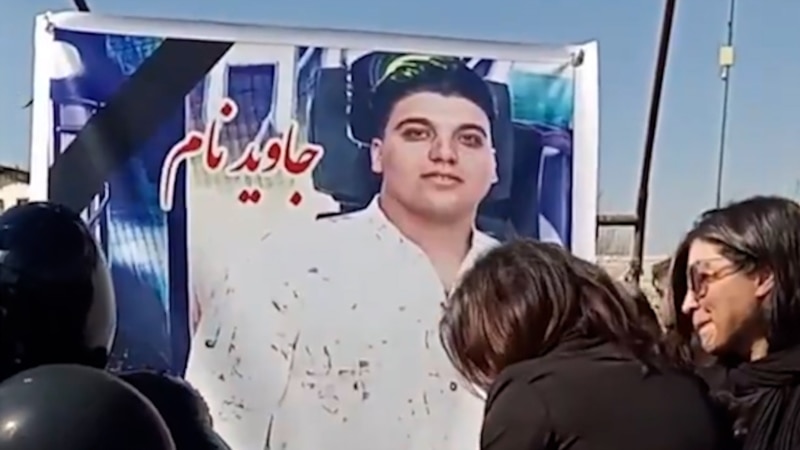
Iranians are marking the end of the traditional 40-day mourning period for those killed during the height of the deadly state crackdown on mass protests last month with renewed public shows of dissent.
During memorial ceremonies held across Iran in recent days, mourners have staged small demonstrations and chanted slogans against Iran’s clerical rulers. Security forces have tried to curb the protests and, in some cases, used gunfire to disperse crowds.
At least 7,000 people were killed during the nationwide protests that erupted in late December 2025, according to human rights groups, although the real death toll is believed to be significantly higher. Most of the killings occurred from January 8 to 10, the peak of the crackdown.
Historically, memorial ceremonies have often taken on political significance during times of unrest, most notably during the lead-up to the Islamic Revolution in 1979.
‘Behind Every Dead Person’
Videos verified by RFE/RL appear to show small protests at memorial ceremonies in the capital, Tehran, and the cities of Shiraz, Abdanan, Bushehr, Chalus, and Najafabad.
In several cities, security forces moved quickly to prevent the gatherings from growing into broader demonstrations. Iranians have reported roadblocks, heavy deployments of police and paramilitary units, and intermittent Internet disruptions.
In Tehran’s Behesht Zahra cemetery, videos on February 17 showed mourners gathered around the graves of slain protesters shouting anti-government slogans. In a show of unity, crowds were heard chanting, “A thousand people stand behind every dead person.”
In the western town of Abdanan, a protest was held on February 17 during a ceremony commemorating the death of 16-year-old Alireza Seydi. The teenager was killed while taking part in a demonstration in Tehran.
During the ceremony, videos showed mourners chanting “Death to Khamenei,” a reference to Iran’s Supreme Leader Ayatollah Ali Khamenei. Videos also appeared to show security forces firing into the air to disperse the crowd.
Families of the victims have reported a surge in harassment and pressure from the authorities in recent days and weeks. Some have been summoned for questioning, threatened, and blocked from organizing commemorations.
Shaping The Narrative
The renewed unrest comes as the authorities attempt to shape the narrative around the unprecedentedly deadly state crackdown on the protests.
The authorities blamed “rioters” and “terrorists” armed by Israel and the United States, Tehran’s archenemies, for the deaths of protesters. Officials claimed around 3,000 people were killed, most of them members of the security forces.
But in remarks on February 17, Khamenei described those killed as “martyrs” and said that “the bullets could have come from anywhere,” a statement that appeared to diverge from earlier official claims.
Khamenei also said he was “in mourning” over the bloodshed as state-sponsored religious ceremonies were held to mark 40 days since the killings. This prompted critics to allege that the clerical establishment is attempting to co-opt the mourning events.
“It’s sheer shamelessness,” Paris-based Iranian analyst Reza Alijani told RFE/RL’s Radio Farda.
Alijani said the public has rejected “Khamenei’s fabricated narrative” about who killed the protesters.
“A system that has effectively confiscated the will and sovereignty of the Iranian nation and has plundered their wealth, natural resources, and economy now wants to do the same with their martyrs,” he added.


