


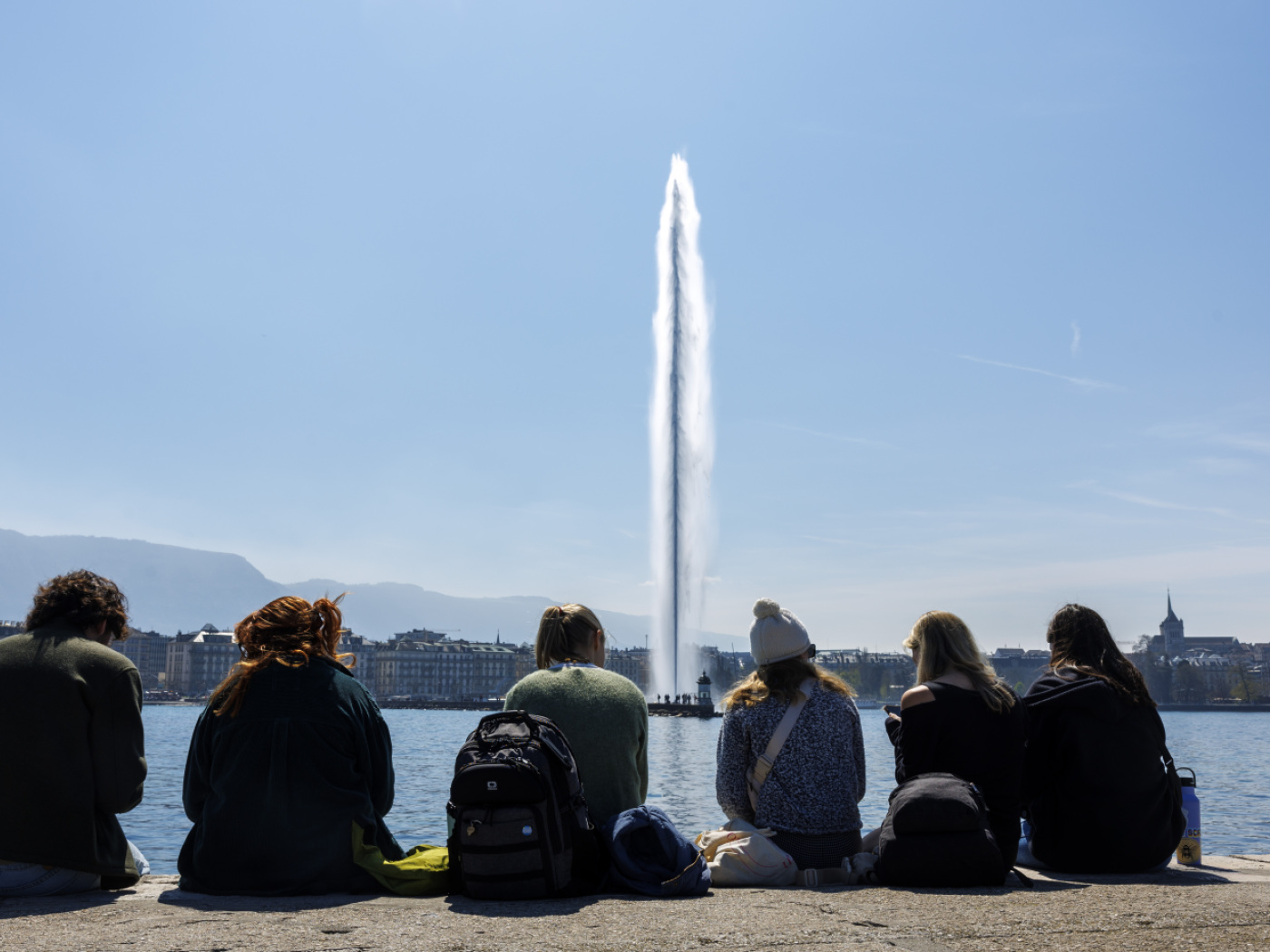
A third of the world’s oil is traded from Geneva
Keystone / Salvatore Di Nolfi
The Swiss canton of Geneva and the federal government expect a tax windfall from commodity traders as the Iran war drives up oil prices.
+ Get the most important news from Switzerland in your inbox
Oil traders in Geneva, who handle a third of global oil trade, often book increased profits during periods of turbulence, which translates into higher tax revenues, Geneva’s finance director, Nathalie Fontanet, told Swiss public broadcaster SRF.
More

More
Iran-US: the stakes of disruption at Hormuz for Switzerland
This was evident in the coronavirus pandemic and the war in Ukraine – and it is likely to happen again because of the war with Iran, Fontanet added.
In 2023, Geneva achieved a record surplus of almost CHF1.4 billion, primarily due to commodity trading. The federal government expects additional revenue of between CHF600 and CHF800 million by 2028 thanks to Geneva’s commodity trading sector.
This includes corporate taxes, dividend taxes and income taxes on the bonuses of commodity sector executives.
Oil prices soar
Fontanet cannot yet quantify how much additional tax revenue is flowing into the state coffers due to the Iran war. She said that during the Ukraine war, price increases affected all raw materials, whereas the Iran war exclusively effects crude oil.
More

More
Switzerland faces a steep energy bill due to the Middle East conflict
Oil prices have soared since Iran closed off the Strait of Hormuz, connecting the Persian Gulf with Gulf of Oman. Roughly a fifth of the world’s oil and gas passes through this maritime chokepoint, along with a significant share of global seaborne trade.
“Disruptions in Hormuz force a real-time redrawing of global energy flows, with Swiss trading houses at the centre of this reconfiguration,” Florence Schurch, secretary general of SUISSENÉGOCE, the main industry association representing Switzerland’s commodity trading sector, told Swissinfo.ch.
According to Robert Bachmann, commodities expert at the non-governmental organisation Public Eye, the largest Geneva oil traders, such as Vitol, Gunvor, Trafigura and Mercuria, generate annual profits in the single or even double digits of billions.
Supply chain shocks
More
More
Switzerland lowers 2026 growth forecast due to Middle East conflict
He is also convinced that Switzerland is profiting from the war in the Middle East. Traders are currently operating with high-risk premiums, which also drives up commodity prices.
“These risk premiums allow traders to increase their profits,” says Bachmann. But that’s not all. Futures trading is also extremely lucrative during times of war.
Bachmann also assumes that the government will receive more revenue from disruptions to supply chains for metals and minerals. “In addition, the food industry has an increased demand for fertilizers, the production of which in turn requires natural gas,” Bachmann said.
“This is the most significant disruption to supply chains we have seen since the COVID-19 pandemic and the start of the war in Ukraine,” Corinne Fleischer, director of supply chain at the World Food Programme (WFP), said at the end of March.
Furthermore, in the event of an oil shortage, there is always an increased demand for coal. Demand has risen particularly in Asia, which is extremely harmful to the climate, but brings considerable profits for Geneva’s commodity traders, he added.
Around 50% of Geneva’s tax revenue comes from the commodities business, which involves not only traders but also banks, transporters, insurers and certifiers.
To calculate projected tax revenues, Fontanet will ask trading companies and private traders for information about their businesses in June.
More

More
Iran war impacts Swiss fuel pumps, tourism and economy
Adapted from German by AI/mga
We select the most relevant news for an international audience and use automatic translation tools to translate them into English. A journalist then reviews the translation for clarity and accuracy before publication.
Providing you with automatically translated news gives us the time to write more in-depth articles. The news stories we select have been written and carefully fact-checked by an external editorial team from news agencies such as Bloomberg or Keystone.
If you have any questions about how we work, write to us at english@swissinfo.ch


