


This year, Ascension Day is on Thursday May 29th. Here’s how the Swiss celebrate it — and where.
Ascension Day is one of the few Swiss nationwide public holidays — alongside National Day (August 1st), Christmas Day and New Year’s Day — to be celebrated in every canton with a day off work.
How is Ascension Day celebrated in Switzerland?
While most people living in Switzerland look forward to kicking off the extended weekend with a relaxing getaway, some traditions to celebrate Ascension day are still observed in many cantons.
Once upon a time, ceremonial processions to mark Ascension day, which would see the Swiss walk through fields and meadows, were prevalent in most Catholic regions across Switzerland
However, today, only a few rural communities in Lucerne carry out these traditional Ascension day processions, known as Auffahrstumritt, in their original religious form.
The oldest, largest and by far most popular Ascension day procession takes place every year in Beromünster, in the district of Sursee, when around 1,000 people travel some 18 kilometres to meditate, pray and walk among like-minded people, listen to sermons by the clergy, and/or receive blessings.
Each year, the procession – which lasts approximately eight and a half hours – takes residents and visitors along a centuries-old path through various towns and villages. Following that, more people – sometimes up to 5,000 – join a large celebration to mark the end of the procession and in turn, Ascension day.
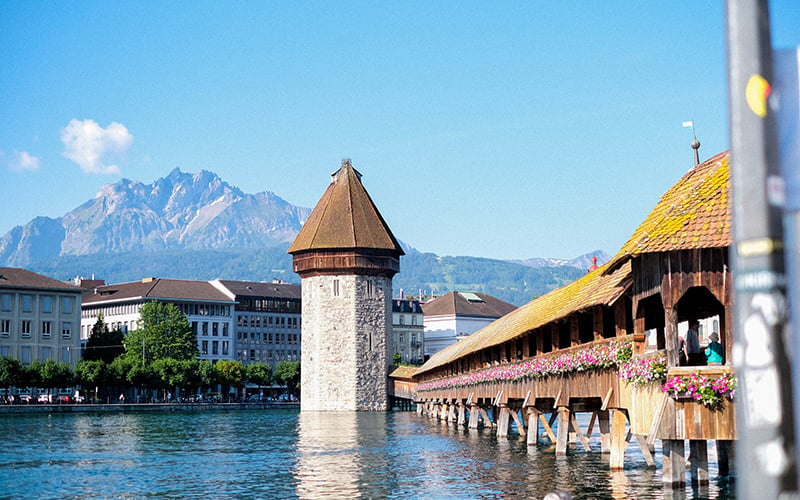
The city of Lucerne. Photo: Geertje Caliguire on Unsplash
The municipality of Sempach and the city of Lucerne also maintain similar traditions.
Advertisement
In Liestal, an industrial town in Basel-Country, residents celebrate a so-called Banntag (community boundary day) on the Monday prior to Ascension day.
On Banntag, all male Liestal residents, whose hometown is Liestal, as well as all their male guests and school-age children of both sexes, stroll along the boundaries of their municipality.
On the day, residents are divided into four groups based on their family ties and neighbourhood — with a leader, fife, drum band, and fancy flag to boot.
The Banntag traditionally starts at 6 am with a shooting demonstration by the marksmen in the Rathausstrasse, following which the town gate bell is rung to gather the townspeople. At 8 am the groups begin the 26-kilometre march along communal boundaries, followed by a few rounds of bar hopping in Liestal’s taverns.


