


Around 1898, Feldschlösschen was brewing 100,000 hectolitres of beer and became the largest brewery in Switzerland.
Feldschlösschen
For decades, the Swiss beer market was dominated by a cartel. Its collapse ushered in a period of upheaval and innovation.
Twenty-five years ago, on November 3, 2000, Swiss public television SRF announced news that would change Swiss brewing forever: Danish beer giant Carlsberg had taken over Feldschlösschen, then Switzerland’s largest brewer, for CHF870 million ($1.08 billion).
The Swiss beer cartel
Until the early 1990s, the Swiss beer market was highly regulated. By 1935, almost all breweries had agreed not to compete with one another, according to the Swiss National Museum. Prices, advertising and delivery areas were set jointly. Even in restaurants, beer prices were standardised.
Relevant and up to date: the SWIplus app brings you the most important information and news from Switzerland. Download it now!
Rudolf Strahm, then a parliamentarian and later federal price supervisor, recalls: “Beer prices were agreed among suppliers for the whole of Switzerland. The same applied between breweries and restaurants. These agreements went so far that most restaurants were only allowed to purchase one type of beer, and not an entire range.”
Breweries also often held stakes in restaurants, through ownership or mortgages. The bond between brewery and tavern was therefore very tight. The beer cartel ensured stability but stifled competition, limited variety and kept prices high.
Dissolution and market liberalisation
By the 1970s, the system was beginning to crumble: beer consumption was falling, and politicians increasingly criticised the restrictive agreements. The cartel was officially dissolved with the Cartel Act of 1995, which opened the market to competition.
International players quickly moved in, triggering a wave of consolidation: many Swiss breweries could not survive on their own. Between 1994 and 2008, the country’s major producers were sold – Calanda-Haldengut went to Heineken, Feldschlösschen-Hürlimann to Carlsberg, and Eichhof to other foreign owners.
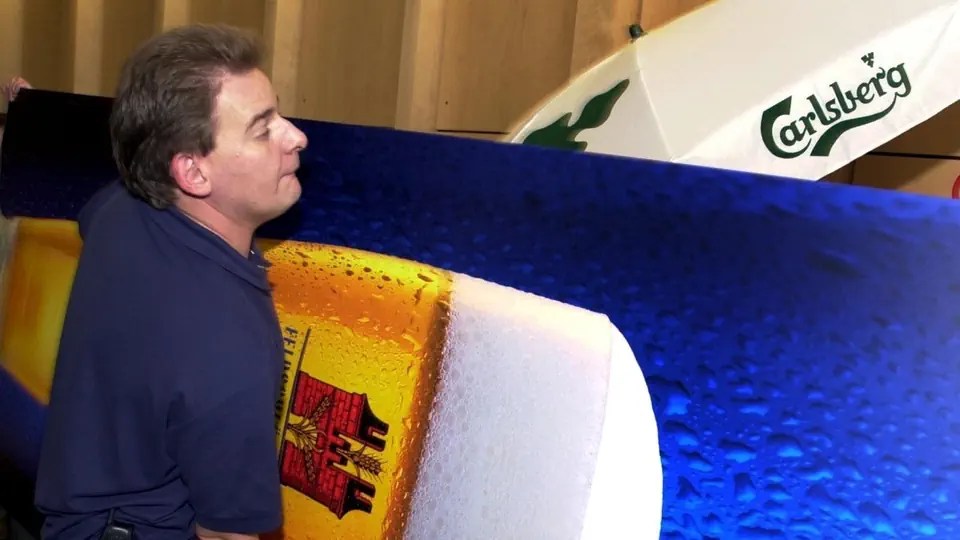
Carlsberg buys Feldschlösschen
Keystone/ Steffen Schmidt
Strahm recalls the impact on the hospitality sector: “Landlords and landladies had sleepless nights.” Previously, breweries had owned or financed many restaurants. But after 1995, large multinationals like Carlsberg and Heineken lost interest in establishments that also served competitors’ beer, leaving many owners in serious financial trouble.
Old breweries, new neighbourhoods
Many former brewing sites now stand in prime urban locations. Zurich’s former Hürlimann brewery has become a wellness and hotel complex, while Winterthur’s former Haldengut site has been redeveloped into a residential area with restaurants and small businesses.
Some independent regional brewers survived, such as Appenzeller Bier and Schützengarten. Because they were not publicly listed, they were able to fend off takeover bids more easily.
The rise of microbreweries
Since the end of the cartel, Switzerland’s beer scene has flourished. More than 1,500 registered breweries now operate across the country, producing a diverse and experimental range of beers, in sharp contrast to the rigid structures of the past.
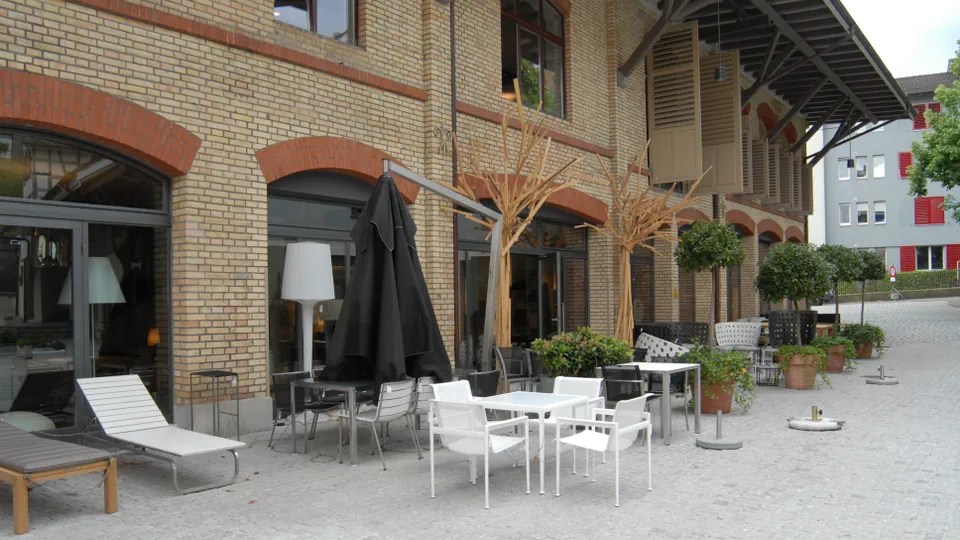
The Hürlimann site: where beer used to be brewed, there are now small businesses.
SRF/Sue Jaisli
The 2000 takeover of Feldschlösschen by Carlsberg marked both the end of an era and the start of a new chapter. Today, Swiss consumers benefit from variety and free competition – from small-batch craft beers to long-established regional brews.
Translated from German with DeepL/amva


