


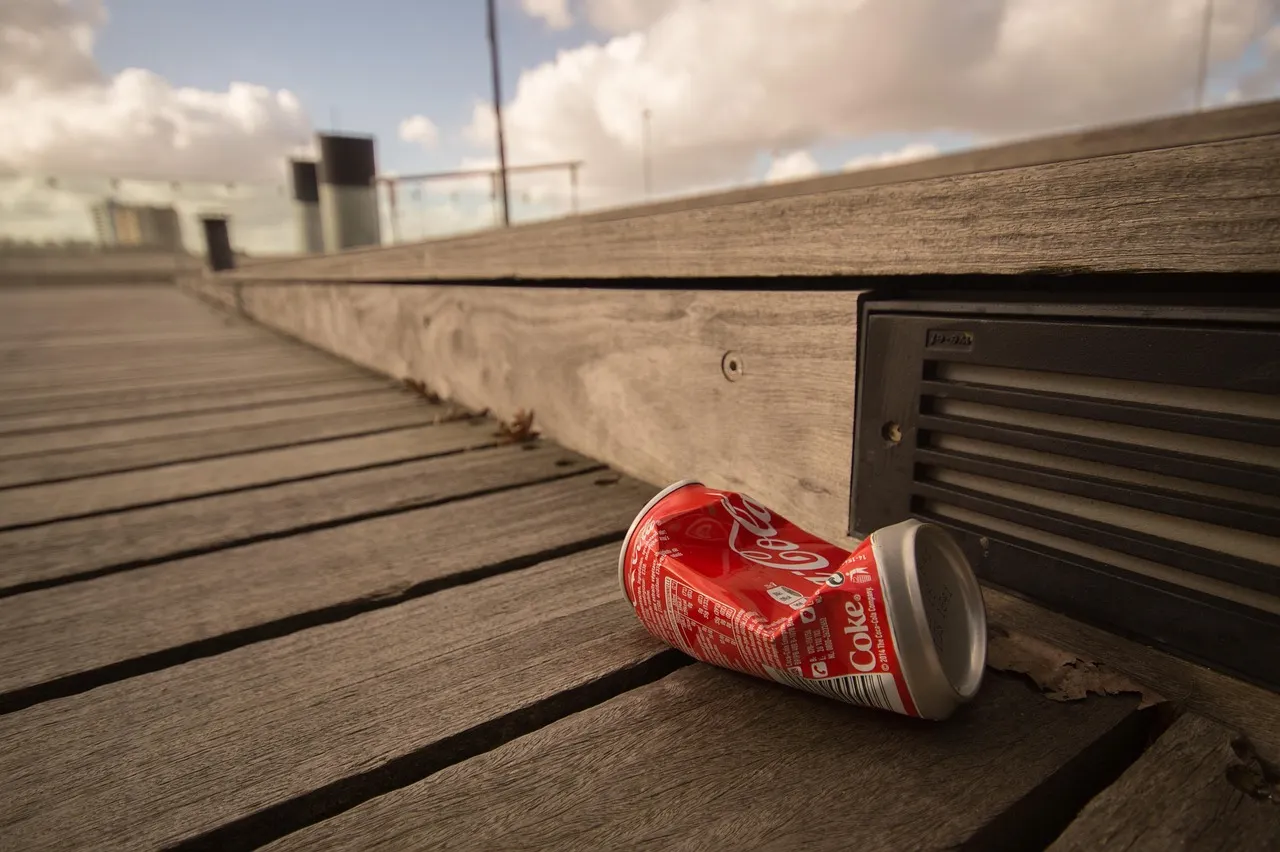
Fines for littering in public places already exist at the cantonal and communal levels. Now the Swiss government is eyeing a national penalty instead.
The Federal Council opened a consultation on June 25th on an ordinance aimed at introducing a national ‘littering fine’ to replace the ones already in effect regionally.
They would be slapped on anyone over the age of 16, caught discarding trash in public places.
What fines does the government want to introduce?
A fine of 100 francs is sought for throwing out a single piece of small waste such as a cigarette butt or a sandwich wrapper, for instance.
It would go up to 200 francs when two or more pieces of trash are discarded.
In the context of this ordinance, ‘small waste’ means trash not exceeding 35 litres.
A fine of up to 300 francs may be imposed for larger quantities — that is, waste weighing between 35 and 110 litres.
For the litter exceeding this volume, criminal proceedings could be initiated, accompanied by a fine of up to 20,000 francs.
Advertisement
Other measures as well
The Federal Council has also opened a consultation on two other ordinances.
One is intended to enable, as of 2026, the recovery of recyclable metals, such as zinc, from the fly ash of household waste incineration plants.
The other aims to establish a nationwide separate collection system for recyclable plastic packaging.
The consultation period on these proposals runs until October 16th.
Advertisement
And there is more
Additionally, the government has also decided to bring into force, from August 1st, other pieces of legislation seeking to strengthen the circular economy, — that is, prioritising reuse and recycling over disposal.
Another ordinance aims to remediate electricity pylons that pose a risk of electrocution to birds.
That’s because according to the Federal Council, overhead power lines can be fatal for large birds.
Furthermore, a short circuit caused by a bird can sometimes lead to serious power outages. The proposed measure therefore contributes to both the protection of birds and the security of the electricity supply.


