


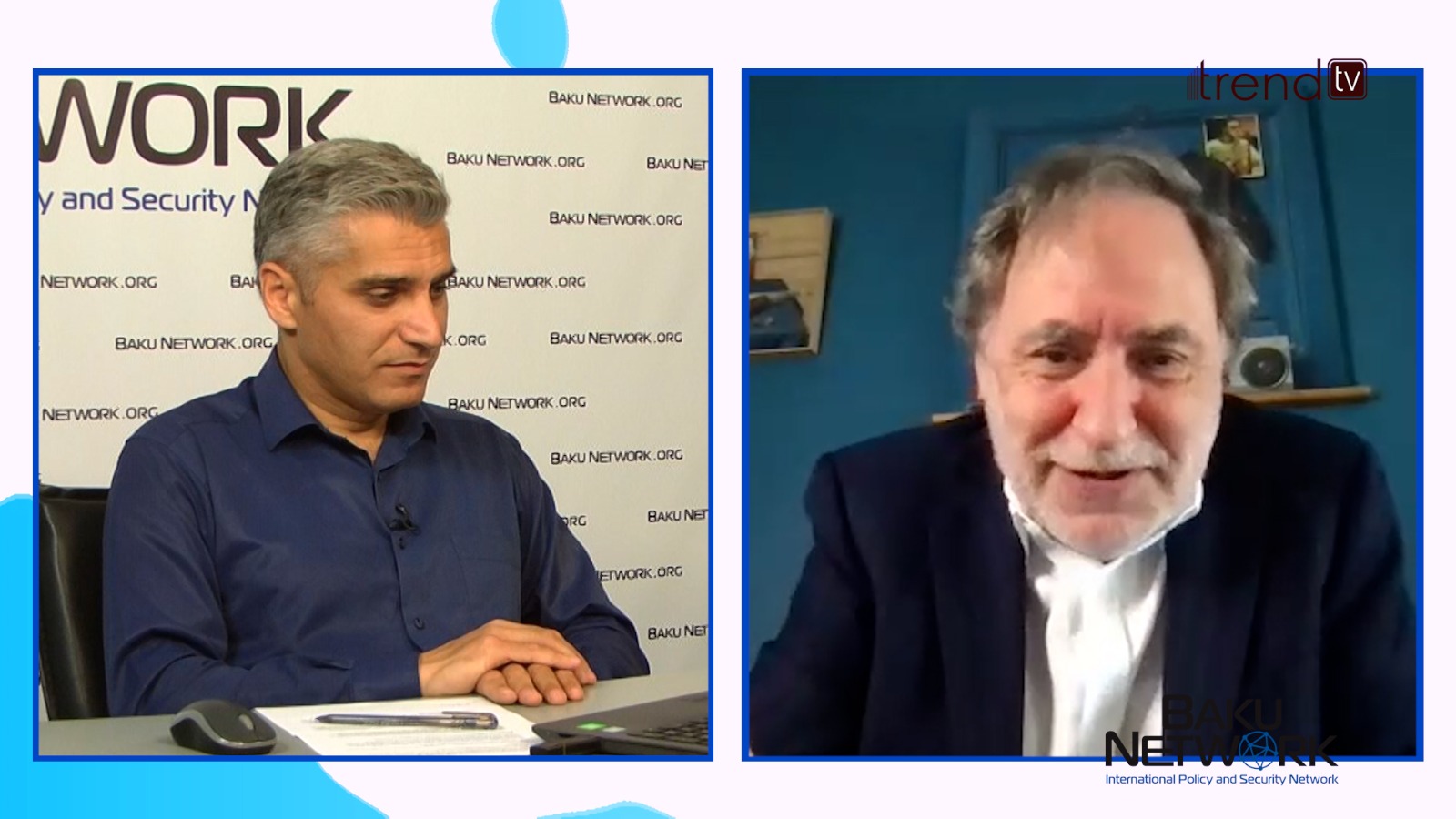
BAKU, Azerbaijan, June 4. In a recent episode
of Real World Order, a political show by the Baku Network think
tank, host Elnur Enveroglu sat down for a blunt and wide-ranging
talk with Jean-Michel Brun, Editor-in-Chief of La Gazette du
Caucase, and Muslims in France.
The conversation offered a rare inside look at what Brun sees as
France’s misguided foreign policy in the South Caucasus, which he
called “a series of shortsighted moves wrapped in political
showmanship and ideological confusion.”
Brun’s main point was pretty clear: France and Azerbaijan used
to have strong ties — in energy, the environment, transportation,
agriculture — but things fell apart after the Second Karabakh War.
He believes this breakdown didn’t have to happen and that it’s
actually hurting France more than helping it.
“France didn’t just turn on Azerbaijan out of nowhere,” Brun
said. “It’s a direct result of Macron letting short-term politics
at home and a tilt toward far-right ideas guide his foreign
policy.”
Unlike past leaders like Charles de Gaulle or Jacques Chirac,
Brun argues, Macron doesn’t seem to have a clear long-term vision.
Instead, he’s taken a more opportunistic route, aligning himself
with nationalist views that romanticize France’s colonial history
and cast modern conflicts as clashes between civilizations.
This shift, Brun pointed out, has led to France openly siding
with Armenia — a move he says is heavily influenced by the
country’s Armenian diaspora. Around 800,000 Armenians live in
France, mainly in cities like Paris, Marseille, and Lyon. “They’ve
invested a lot not just in lobbying, but in shaping media and
academic circles,” Brun said. “That’s changed the public story
around the Armenia-Azerbaijan conflict in a big way.”
He believes this influence has been used to frame the conflict
as a religious one, casting Armenia as a Christian stronghold under
threat — a narrative he called “dishonest and dangerous.”
Meanwhile, France’s Muslim population — about 13 million —
hasn’t had the same kind of impact. Brun says it’s not just about
numbers, but about how organized and present a community is in
politics and media. “The Armenian diaspora has made itself heard.
That matters.”
Brun said this political shift is already backfiring. French
companies are missing out on big opportunities in Azerbaijan’s
post-war rebuilding, especially in cities like Agdam, Shusha, and
Fuzuli. While firms from the UK and Italy are involved in
construction and infrastructure, French giants like Bouygues and
Vinci have been left out.
“Business leaders in France are frustrated,” Brun said. “There’s
money being poured into these projects, but France isn’t part of it
— and there’s no good reason for that.”
He also pointed to how France has handled recent tensions with
Azerbaijan. Two incidents involving French nationals — one accused
of spying, the other of vandalism — triggered a strong response
from Paris, which leaned heavily on human rights talk. But Brun
says the government ignored the provocative behavior of its own
politicians and pro-Armenian activists. “This isn’t thoughtful
diplomacy,” he said. “It’s just symbolic politics getting in the
way of real strategy.”
Still, Brun thinks Macron could change course if the
geopolitical winds shift. With France losing ground in Africa and
the Mediterranean, Macron might look to Azerbaijan to regain some
influence. “There’s growing awareness in Paris that Armenia isn’t a
strong partner,” Brun said. “Its economy is weak, and it doesn’t
carry much strategic weight. Azerbaijan, on the other hand, is
becoming a major energy player and a force for regional stability.
That’s the kind of partner France should be looking for.”
Brun also mentioned opportunities in areas like education,
farming, infrastructure, and culture. Even with all the political
noise, he said, French culture is still respected in Azerbaijan — a
soft-power asset France hasn’t really used. “There’s still a chance
to fix things,” he said. “But that chance won’t last forever.
France has to choose: keep playing political games at home or get
back to serious foreign policy.”
As France tries to rethink its role on the world stage amid
energy challenges and a more competitive global landscape, what it
does in the South Caucasus might end up being a big test. And the
message from Baku is clear: symbolism won’t get you far — real
partnerships will.


