

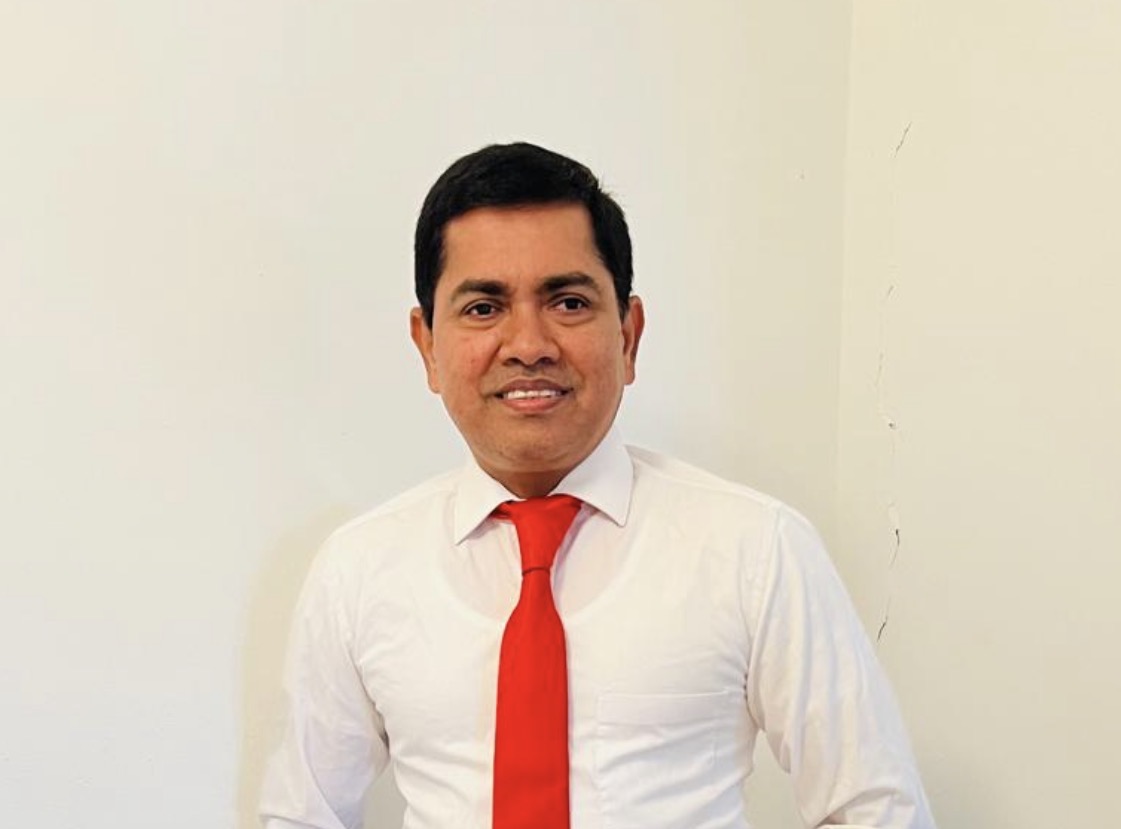
Dr. Mohamed Shareef Asees – PhD in Global Studies; MA in International Relations; BA in Political Science. Researcher and lecturer in International Relations, Geopolitics and Peacebuilding, based in Berlin
For decades after the Cold War, the United States was widely seen as the world’s leading power, the country that could set the rules, intervene in conflicts, and act as a global “security guarantor.” It was often described as the “world police,” shaping international order not only through military strength, but also through alliances, diplomacy, and global influence. But that image no longer feels as stable as it once did.
Today, in the midst of renewed crises in the Middle East, a more uncomfortable question is being asked in global politics: is American leadership still as effective and widely accepted as it once was, or is the world quietly shifting toward a different kind of order?
What we may be witnessing is not the decline of US power, but something more subtle and arguably more significant: a transformation in how that power operates, how it is perceived, and how far it can actually go in shaping global events.
A Changing Meaning of Global Leadership
To understand what is happening, it helps to remember what made US hegemony so strong in the first place. It was never just about military strength. It was also about trust, influence, and the belief shared by many countries that the United States could and should play a leading role in managing global crises. For a long time, that belief held.
The US had the strongest military, the largest economy, and a wide network of alliances stretching across Europe, Asia, and the Middle East. When crises erupted, Washington was often at the center of the response. Whether through diplomacy, sanctions, or military intervention, it shaped outcomes in ways few others could. But over time, that confidence has begun to erode not suddenly, but gradually.
The Middle East: A Difficult Reality Check
Nowhere is this shift more visible than in the Middle East. The region has long been central to US foreign policy. From Iraq and Afghanistan to the Gulf region and its close relationship with Israel, American involvement has been deep, sustained, and often controversial. The assumption behind much of this engagement was simple: that the US could influence events, manage conflicts, and help maintain stability.
But recent developments suggest a more complicated reality. Despite overwhelming military capability, the United States has struggled to turn its strategic goals into lasting political outcomes. Conflicts in the region continue to evolve, often in unexpected directions. New tensions emerge even as old ones remain unresolved. Instead of clear solutions, the region seems locked in cycles of escalation and instability.
Just as importantly, the Middle East today is no longer shaped by one dominant external power. Regional actors are far more independent than before. Countries are pursuing their own strategies, building new partnerships, and balancing relationships with multiple global powers rather than relying on a single ally. In other words, the region is no longer simply responding to US leadership, it is responding to a much more complex global environment.
Power without Full Control
One of the most striking features of this moment is the gap between power and control. The United States remains militarily unmatched. It can project force globally and maintain a strong presence across key regions. But military strength does not automatically translate into political control or long-term stability.
In fact, recent years have shown that even the most powerful interventions can produce limited or unintended outcomes. Military success on the ground does not always lead to strategic success in politics. This creates a paradox: the US remains extremely powerful, but its ability to shape outcomes in predictable ways is weaker than before.
It is not that American influence has disappeared. Rather, it has become more constrained, more contested, and more dependent on cooperation from others including actors who may not always share its goals.
Alliances Are No Longer Fixed
Another major shift is happening in global alignments. During the Cold War and even in the decades that followed, international politics was often understood in terms of clear alliances: countries were either aligned with the United States or with its rivals.
That world is fading. Today, many countries prefer flexibility over fixed alignment. Instead of choosing one side permanently, they engage with multiple powers at the same time the United States, China, Russia, and regional actors depending on their interests.
This creates a more fluid and unpredictable international system. In the Middle East, this is especially visible. Countries that were once seen as firmly within one strategic camp are now balancing relationships carefully, expanding economic ties with different powers while maintaining security partnerships elsewhere.
This is not necessarily “isolation” of the United States. It is something more subtle: diversification of global relationships.
The Role of Leadership and Perception
Global power is not only about capabilities it is also about perception. The way a country behaves on the international stage affects how reliable and predictable it is seen to be. And over the past decade, US foreign policy has sometimes appeared less consistent than in earlier periods.
The Trump administration, in particular, marked a shift in tone and style. The “America First” approach signaled a more transactional view of international relations, with greater skepticism toward multilateral institutions and long-standing agreements.
To some allies, this raised questions about reliability. To competitors, it introduced uncertainty into global diplomacy.
Even though US foreign policy continues to evolve across different administrations, the broader impression has been that American leadership is becoming less predictable than it once was. And in international politics, predictability is a form of power.
A Crisis of Consensus, Not Just Capability
It is important to be clear: the United States has not lost its power. It remains the world’s strongest military force, a leading economic actor, and a central player in global institutions. There is no simple replacement for its role in the international system.
But what is changing is something more intangible the level of consensus around its leadership. In parts of the world, especially in the Global South, there is growing debate about the effectiveness and fairness of global power structures. Questions are being raised about intervention, sovereignty, and the long-term outcomes of foreign involvement in conflict regions. The Middle East crisis has intensified these debates, making them more visible and more urgent.
So Where Is This All Heading?
We are not witnessing the end of American power. Instead, we are seeing the end of a particular historical moment the moment of unipolar dominance.
What is emerging is a more fragmented world, where power is distributed across multiple centers, and where influence depends less on command and more on negotiation.
The United States is still central to this system. But it is no longer alone at the centre. Its role is shifting from global “policeman” to a powerful but constrained actor operating in a more complex and less predictable world.
Final Thought
The Middle East crisis is not just another regional conflict. It is also a mirror reflecting deeper changes in global politics.
It shows us a world where military strength is no longer enough on its own, where alliances are more flexible than fixed, and where global leadership is increasingly questioned rather than accepted automatically.
The United States is still a defining force in world affairs. But the nature of that force and the world it operates in is changing. And that may be the most important shift of all.


