


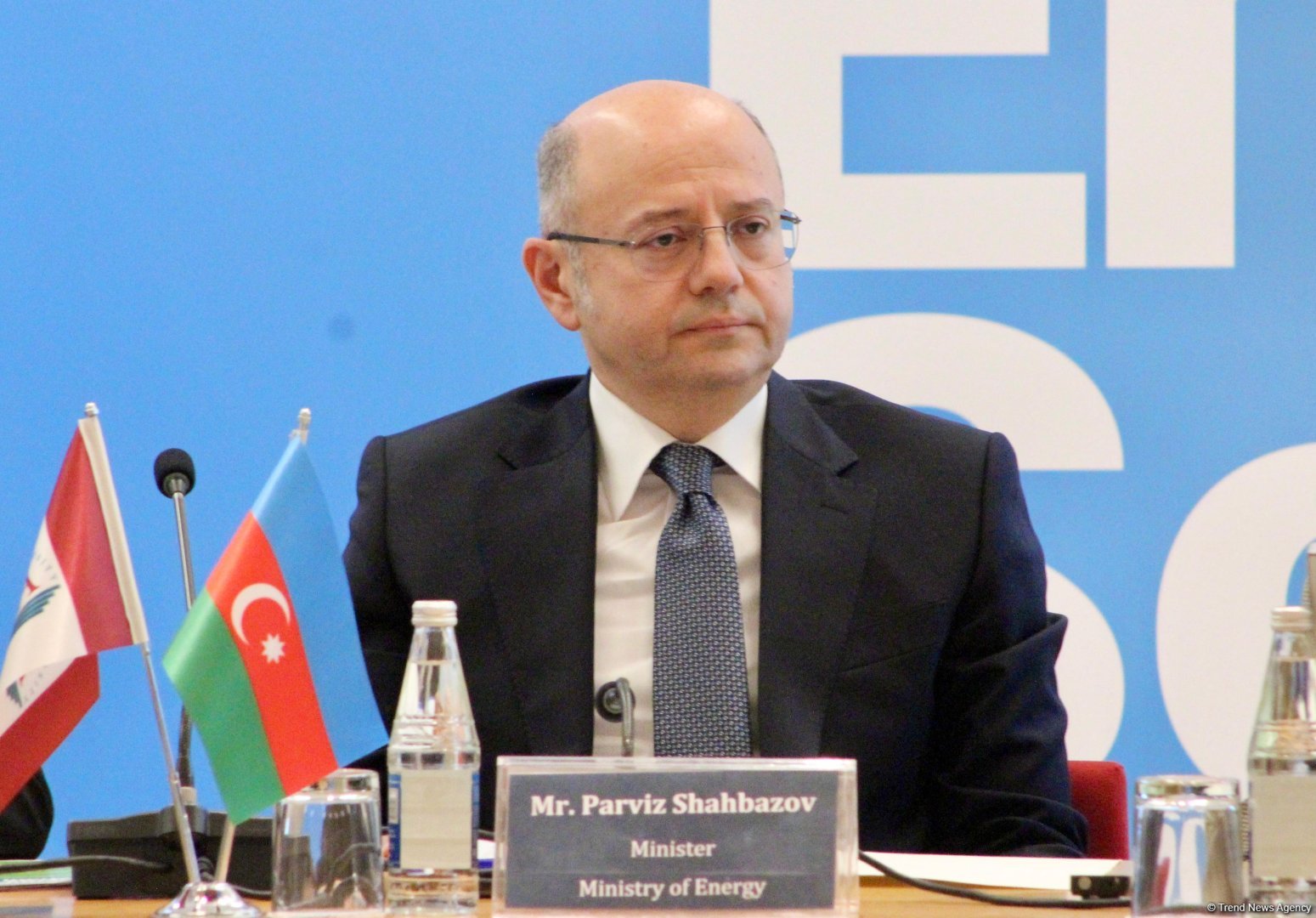
BAKU, Azerbaijan, November 15. The world has
reached a crucial juncture in climate and energy, and uniting at
this significant moment presents a historic opportunity to
influence the global energy future, Azerbaijani Energy Minister
Parviz Shahbazov said at a high-level roundtable on green energy,
hydrogen, global energy resources, and grids, Trend reports.
”Through today’s initiatives, we will demonstrate our
commitment to a rapid transition to renewable energy,” he
added.
The minister noted that thanks to the strong support given by
President of the Republic of Azerbaijan Ilham Aliyev to the energy
transition, the initiative of green energy zones in the nation’s
Karabakh, East Zangezur, and Nakhchivan, as well as visionary
policy aimed at creating a diversified energy infrastructure to
supply green energy from the Caspian Sea to Europe, our country is
implementing strategic projects standing at the forefront of
renewable energy in the region.
“These efforts are the driving force behind the COP29 energy
initiatives, aimed not only at building Azerbaijan’s clean energy
future but also at accelerating the development of green energy in
the region and globally and removing barriers. The three energy
initiatives consisting of five components put forward by Azerbaijan
provide concrete solutions to support the successful fulfillment of
COP28 commitments to triple renewable energy and double energy
efficiency.
One of them is the Green Energy Commitment, which promotes the
establishment of green energy corridors and zones. Green energy
corridors are an effective means of large-scale transfer of
renewable energy and high-potential energy sources located away
from consumption centers. Regional cooperation and establishment of
appropriate regulatory frameworks for the development of green
energy corridors, as well as ensuring sustainable financial
opportunities and increasing the production of HVDC cables, are the
main priorities.
Azerbaijan is currently implementing the Caspian-Black
Sea-Europe, Central Asia-Azerbaijan, and Azerbaijan-Turkey-Europe
projects. These corridors reflect Azerbaijan’s intention to take a
leading position not only in energy exports but also in global
sustainable development,” the Minister added.
According to Shahbazov, green energy zones are the bread and
butter of our journey toward hitting the bullseye of zero net
emissions.
“These zones, established in areas rich in renewable energy
sources and based exclusively on the use of clean energy, make a
significant contribution to attracting investments, ensuring
sustainable economic growth, and creating new jobs,” he noted.
It was also noted that the second initiative, the Global Energy
Conservation and Grid Pledge, aims to increase the installed
capacity of energy conservation systems sixfold to 1,500 gigawatts
by 2030. This collective goal also includes elements such as
encouraging investment in storage and the deployment of new
technologies. Another component of the initiative calls for
increased investment in power and transmission systems,
modernization, and expansion of existing infrastructure.
“Included in this context was a commitment to add or upgrade 25
million kilometers of grid around the world by 2030 and another 65
million kilometers by 2040. This initiative is of strategic
importance in terms of addressing the shortcomings of the existing
grid infrastructure in supporting variable renewables, integrating
larger green energy capacity into the grid, and balancing energy
supply and demand.
The third initiative is titled “COP29 Hydrogen Declaration.”
Hydrogen is a potent energy source for achieving a zero-emission
future. Its application will render the industrial, transportation,
and energy sectors more environmentally friendly and sustainable,
thereby realizing the complete potential of renewable energy. “The
Hydrogen Declaration” addresses hydrogen objectives and collective
commitments that endorse hydrogen’s significance in the energy
transition, along with initiatives to advance hydrogen standards
and certification.
Green hydrogen is an important element of Azerbaijan’s energy
export portfolio diversification and decarbonization policy, and
the unveiling of a hydrogen strategy under COP also shows its
determination in this direction. These initiatives will provide a
strong incentive for both state and non-state actors to achieve
climate goals. Here at COP29, we invite everyone to join these
commitments, to step up action on climate change, and to take steps
together for a brighter future.
At the same time, we believe it is important to assess the
progress of these initiatives at future COP meetings and reflect
them in the IEA and IRENA reports. The support of each of you
strengthens our collective strength. Let us raise global efforts to
combat climate change to a higher level and build a sustainable
future for our world, making COP29 a landmark event,” summarized
the minister.
The 29th session of the Conference of the Parties to the UN
Framework Convention on Climate Change (COP29), which will last
until November 22, opened at the Baku Olympic Stadium on November
11. The event is the largest organized by Azerbaijan to date, and
for the first time, it is held in the region of Azerbaijan.
The highest-level event, the World Leaders’ Summit on Climate
Action, took place at COP29 on November 12-13.
The main expectation from COP29 is to agree on a fair and ambitious
New Collective Quantitative Goal (NCQG) on climate finance.
In addition to being a top priority that sets the stage for
action, the creation of climate finance will also contribute to
meeting the 1.5°C commitment by bringing everyone together.
The UN Framework Convention on Climate Change is an agreement
signed at the Rio Earth Summit in June 1992 to prevent dangerous
human interference in the climate system. The acronym COP
(Conference of Parties) stands for “Conference of Parties” and is
the highest legislative body overseeing the implementation of the
Framework Convention on Climate Change.
A total of 198 countries are parties to the Convention. Unless
otherwise decided by the parties, COP is held annually. The first
COP event was held in March 1995 in Berlin, and its secretariat is
located in Bonn.
Stay up-to-date with more news on Trend News
Agency’s WhatsApp channel

