


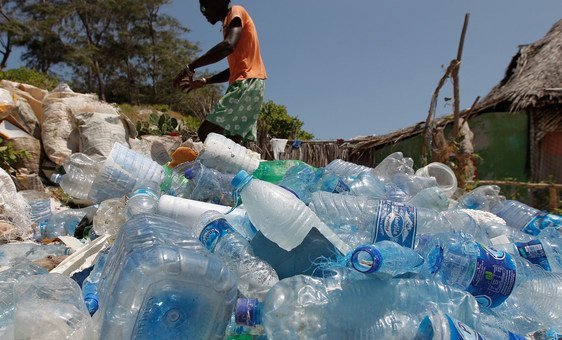
The urgency is clear: humanity produces over 460 million metric tonnes of plastic annually, with half designed for single use. “By 2050, there could be more plastic in the ocean than fish,” UN Secretary General António Guterres has cautioned, with pollution now found “everywhere – all around us and inside us – from our seas to our blood, to our brains”.
Speaking ahead of the final session of International Negotiating Committee on the accord, in Busan, South Korea, the experts emphasised that plastic-producing states and companies must take greater responsibility for addressing worldwide human rights impacts.
Transparency and prevention
The experts highlighted that the legally binding instrument must include explicit references to human rights and emphasised the importance of transparency, prevention and accountability principles.
“The current direction of the negotiations…risks shifting responsibility from producing States to developing States that lack the capacity or resources to confront global plastic scourge,” the experts warned.
They emphasised that every stage of the plastic cycle generates pollution threatening basic human rights – from production through disposal.
Transparency must underpin the entire process. “The public must have access to accurate and accessible information on the chemicals of concern used in plastic polymers and products, the type and amounts of pollutants emitted or released in each of the stages of the plastic lifecycle, and the volumes of plastics produced”, the Human Rights Council-appointed experts said.
The experts – who are not UN staff and receive no salary for their work – also stated the importance of prevention.
Prevention requires action on two fronts: controlling chemicals of concern in plastics and ensuring product design enables safe recycling. These measures are particularly crucial for developing countries lacking economies of scale and depending on imports. The experts noted this approach would “enable the transition to a chemically safe circular economy”.
Producers must pay
To support these efforts, the experts are calling for a mandatory global fund with producer contributions.
“Accountability means that plastic producers must make contributions to a global fund,” the experts emphasised.
This would operationalise the polluter-pays principle and support developing nations, particularly small island states, in implementing effective waste management systems and cleaning up existing pollution, including marine plastic gyres.
‘A just transition’
A human rights-based approach also demands access to remedies, especially for communities disproportionally impacted by plastic pollution. The experts have previously called for a just transition that protects vulnerable communities, including waste pickers who collect approximately 60 percent of recycled plastics globally.
“A just transition that leaves no one behind is critical to address the situation of many individuals and groups who derive an income from work on plastics,” the experts stressed.
Looking ahead
“The international community must come together to end plastic pollution,” the experts stated. Looking ahead, the experts call to confront the “negative externalities imposed by fossil fuels and petrochemical industries” while ensuring protection for vulnerable communities.
Their conclusion set a clear mandate: “A legitimate and just transition to ending plastic pollution necessitates placing human rights at the core of the legally binding instrument under negotiation”.


