


At least 1.4 million people largely in the capital Port-au-Prince, have been forced to flee their homes due to gang violence, creating what the UN’s Designated Expert on the situation of human rights in Haiti, William O’Neill, has called an “unprecedented level of internal displacement.”
Speaking to journalists at UN Headquarters in New York on Monday following a 10-day mission to the country, he said that the “on-going human rights crisis creates massive suffering for the Haitian people, especially the most vulnerable.”
At least 26 gangs control up to 90 per cent of Port-au-Prince and some of the surrounding areas. Around half of all gang members are children, under the age of 18.
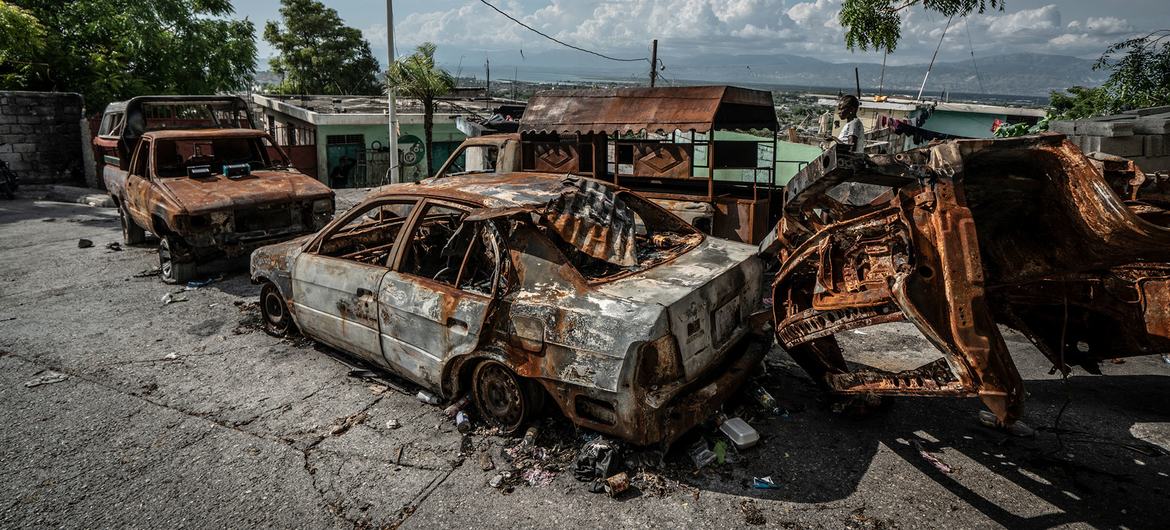
Burnt-out vehicles line a roadside in Port-au-Prince, after a reported firefight between gang members and the police. (file).
They violently extort communities, carry out rape and kidnap some for ransom, all while fighting the beleaguered Haitian security forces for territorial dominance.
Shifting frontlines
Thousands of people “remain trapped in areas controlled by gangs or along shifting frontlines,” said Mr. O’Neill, facing what he described as “invisible borders.”
For young women and girls those borders are even greater: “They face discrimination for being girls, for living in gang-controlled neighborhoods, and for being poor. ‘I just want to live well and safely,’ one girl told me, ‘because this is my country,’” he said.
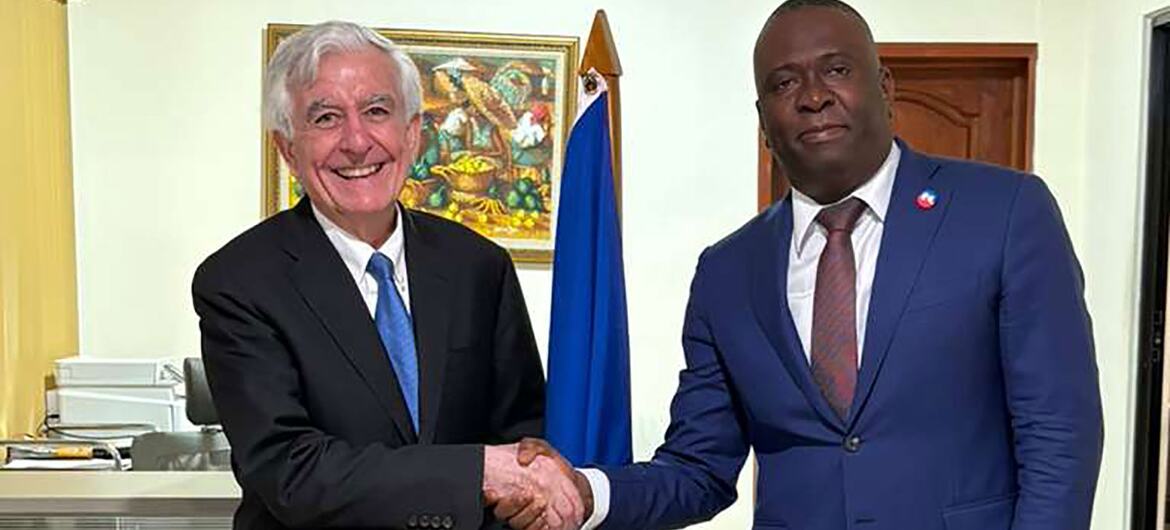
The UN’s Designated Expert on the situation of human rights in Haiti, William O’Neill (left) meets Haiti’s Minister of Justice Patrick Pelissier.
Haiti is faced with a deepening humanitarian crisis exacerbated by the ongoing violence and frequent extreme weather events including floods and droughts as well as earthquakes.
The country also faces political uncertainty having not had an elected president since Jovenel Moïse was assassinated in 2021. It is hoped that elections will be held later this year.
‘Difficult yet promising moment’
As Designated Expert, Mr. O’Neil’s role is to monitor human rights developments in Haiti and advise the Government of Haiti, national human rights institutions and civil society organizations, including women’s rights groups, to assist in their efforts to ensure respect for – and the promotion and protection of – human rights.
He told UN correspondents that he remains “deeply concerned about corruption, impunity and the weakness of accountability mechanisms,” and added that the country is facing “a difficult yet promising moment.
“If we can help Haiti address insecurity, fight corruption and impunity, and protect human rights, then everyone will prosper.”

