


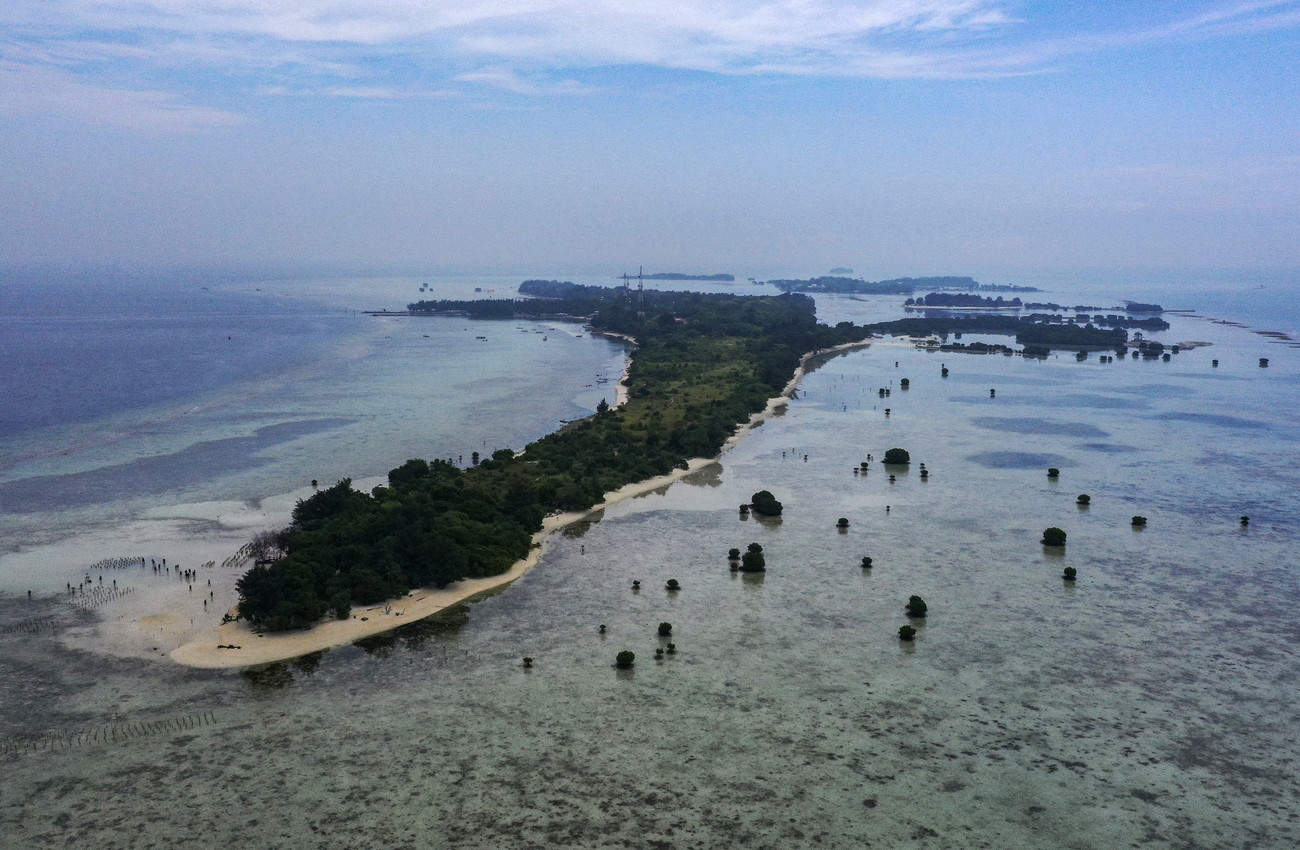
Pulau Pari in Indonesia.
Keystone / Mast Irham
A Swiss court has decided to admit a climate change legal complaint against Swiss cement maker Holcim which alleges the company is doing too little to cut carbon emissions. According to the NGO Swiss Church Aid (EPER), the case marks the first time a court has admitted climate litigation brought against a large corporation in Switzerland. Holcim plans to appeal.
What is the lawsuit all about?
Four residents of the small low-lying Indonesian island of Pari, which has been repeatedly flooded as warmer temperatures push up sea levels, are suing Holcim, one of the world’s largest cement manufacturers.
They submitted a legal complaint to the Zug Cantonal Court in January 2023, as Holcim has its headquarters in the Swiss city of Zug. The plaintiffs hold the cement company partly responsible for climate change, which is causing sea levels to rise, making life increasingly dangerous for the island of Pari. They are seeking compensation from Holcim and demand that the company reduce its emissions more rapidly than currently planned and bear a portion of the costs that global warming is causing on Pari.
More


More
Indonesians vs Swiss company Holcim: ‘We want to save our island’
What is the latest verdict by the Swiss court?
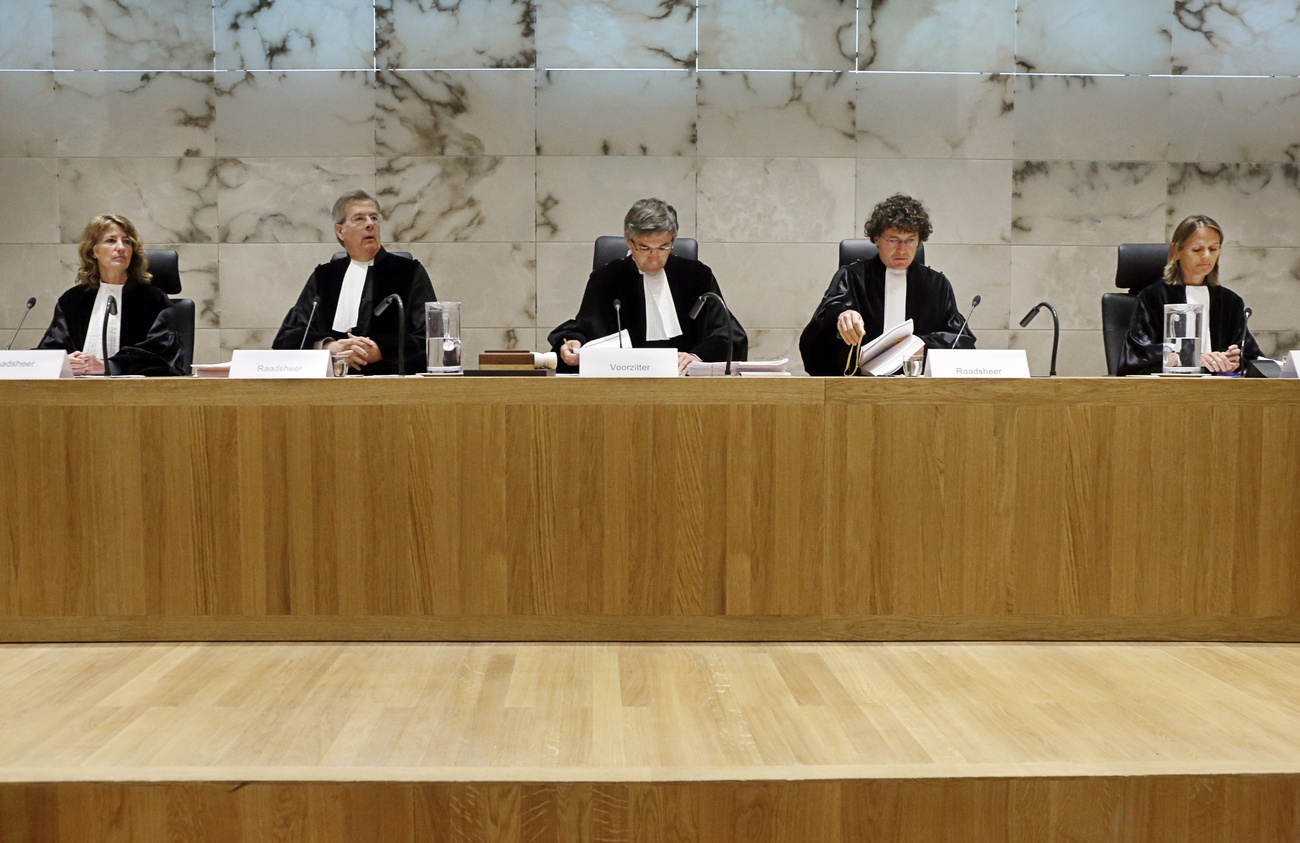
The Zug Cantonal Court has ruled that the lawsuit filed by the four residents is admissible, the non-profit Swiss Church Aid (HEKS/EPER), which is backing the Pari case, said on December 22. This is a first in Switzerland. The court has not yet commented on whether Holcim is responsible for the consequences of climate change in Pari. In a statement, Holcim acknowledged the court had admitted the case, and said it intends to appeal.
Holcim is recognised as one of the “Carbon Majors,” meaning it’s one of the world’s largest industrial emitters of CO₂, primarily from cement production. Since 1950, the company has emitted roughly twice as much CO₂ as Switzerland. Holcim says it is fully committed to reaching net zero by 2050 and is following a rigorous, science-based approach to achieve that goal. The company also says it has reduced direct CO₂ emissions from its operations by more than 50% since 2015.
Cement production accounts for about 7% of global CO₂ emissions, the Global Cement and Concrete Association says.
What are Holcim’s main legal arguments?
From Holcim’s perspective, courts are not the appropriate forum to address climate change. It insists that politicians must determine who is allowed to emit how much CO₂. Holcim already raised these arguments during the main hearing in September. The judges explicitly address this in their ruling, underlining that court decisions do not replace democratically legitimized climate policy, but rather complement it. The case does not concern Swiss climate policy, but rather the specific demands of residents of a small island.
More
More
Green promises: the two faces of the Swiss cement giant Holcim
What are the next steps?
The next legal body to consider the case is the Zug Cantonal Court. However, the parties can appeal this court’s ruling first to the Federal Court in Lausanne and later to the European Court of Human Rights (ECHR) in Strasbourg. Only after the case has been legally admitted could the question of whether Holcim must pay and tighten up its CO₂ measures be clarified. The case will therefore keep the courts – and the public – busy for years to come.
More

More
Four Indonesian islanders take on Swiss cement giant Holcim
What are the potential consequences of this case?
Should the lawsuit continue, the pressure on all major climate polluters would increase and they would have to expect more lawsuits in future. Polluting corporations would basically have two options: either they comply with plaintiffs’ demands and reduce their emissions – in other words, they restructure their business – or they try to exert pressure on politicians and possibly also directly on the courts to prevent further such lawsuits from being admitted.
What is the international impact of the Swiss Holcim case?
While the Zug Cantonal Court’s latest ruling is a first of its kind in Switzerland, it is part of a global trend. Nearly 3,000 climate lawsuits of various kinds are pending in approximately 60 countries worldwide. Last summer, the International Court of Justice in The Hague declared climate protection a human right. And in the spring, a German court admitted a climate lawsuit filed by a Peruvian farmer against the energy company RWE. The Zug ruling is therefore expected to attract considerable attention worldwide.
More
More
‘We cannot rely only on judges to drive the ecological transition’
Translated from German by AI/sb


