


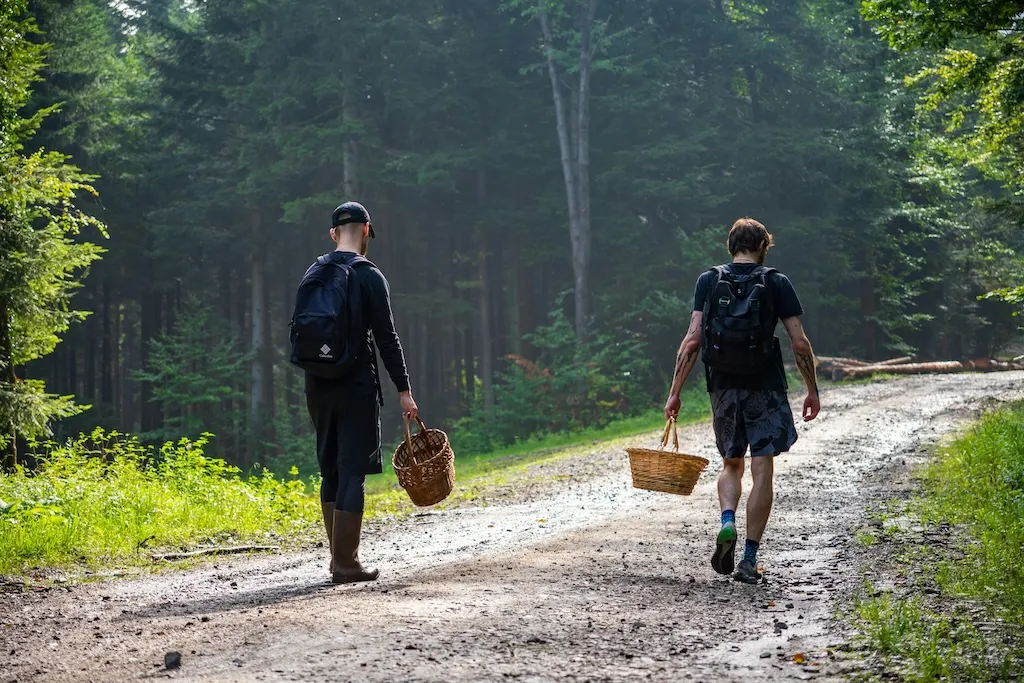
Autumn is on its way and that means harvest time for many fruits and vegetables in Spain. But, it’s also one of the best times of year for foraging, including for wild mushrooms, chestnuts and wild berries.
Foraging is particularly popular in northern Spain, in regions such as Catalonia, Galicia, Cantabria and the Basque Country, as well as other areas around the Pyrenees in Navarre and Aragón. But, there are certain products that can be found across the country.
If you do decide to go foraging in Spain, there are certain thing you need to keep in mind and local rules you’ll need to follow.
Not everything is available for the taking and you need to know how to properly distinguish between public and private land.
Before you begin, it’s imperative that you know what you’re doing. Lots of wild plants, berries and mushrooms can be poisonous, so you need to study local plant guides, download apps or go with an expert, so you know what is safe.
Of course if you’re just foraging for things that you know well such as blackberries and chestnuts, this may not be necessary.
READ ALSO: 14 unusual foods you won’t believe are eaten in Spain
What can I legally forage for?
Items such as wild blackberries, pinecones from the ground, chestnuts and hazelnuts, for example are fair game in most regions, as long as they’re on public property.
Foraging for anything on private land is of course not allowed and you need to be sure that you’re not in an orchard or on farmland, even if it looks like you’re just on public property in the countryside.
Advertisement
Picking small bunch of wild flowers is permitted too, as long as you don’t take too many or pick them all the time.
Mushrooms are one of the most popular foods to forage in autumn, particularly in Catalonia. These too are game, but it’s important to remember that you cannot collect more than five kilos of them. Each city council can also set certain conditions for collecting them, so it’s a good idea to find out the rules in your local area first.
Certain fruit such as wild apples, pears, plums, figs and even carob is fine to forage too, as long as they’re not on private property.
Some wild herbs and edible wild plants grow in abundance too including rosemary, dandelions (whose leaves can be eaten in salads), nettles (used in soups and teas) and wild asparagus.
Edible flowers can be collected too. The most commonly used petals are those of the marigold or borage flowers.
READ ALSO: Taste your way around Oviedo: Spain’s Capital of Gastronomy 2024
Advertisement
What is prohibited?
There are some protected aromatic herb species you find in the mountains or within natural or national parks. These include chamomile, thyme and oregano, so check with the local authorities if these can be picked or not.
It is also forbidden to take certain items to decorate your house or gardens, including moss, yew and fir trees and mistletoe in winter, often used for Christmas decorations.
You may be fined if you’re found to be collecting any of these.
What to be aware of
Besides knowing if the plant is poisonous or not, you’ll want to make sure the produce you forage isn’t contaminated. Make sure it’s away from busy roads, land where fertilisers and pesticides are used.
If you see any plants right next to fields which are being sprayed for example, these are no-go as they may be contaminated and not safe to eat.
You also shouldn’t be collecting species that are rare or protected.


