


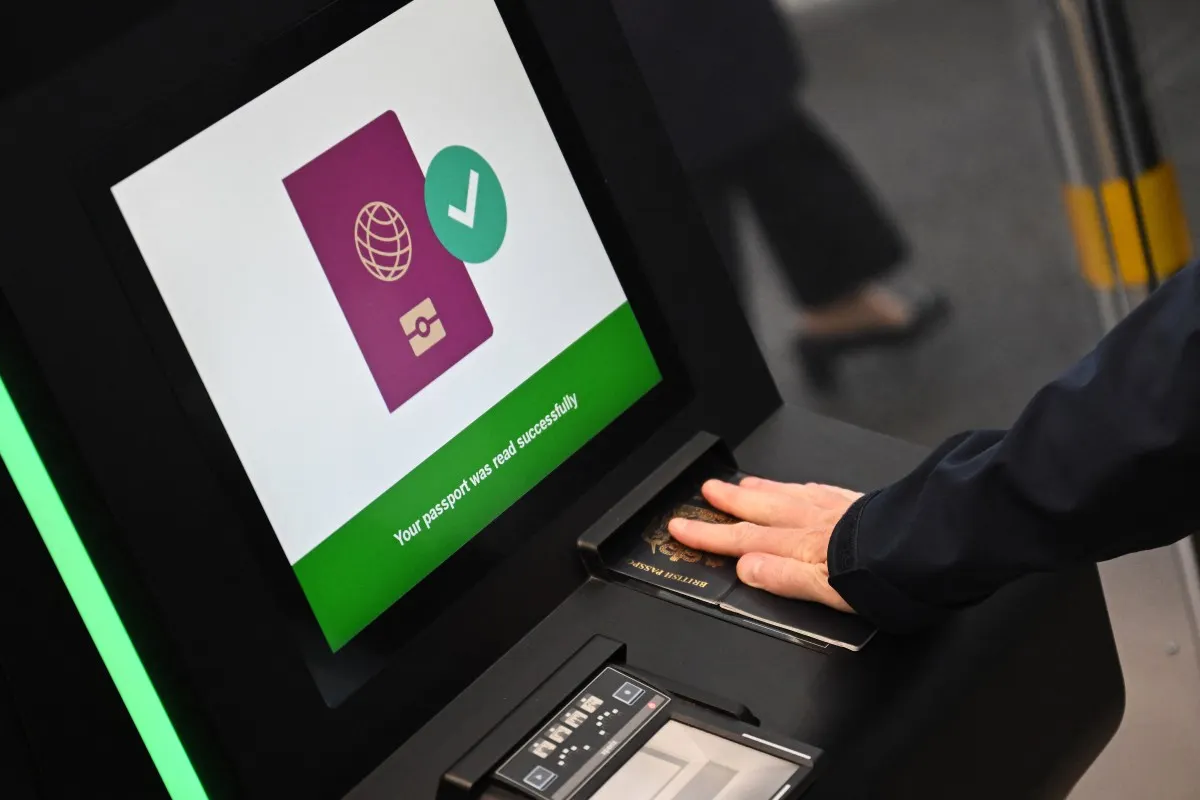
One of the stated aims of the EU’s new EES system of biometric passport checks is to catch people who ‘over-stay’ the 90-day limit, and 4,000 of those have been caught in the first months of its implementation, according to an EU official.
Since the new EU digital border system, the EU Entry/Exit System (EES), was launched on October 12th 2024, some 17 million travellers and 30 million border crossings have been registered, a European Commission top official said on Monday.
Speaking at the European Parliament home affairs committee, Henrik Nielsen, Director for Schengen, borders and visa at the Commission, said that during this period Schengen countries also recorded some 16,000 refusals of entry.
Of these, “a bit more than 4,000” were due to overstays, referring to people breaching the rule allowing visitors to remain in the Schengen area for 90 days in any 180-day period.
READ ALSO: CALCULATOR: How to work out your 90-day allowance✎
Other refusals were related to identity fraud, people trying to enter or exit numerous times using different passports, and use of false documents. A victim of trafficking was also identified by the system, the official added.
Advertisement
The parliament committee was assessing the initial EES implementation.
The EES has been gradually introduced since October 12th, 2025 and is expected to reach full operation from the 10th of April.
Currently, member states have to register at least 35 per cent of all border crossings. By March 10th, Nielsen said, countries will have to register at least 50 per cent and reach 100 per cent by April.
In April the stamping of passports will also end and an online tool will become available for travellers to check how many days of the 90/180 allowance they have used.
Teething troubles
Three countries, not named during the meeting, are currently not meeting the 35 per cent target because of “technical issues at national level,” Nielsen added.
Other problems were related to the “registration of the [visitors] biometrics” because of “equipment installed at border crossing points in the member states… not always up to standard or functioning properly”.
A third issue the Commission is “keeping an eye on” are long waiting times in some locations, especially during peak travel periods. Nielsen said part of the answer could be increasing the number of self-service kiosks and automated gates, a national investment which “remains eligible under EU funds”.
Earlier in February, airlines and airport organisations called for a review of EES implementation timeline ahead of summer, when tourism traffic will peak. But Nielsen said at this stage the Commission has “no plans to propose any changes or extensions of the flexibility” allowed to member states.
After April, Schengen countries have a transition period of three months during which they can decide not to take passengers’ biometrics to ease traffic, he said.
“Under some circumstances, these exceptions… can also be extended to September, so we feel that… with those possible exceptions, member states should be able to handle also the travel peaks that may occur over the summer,” he added.
The EES is used at external borders in Europe’s Schengen open-borders zone, which is made by EU countries (except for Cyprus and Ireland), as well as Iceland, Liechtenstein, Norway and Switzerland. It does not, therefore, affect travel within the Bloc, but only external Schengen borders such as trips between France and the UK, or the US and Germany.
Advertisement
Those travelling on EU passports are not affected by the change, but the EES requires third country nationals entering to register personal data and provide biometric information at the first border crossing. The data is held in digital form in an EU-wide database tracking each time visitors enter and exit the Schengen territory.
Non EU/Schengen citizens who live in an EU or Schengen zone country do not have to register, but instead show their passport and residency permit.
Tillmann Keber, Executive Director of the EU Agency in charge of the IT system (eu-LISA), said at the meeting that “overall, the entry into operation [of the EES] was very smooth and successful at central level” and “the system is now in a normal, technically speaking, operational mode and fully stabilised”.
90-day rule
Although EES also has security functions, part of the reason for its introduction is to better track the ’90-day rule’ – which allows non-EU citizens from certain countries (including the UK, USA, Canada, Australia and New Zealand) to spend up to 90 days in every 180 in the EU without requiring a visa.
Advertisement
Previously the 90 days were tracked with messy and inconsistent passport stamping, but the EES automatically calculates the length of stay based on entry and exit dates, so over-stayers are instantly flagged the next time they try to cross an EU external border
Penalties for over-staying including a fine and being banned from entering the EU.
READ ALSO: What happens if you overstay your 90-day limit in France?✎
In early February, drivers from the Western Balkans blocked Schengen border crossings complaining that a stricter enforcement of the 90/180 rule would make regular work in the EU impossible.
UK transport and logistics organisations also urged the Commission to suspend penalties linked to the 90/180 days, warning that this could leave operators short of drivers and disrupt supply chains.
Nielsen said this is “not an easy issue… because so far… member states are very strict on saying that they don’t want to change the basic rule of the 90 per 180 days”.


