


The association of European airports called on Thursday for an urgent review of the new EU border system, amid “mounting operational issues” that could affect the holiday season.
In a letter to the European Commission, Airport Council International, ACI Europe, said if problems are not resolved by January, “additional flexibility” will be needed in the roll-out of the system.
The EU Entry/Exit System (EES) is implemented in EU countries (except for Cyprus and Ireland), as well as Iceland, Liechtenstein, Norway and Switzerland.
Introduced on October 12th after years of delay, the EES requires EU travellers entering Europe’s Schengen open-borders zone to register personal data and provide biometric information at the first border crossing. Self-service kiosks are deployed at airports for that purpose, with information also checked by border guards.
The data will be held in digital form in an EU-wide database. This will gradually replace the manual stamping of passports and should make it easier to identify overstayers or flag security issues.
READ MORE: What will EES border checks mean for non-EU residents in Europe?
But issues with the IT infrastructure led to many delays in the launch of the system. After several postponements, it was decided to introduce the EES gradually over six months, with not all border crossing points going live at the same time, or not collecting full information, in a bid to address emerging issues at specific locations. Since the launch, however, major queues were reported at several airports.
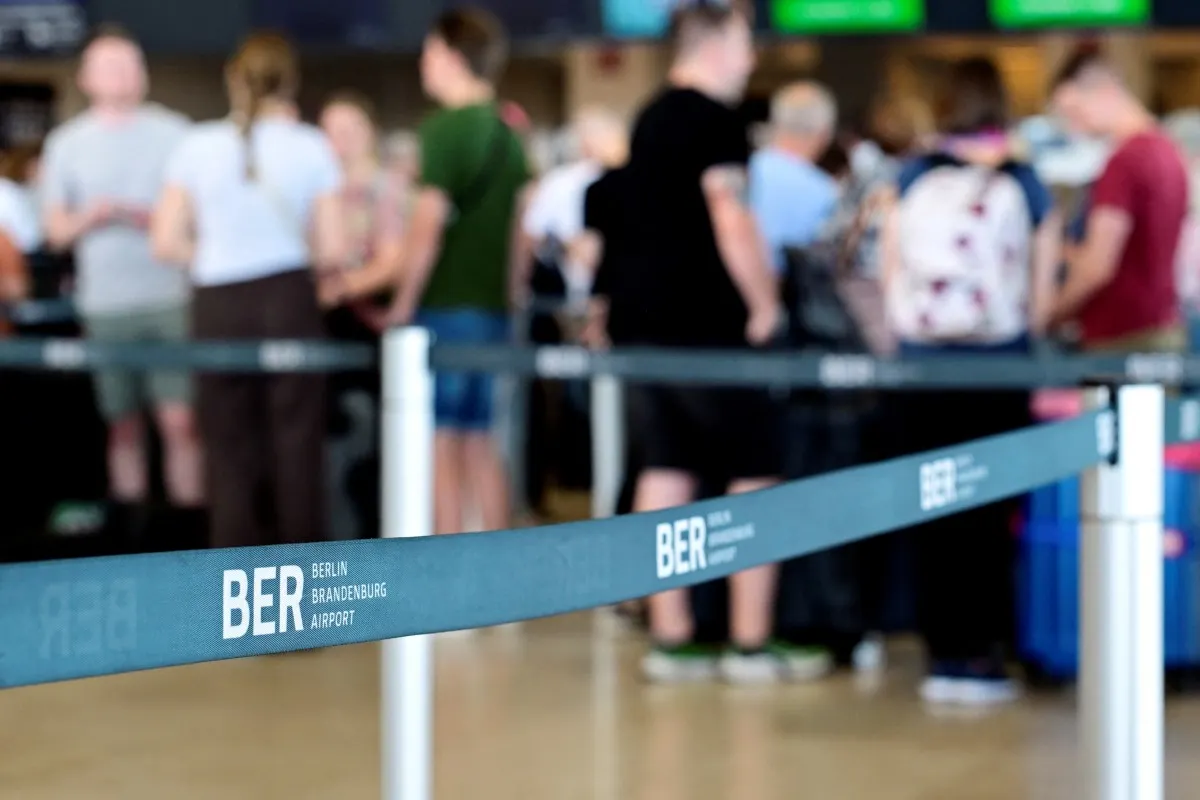
The association of European airports said in a statement on Thursday: “The progressive scaling‑up of the registration and capture of biometric data from third country nationals entering the Schengen area has resulted in border control processing times at airports increasing by up to 70 per cent, with waiting times of up to 3 hours at peak traffic periods”.
“This is severely impacting the passenger experience, with airports in France, Germany, Greece, Iceland, Italy, Portugal and Spain especially impacted,” the statement added.
ACI Europe said the current situation “reflects the combination of several operational issues”. These include regular outages of the system, configuration problems and partial deployment or unavailability of self‑service kiosks, unavailability of Automated Border Control (ABC) gates for EES processing at many airports, the lack of an “effective pre‑registration app” and “insufficient deployment of border guards”.
Advertisement
The letter was addressed also to the EU agency which operates large-scale IT systems in the area of immigration, eu‑LISA, the European border agency Frontex, and Schengen countries.
ACI EUROPE Director General Olivier Jankovec said: “Significant discomfort is already being inflicted upon travellers, and airport operations impacted with the current threshold for registering third country nationals set at only 10 per cent.
“Unless all the operational issues we are raising today are fully resolved within the coming weeks, increasing this registration threshold to 35 per cent as of 9 January — as required by the EES implementation calendar — will inevitably result in much more severe congestion and systemic disruption for airports and airlines. This will possibly involve serious safety hazards.”
Advertisement
He added: “We fully understand and support the importance of the EES and remain fully committed to its implementation.
“But the EES cannot be about mayhem for travellers and chaos at our airports. If the current operational issues cannot be addressed and the system stabilised by early January, we will need swift action from the European Commission and Schengen member states to allow additional flexibility in its roll‑out.”
Have you been caught up in delays at Europe’s airports because of EES? Please share your experiences with other readers in the comments section below.


