


Iran has enacted a decision to suspend its cooperation with the International Atomic Energy Agency (IAEA), alarming European powers who called the move “disastrous.”
Iranian President Masud Pezeshkian on July 2 enacted a law passed last week — after Israeli and US air strikes over 12 days hit its most-important nuclear facilities — to stop cooperating with the UN nuclear watchdog until Tehran receives guarantees that its nuclear sites and scientists are safe and that its right to enrich uranium domestically is assured.
Suspending cooperation with the IAEA means Iran will halt inspections, reporting, and oversight activities under the Treaty on the Non-Proliferation of Nuclear Weapons (NPT).
German Foreign Ministry spokesman Martin Giese said the decision sends a “disastrous signal,” insisting that cooperation with the watchdog is “crucial” for “diplomacy to succeed.”
A day before the implementation of the law, French President Emmanuel Macron urged Russian leader Vladimir Putin to persuade Iran to resume cooperation with the IAEA, which the Kremlin agreed to, according to RFE/RL sources.
Putin also expressed support for a diplomatic resolution, potentially including a zero-enrichment outcome in Iran — a non-starter for Tehran.
Macron warned that without a solid deal between Tehran and Washington on Iran’s nuclear program, European powers would begin the process of re-imposing UN sanctions against the Islamic republic.
US State Department spokeswoman Tammy Bruce called Iran’s suspension of cooperation with the UN nuclear watchdog “unacceptable.” Bruce noted that the decision comes at a time when Iran “has a window of opportunity to reverse course and choose a path of peace and prosperity.”
The United States and Iran had engaged in five rounds of indirect negotiations over Tehran’s nuclear program before the talks broke down, prompting Israel to launch airstrikes on Iranian nuclear facilities and military targets on June 13.
The United States entered the conflict on June 22, joining Israel by striking three major Iranian nuclear sites, including the heavily fortified underground facility at Fordow.
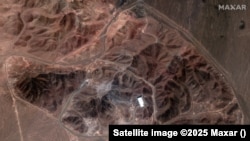
New Satellite Images Show Activity At Iran’s Fordow Nuclear Site 1 Week After US Bombings
New Maxar satellite images, taken on June 29, show cranes and people working at the Fordow enrichment complex following US and Israeli air strikes. Vehicles can also seen below a ridge and are parked along a path that was built to access the site.
Eric Brewer of the Washington-based Nuclear Threat Initiative, said “a new and dangerous phase” had begun with Iran’s decision to suspend cooperation with the IAEA.
“The task of understanding what’s happening at Iran’s nuclear sites, new and old, will fall entirely on intelligence organizations,” Brewer, a former US intelligence analyst, wrote on X.
In an interview with CBS News aired on July 1, Iranian Foreign Minister Abbas Araqchi indicated that Tehran remains open to talks with the Washington.
“I don’t believe negotiations will restart as quickly as that,” Araqchi said, responding to Trump’s suggestion that talks could begin as soon as this week. Still, he emphasized, “the doors of diplomacy will never be completely closed.”
But Trump this week appeared to change his stance on talks with the Islamic republic, writing on his Truth Social platform that he is “not offering Iran anything…nor am I even talking to them since we totally obliterated their nuclear facilities.”
The full impact of the 12-day conflict with Israel on Iran’s nuclear program is still uncertain. While Iran claims its nuclear facilities were heavily damaged, it has pledged to press on with its program, insisting it remains peaceful.
IAEA chief Rafael Grossi stated last week that Iran could restart uranium enrichment “in a matter of months.”
Tehran has repeatedly accused the UN nuclear watchdog of bias, alleging it collaborates with Western nations and Israel against Iran.
For years, Grossi has criticized Iran for what he sees as a persistent lack of cooperation in the agency’s efforts to investigate previously undisclosed nuclear sites. This ultimately resulted in the IAEA Board of Governors last month issuing a rare non-compliance resolution against Iran, which Tehran claims facilitated Israel’s attacks.


