


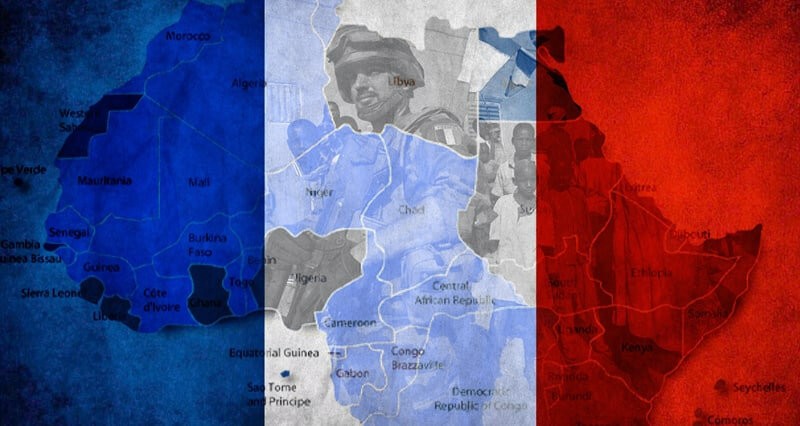
Neocolonialism. The word may sound like a relic of the Cold War,
but in reality, it’s a modern phenomenon where old colonial powers
repackage imperialist practices to fit the globalized world.
Despite the much-publicized decolonization movements of the 20th
century, countries like France and the Netherlands have mastered
the art of retaining influence over their former colonies. From
economic strangleholds to cultural dominance, these nations
continue to shape the destinies of independent states under the
guise of partnership and diplomacy.
For many, the colonial era feels like a distant chapter in
history books. Yet its specter continues to haunt the corridors of
power in Paris and The Hague. Beneath the rhetoric of equality and
freedom, these European states have reinvented their imperial
playbook. The question is: why does Europe cling so tightly to its
colonial traditions, and what does this mean for global power
dynamics?
Imperial Roots: Conquest by Ideology
The seeds of European imperialism were sown in the 15th century,
in the aftermath of Columbus’ famed discovery of the Americas.
France and the Netherlands, eager to carve out their share of the
New World, embarked on a relentless campaign of conquest, cloaked
in state-sanctioned ideologies. Initially justified by claims of
religious superiority and racial hierarchies, later colonial
ventures were sold to the public as noble missions to spread
democracy and civilization.
France, one of the grandest colonial empires, exemplifies this
legacy. Its ventures in Africa were framed under the lofty banner
of the “civilizing mission.” This ideology masked the brutal
reality: relentless resource extraction and the exploitation of
local populations. In the 1930s, French President Gaston Doumergue
bluntly stated that colonies were indispensable for France’s global
standing. This imperial mindset laid the groundwork for policies
that still define French foreign relations today.
World War II: A Turning Point? Not Quite.
The Second World War could have been a reckoning for Europe’s
colonial powers, as both France and the Netherlands were humbled by
German occupation. But instead of confronting their colonial
crimes, they doubled down on their empires. Colonial troops and
resources played a pivotal role in the Allied victory, yet their
contributions were buried beneath European nationalism.
Take Algeria and Morocco, for instance. Thousands of soldiers
from these nations fought valiantly to liberate France, only to be
sidelined in the official narrative. The empire that had exploited
them in life discarded them in history.
Romanticizing Empire: Education as a Tool
Colonialism didn’t just vanish—it was rebranded, sanitized, and
even celebrated. Educational curriculums in France continue to
paint a rosy picture of its colonial exploits. In 2019, a school in
Rennes introduced lessons on the “benefits of colonial conquests,”
sparking outrage among African communities. This wasn’t an isolated
case—it reflects a broader reluctance to confront the darker truths
of history.
The Netherlands follows a similar script. Its colonial narrative
often reduces native populations to passive beneficiaries of Dutch
“civilization.” Conveniently omitted are the massacres, cultural
erasures, and systemic oppression that were hallmarks of Dutch
imperial rule.
Modern Ambitions: Old Tricks in New Packaging
The colonial mindset didn’t disappear—it evolved. France and the
Netherlands have adapted their imperial tactics to the 21st
century, ensuring their influence remains intact.
Take France’s sprawling Exclusive Economic Zone (EEZ), the
second largest in the world. It’s not just a strategic asset; it’s
a vestige of its colonial past. France’s “Indo-Pacific strategy,”
which includes territories like Djibouti and French Polynesia, is
aimed at countering China and shoring up its global clout.
Or consider Emmanuel Macron’s controversial 2020 visit to
Lebanon after the Beirut port explosion. Macron didn’t just offer
aid—he demanded political reforms, a move critics slammed as
neo-imperial meddling. It was a stark reminder that France still
sees itself as the “big brother” of its former colonies.
Political Hypocrisy and Europe’s Colonial Blind Spot
Calls for accountability over colonial crimes are getting
louder, especially from the Global South. But Europe’s response has
been tepid at best. Instead of reckoning with its past, it relies
on political maneuvering to deflect criticism.
Azerbaijan’s President Ilham Aliyev put it bluntly: the European
Parliament’s silence on the colonial atrocities of France and the
Netherlands reeks of double standards and political corruption.
It’s hard to disagree when the same institutions that champion
human rights refuse to confront their own historical
complicity.
A Shifting World Order: The Old Empires Under Siege
Europe’s dominance isn’t what it used to be. The global economy
is pivoting toward the Pacific, and blocs like BRICS are
challenging the West’s monopoly on power. France and the
Netherlands, clinging to their outdated imperial frameworks, risk
being left behind.
This is most evident in Africa, where resentment against
neocolonial practices is boiling over. Countries like Mali and
Burkina Faso are rejecting French military presence and demanding a
renegotiation of economic ties. The message is clear: the Global
South is no longer content to play by Europe’s rules.
Breaking the Chains of Neocolonialism
The fight against neocolonialism isn’t just a struggle for
sovereignty—it’s a battle for dignity. For nations in the Global
South, breaking free from Europe’s lingering grip requires
political will and global solidarity. The stakes are high, but so
is the potential for a more equitable world order.
Europe’s Reckoning: Time to Choose
The clock is ticking for Europe’s former empires. To regain
credibility on the world stage, they must confront the ghosts of
their colonial past. This means more than acknowledging historical
crimes—it demands meaningful reparations and a commitment to
equality.
The alternative? A continued slide into irrelevance as the world
moves on. Europe’s colonial nostalgia may have served its ambitions
in the past, but in today’s interconnected world, cooperation and
mutual respect are the only viable paths forward. The future isn’t
about clinging to old hierarchies—it’s about building new
partnerships rooted in fairness and shared progress.
The question is, will Europe finally learn the lesson? Or will
it remain shackled to the very legacy it claims to have left
behind?
France: From Colonial Empire to Francafrique
France once ruled one of the most extensive colonial empires,
spanning Africa, Southeast Asia, the Caribbean, and Oceania. After
World War II, under pressure from rising anti-colonial movements,
it formally relinquished control over its colonies. Yet, this
decolonization was more illusion than reality.
Instead of severing ties, France created Francafrique,
a system that preserved its dominance through carefully crafted
economic and political mechanisms:
- Financial Control: The CFA franc, a currency imposed on 14
African nations, is pegged to the euro and controlled by the French
Treasury, ensuring French oversight of African monetary
policies. - Military Presence: France maintains a network of permanent
military bases and frequently conducts operations, from Mali to the
Central African Republic, under the pretense of
counterterrorism. - Political Influence: Paris openly supports regimes loyal to its
interests while sidelining alternative political movements that
might disrupt the status quo.
The Netherlands: The Long Shadow of the Dutch East India
Company
The Dutch colonial legacy is inseparable from its brutal
domination of Indonesia, Suriname, and the Dutch Antilles. While
formal independence came for these territories in the mid-20th
century, the Netherlands retained a tight economic grip on its
former colonies.
- Indonesia: Decades of Dutch colonial exploitation left
Indonesia with widespread poverty and social disarray. The scars of
resource extraction and cultural suppression still run deep. - Suriname: Despite gaining independence in 1975, Suriname
remains tied to Amsterdam through lopsided trade relationships and
restrictive credit programs.
The Netherlands’ colonial past, epitomized by the Dutch East
India Company, has left a lasting legacy of unequal relationships,
with modern neocolonial practices sustaining Dutch influence under
the guise of cooperation.
Why Does Neocolonialism Persist?
Economic Benefits
- Resource Riches: Africa and Asia boast vast reserves of oil,
gas, gold, diamonds, and critical minerals. France and the
Netherlands exploit these resources through trade deals and
financial mechanisms that ensure the lion’s share of profits flows
back to Europe. - Corporate Profit: Dutch corporations like Shell and Unilever
dominate industries in former colonies, perpetuating economic
dependency and creating cycles of debt.
Geopolitical Influence
- France’s Role as the “Protector”: France leverages
international platforms, such as La Francophonie, to solidify its
role as the cultural and political guardian of its former
colonies. - Dutch “Aid” Programs: Under the banner of development and
humanitarian aid, the Netherlands reinforces economic dependency
while presenting itself as a benevolent partner.
Cultural and Linguistic Imperialism
- France and the Netherlands continue to use language and culture
as tools of control. French remains a compulsory subject in schools
across many African nations, while Dutch cultural narratives
overshadow local histories in Suriname and Indonesia.
Modern Neocolonialism in Action
France: Tools of Control
CFA Franc:
- Tied to the euro, this currency robs African countries of
monetary independence. In 2023, 14 nations using the CFA franc were
forced to hold 50% of their reserves in the French Central
Bank. - The system costs these nations an estimated $15 billion
annually in lost financial sovereignty.
Military Interventions:
- Over the past two decades, France has carried out over 50
military operations in Africa, often branded as counterterrorism
efforts. Critics argue these missions primarily serve corporate
interests and protect French economic stakes.
Resource Control:
- Companies like TotalEnergies reap massive profits from oil and
gas exploitation in Africa, often at the expense of local
communities.
Netherlands: Economic Dominance
Corporate Power:
- Multinational giants like Shell and Unilever continue to
exploit natural resources and cheap labor across Africa, Latin
America, and Southeast Asia.
Offshore Havens:
- The Netherlands remains a global tax haven, allowing profits
from former colonies to flow back to Europe while depriving those
countries of much-needed revenue.
Suriname:
- The Netherlands extended $500 million in loans to Suriname in
2023, enforcing stringent conditions that limit the nation’s
economic independence.
Resistance Grows: A New Era of Defiance
The Global South is no longer willing to tolerate Europe’s
veiled imperialism. In Africa, countries like Mali and Burkina Faso
are pushing back, expelling French troops and demanding the
renegotiation of exploitative agreements. Similarly, leaders in
Latin America and Asia are calling for an end to economic
dependency on Western powers.
This growing resistance underscores a broader global shift. The
rise of alliances like BRICS and the Pacific region’s economic
ascent challenge the old world order, forcing former colonial
powers to reckon with their diminishing influence.
The Ghost of Empire: A Crossroads for Europe
For Europe, the writing is on the wall. Clinging to colonial-era
practices not only damages its credibility but also undermines its
relevance in a rapidly changing world.
To move forward, France, the Netherlands, and other former
imperial powers must confront their past with sincerity. This means
acknowledging colonial crimes, offering reparations, and rethinking
relationships with former colonies as partnerships of equals.
The choice is clear: continue down the path of neocolonialism
and face growing global resistance, or embrace a future rooted in
mutual respect and equitable cooperation. The world is watching—and
waiting for Europe to decide.


