


Key European Union oil and gas groups will hold meetings this week as countries around the bloc scramble to deal with the impact of the US-Israel-led war with Iran on energy prices and supplies.
European Commission spokeswoman Anna-Kaisa Itkonen told a news briefing on April 7 the oil coordination group will meet on April 8, while the gas group will convene the following day.
The EU is facing energy-saving measures such as reduced air travel, highway speed limits, and work-from-home directives as the war has resulted in the blockage of the Strait of Hormuz, the transit corridor for about 20 percent of the world’s oil and gas.
Last month the bloc’s energy ministers held an emergency meeting, and while no concrete measures were agreed upon the European commissioner for energy, Dan Jorgensen, promised that Brussels would soon be announcing a package of EU-level measures.
According to EU officials familiar with the file who spoke to RFE/RL on the condition of anonymity, these measures might include more flexible state aid rules for energy companies as well as a push for more renewables and nuclear energy.
They also could potentially include more drastic emergency moves — similar to when Russia launched its full-scale attack on Ukraine in early 2022 — such as an EU-wide cap on gas prices and taxation of energy companies’ windfall profits.
The 27-nation bloc is already bracing for a big economic hit if the war drags on. German Chancellor Friedrich Merz told reporters last week that the burden on the EU’s economy might be as heavy as it was during the Covid-19 pandemic or first few months of the Ukraine war.
Ahead of the meeting of energy ministers, Jorgensen wrote a letter to member states, seen by RFE/RL, in which he stated that “while the direct exposure of the EU to supply from the region prior to the conflict is limited, we are depending on global markets for our fossil fuels supply in direct competition with other consumers.”
Countries including Italy, Austria, Hungary, the Czech Republic, Croatia, and France have already adopted various measures to mitigate the impact of the sharp jump in prices and choking of supplies resulting from the Iran war.
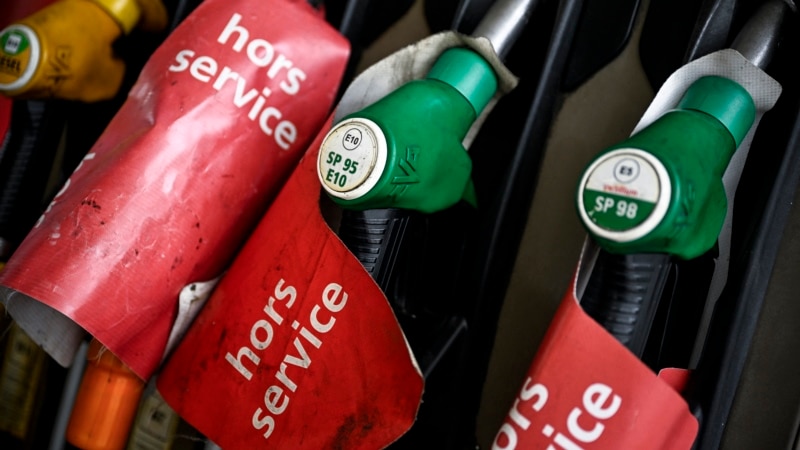
While Europe has diversified in recent years with most imports instead coming from Algeria, Azerbaijan, Norway and the United States, the increased global demand from dwindling supplies have meant prices at the pump have surged in the EU, as well.
But the EU is also more dependent on so-called refined petroleum products, meaning materials derived from crude oil through processing, such as diesel, asphalt, and especially kerosene, which is essential for modern jet engines with 40 percent of supplies coming from the Persian Gulf.
Jorgensen’s letter says a shortage of these products is of “particular concern in the short term” and suggests “member states are invited to consider the promotion of demand saving measures, in accordance with their contingency plans, with particular attention to the transport sector.”
Some airlines have already signaled they may reduce the number of flights on certain routes. The last kerosene shipments that passed through the Strait of Hormuz before its closure are due to arrive in Europe next week.
The letter references the International Energy Agency’s (IEA) recent 10-point recommendation, which include energy reduction costs such as working from home, reduced air travel, carsharing, alternate private car access to roads, lowering the speed limit by 10 kilometers per hour, and discouraging the use of liquified petroleum gas (LPG) when cooking.
Additionally, the letter also urges member states to defer any non-emergency refinery maintenance and to increase the uptake of biofuels to replace fossil fuels.


