


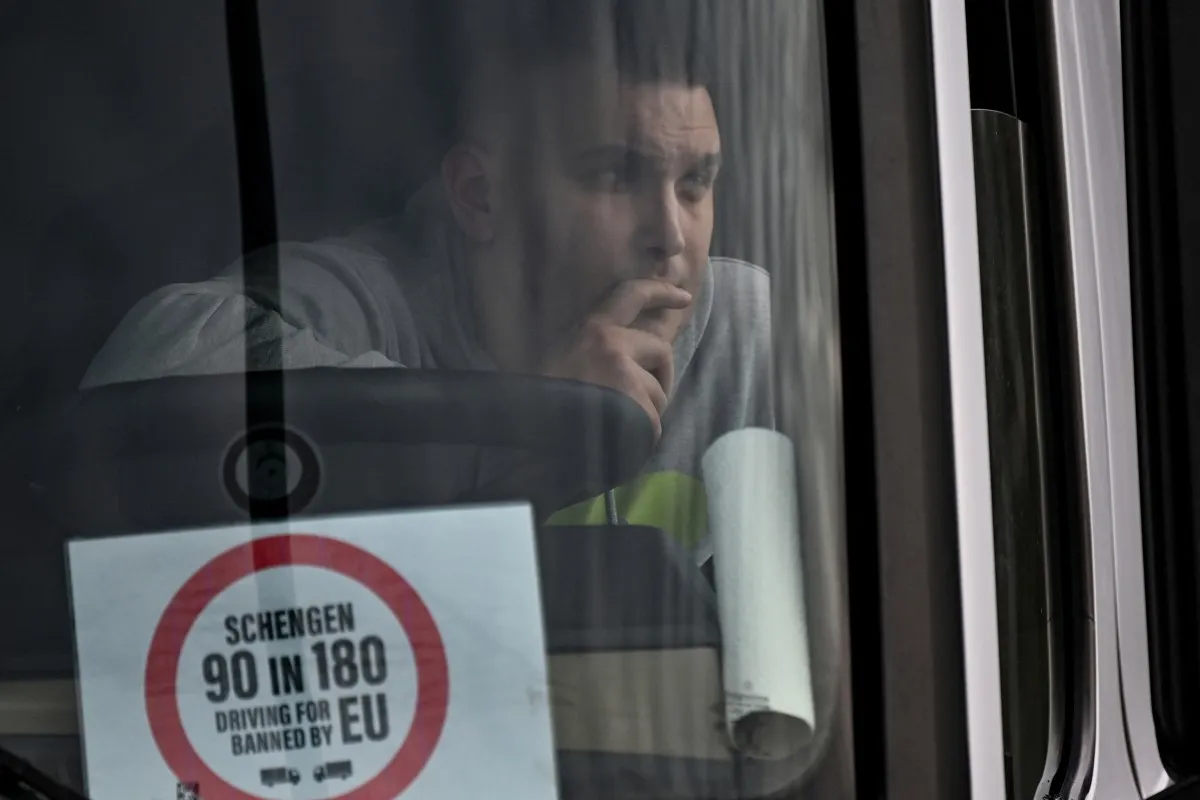
The European Commission has announced it will look into allowing certain non-EU professionals to stay in the EU beyond the current 90-day rule, as part of a future overall of its visa system. It also asked EU countries to make visa access “simpler and faster” for skilled workers.
The European Commission will consider longer short-stay Schengen visas for certain professional categories as a part of the EU visa policy strategy, according to a plan presented in Brussels on Wednesday.
The Communication outlining the future steps of the strategy says: “The Commission will work closely with Member States to identify pragmatic solutions to accommodate extended short stays for selected categories of third-country nationals, ensuring a security and economic benefit for the Union, as well as legal clarity for travellers.
READ ALSO: EU announces new push to overhaul visa system and deportations policy
“These reflections will also explore the introduction of new legislation with a specific set of extended short-stay rules at EU level.”
At present, EU law allows stays within the Schengen area for up to 90 days within 180 days for both visa-free and visa-required travellers.
But the EU Commission accepts that for certain professionals the 90-days rule is too restrictive.
“Some third country professionals who heavily rely on mobility between Member States – such as touring artists, athletes attending sporting events, experts working on cross-border projects, work-force supporting the EU industries and services or truck drivers servicing EU businesses – may require access to different Member States for more than 90 days within 180 days, without needing long stay or residence in the EU,” the communication notes.
Advertisement
The EU says the current system is “further complicated by the existence of bilateral agreements concluded by some Member States” before the entry into force of Schengen rules. These “allow nationals of specific third countries to stay beyond 90 days, but only within the territory of the Member State concerned, thereby undermining the uniform application of the Schengen rules.
The Commission said it will “review the impact” of such bilateral arrangements “with a view to gradually phasing them out.”
The document does not mention any plan to allow extensions of the 90-day rule for other categories of non-EU citizens such as second home owners, a call put forward by British nationals and certain lawmakers in countries such as France and Spain in recent years.
Attracting talent
As part of the new strategy, the Commission also issued a Recommendation to Member States “to make the EU more attractive to highly qualified and skilled professionals, students, researchers and innovative entrepreneurs and to support the EU’s competitiveness in a global context.”
Advertisement
The recommendation encourages EU countries to put in place simpler and faster procedures for long-stay visa and residence permits for highly-qualified individuals, including “more digitised processes, fewer documents and shorter processing times, easier transitions to work or entrepreneurship from study or research in the EU, improved intra-EU mobility, as well as better access to information” for prospective employees and employers.
The Commission said it would also explore “possible amendments to EU rules on students and researchers and highly qualified and skilled workers” and “a targeted EU legal framework for start-up and scale-up founders and innovative entrepreneurs.”
“Visa policy is a strategic tool for Europe’s security and Europe’s competitiveness,” said the Commission’s Vice-President Henna Virkkunen. “A modern, reliable and efficient visa system strengthens security and trust with partners while helping attract highly skilled professionals, innovative ideas and investment, and supports Europe’s position as a destination of choice for talent. This is how Europe stays competitive globally, creates quality jobs and builds a strong, fair and prosperous society,” she said.
Security as a priority
The strategy, proposed together with an asylum and migration package, indicates that the visa policy will be used “to advance the EU’s strategic interest and strengthen the EU’s security framework”.
The Commission announced plans to review the system for granting visa-free status to countries, considering criteria such as “visa refusal rates, unfounded asylum applications, return rates, cooperation on security, return and readmission.
“Where obligations are not met, visa-free travel could be suspended,” the Commission said.
Nationals of over 64 countries and territories can currently travel visa-free to the EU.
Human rights groups however have been critical of this approach.
Olivia Sundberg Diez, Amnesty International policy analyst, told AFP that this approach “only heightens its dependence on third countries to manage migration, while making it complicit in any rights violations that may result”.


