


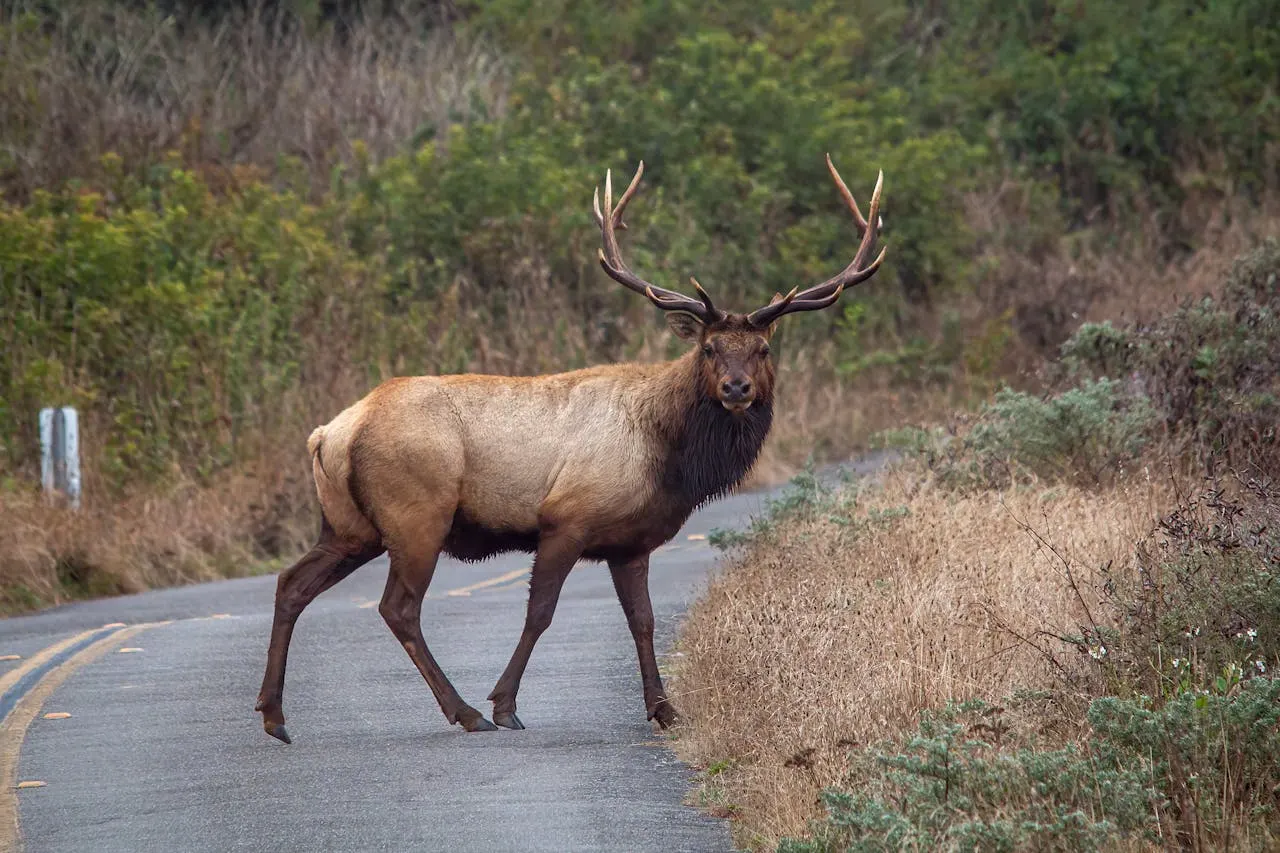
Motorists in Switzerland are faced with numerous hazards while driving in autumn and winter, with wildlife crossing the road being one of them. But there are certain parts of the country where you have to be more alert.
This is what emerges from a new study published by AXA insurance, which spent “more than 11.5 million francs in 2024 on accidents with wild animals.”
However, the risk of such an encounter differs widely from one canton to another, “because the probability of hitting an animal is not the same in all regions of Switzerland.”
This s where the incidence is highest
According to AXA, “the risk of collision with animals is particularly high in the cantons of Fribourg, Jura, Thurgau and Schaffhausen.”
In fact, the frequency of animal-related accidents in those regions – that is, the number of accidents per insured vehicle – is between 5 and 6.9 percent.
That’s because “rural cantons have more roads through forests and, in general, there are more wild animals, which increases the risk of collisions,” said Michael Villiger, Head of Motor Vehicle Claims and member of AXA’s Mobility Competence Center.
These numbers are about twice as high as the Swiss average (3.2 percent) and up to eight times higher than in Basel-City (0.8 percent), where the number of accidents involving wild animals is lowest in Switzerland.
Advertisement
Be vigilant
Animals always pose a danger, “but extra vigilance is required in October, November, and December because when days get shorter, wild animals are more likely to cross paths with motorists,” AXA warned.
“And in winter, deer like to lick salt residue along the roadsides. Since it’s dark in the morning and evening, they’re only seen late, or too late.”
Therefore, during these times of day, drivers are advised to adjust their speed, especially around road signs and on sections of road that pass through forests.
AXA also suggests the following:
- Turn on your high-beam headlights when you can so that wild animals can see you as early as possible.
- As soon as you see a wild animal at the edge of the road, brake immediately, dim your lights, and honk your horn if the animal does not move away. Be aware of any vehicles behind you.
- Be prepared for more wild animals in the same place, as animals often roam in groups. This means that if there is one animal, there are also others, so as soon as the lead animal flees, the herd will nearly always follow.
- If a wild animal suddenly jumps out in front of your car, the best thing to do is brake hard, even on a slippery road, because anti-lock brakes will prevent your car from skidding. This can reduce energy and minimise the impact of any subsequent collision. Drivers should avoid swerving sharply.
Advertisement
What to do if you hit a wild animal?
Report this accident to the police immediately, by calling their nationwide emergency number, 117.
“Anyone who delays reporting the accident to the police is committing a punishable act,” AXA said.
These drivers may even face criminal prosecution for negligent mistreatment or animal cruelty.
(However, there is no legal obligation to report fatal collisions with birds, toads and similar small wild animals).
Advertisement
Who pays for the damage to your car?
This answer comes from another insurance company, Zurich.
“The damage will be covered by the partial casco or fully comprehensive car insurance. If a collision with a wild animal occurs, partial casco insurance will cover the damage to your car. If, however, the damage is the result of an evasive manoeuver, then fully comprehensive insurance will come into play.”
READ ALSO: Why your Swiss car insurance should contain a ‘weasel clause’


