


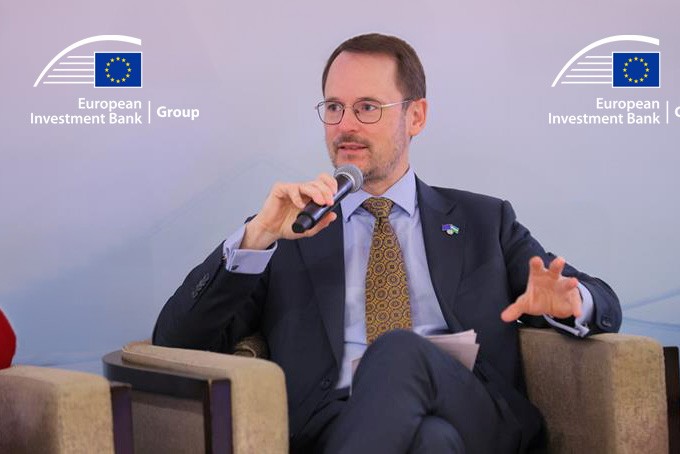
BAKU, Azerbaijan, March 20. Turkmenistan’s
plans to modernise transport infrastructure and develop renewable
energy align well with the climate and infrastructure priorities of
the European Investment Bank (EIB), Olivier Kueny, Head of the
EIB’s Regional Representation for Central Asia, told Trend.
“The European Investment Bank (EIB) sees Turkmenistan’s
ambitions in transport and green energy as highly relevant in
today’s global context, where both the European Union and Central
Asia are facing major geopolitical and climate-related challenges,”
Kueny said.
According to him, Turkmenistan’s efforts to modernise transport
networks and invest in renewable energy correspond with the EIB’s
role as “Europe’s Climate Bank,” which focuses on supporting
sustainable, low-carbon infrastructure and building
climate-resilient economies.
“In practical terms, this means prioritising projects that
reduce greenhouse gas emissions, improve energy efficiency and
promote the use of clean technologies,” Kueny noted.
He also pointed out that the bank supports the European Union’s
Global Gateway priorities in Central Asia, including development of
the Trans-Caspian Transport Corridor (TCTC), digital connectivity,
clean energy and water projects, as well as initiatives related to
critical raw materials.
“With direct access to the Caspian Sea, the country is a key
node of the TCTC corridor. Strengthening its rail, road, rolling
stock and port infrastructure could help reduce the cost and time
needed to move goods between continents, ultimately boosting trade
and economic development,” he said.
At the same time, Kueny stressed that the EIB evaluates the
long-term sustainability of projects and encourages the use of
international best practices, including transparent governance,
thorough environmental impact assessments and meaningful
stakeholder engagement. According to him, helps ensure that
investments deliver lasting economic benefits while protecting the
environment.
“It is important to note, however, that the EIB cannot yet
operate in Turkmenistan as it does in other Central Asian
countries. The recent mission to Ashgabat led by Mr. Edvardas
Bumsteinas, Head of the EIB’s Division for Asia and the Pacific,
together with myself as the recently appointed Head of the Regional
Representation for Central Asia, focused specifically on
negotiating a Framework Agreement that would allow the Bank to
begin its activities in the country,” he added.
The European Investment Bank (EIB), founded in 1958 and
headquartered in Luxembourg, is the lending institution of the
European Union that provides long-term financing for
infrastructure, climate, energy, transport, digitalization and
other development projects in EU member states and partner
countries worldwide. The bank currently cooperates with more than
160 countries and focuses on supporting sustainable development,
climate action and economic connectivity.
Turkmenistan and the EIB have been developing dialogue in recent
years, primarily aimed at creating a legal framework that would
allow the bank to begin operations in the country. In particular,
the sides are negotiating a Framework Agreement that would
establish the legal basis for EIB financing of projects in
Turkmenistan. Potential areas of cooperation discussed between
Turkmenistan and the bank include transport infrastructure,
especially projects linked to the Trans-Caspian transport corridor,
as well as initiatives in renewable energy, digitalisation, water
management and other sustainable development sectors.


