


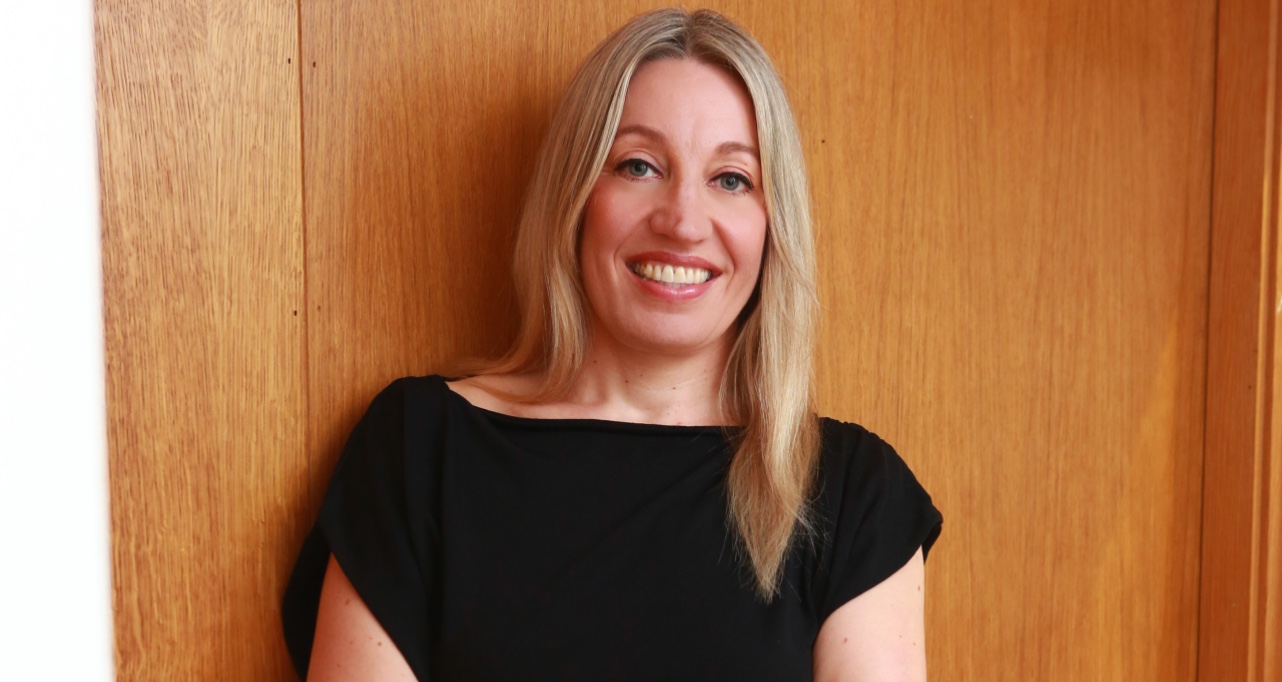
BAKU, Azerbaijan, November 20. Environmental
protection and social inclusion go hand in hand, reinforcing one
another and driving economic growth across the EBRD’s regions, said
Maya Hennerkes, Managing Director of the Environment and
Sustainability Department at the European Bank for Reconstruction
and Development (EBRD), in an exclusive interview with Trend.
“Where you have strong environmental protection, that also
provides a greater assurance for all social groups. By protecting
the environment, we’re also fostering social inclusion, and by
supporting both, we absolutely bring about economic development in
the bank’s regions,” Hennerkes said.
She noted that while climate change presents major challenges,
it also creates new opportunities. “We have a huge transformation
process happening in industries – a massive industrial and economic
transformation. And with that come new high-quality jobs in green
industry areas and business opportunities through improved natural
capital,” she explained.
However, Hennerkes acknowledged that environmental and social
goals may occasionally conflict. “We see that, for example, when
we’re financing a wind farm that may affect the livelihoods of
locals working in that area,” she said. “This is where we work very
carefully through our environmental and social policy to make sure
that by pursuing one goal, we’re never negatively impacting
another”.
Turning to Azerbaijan, the bank’s rep emphasized the country’s
strong potential for green growth. “Azerbaijan specifically has
great untapped potential for this green transformation,” she said.
“It was very inspiring to see the momentum during COP29 in Baku,
where we saw a lot of signings with Azerbaijani companies for green
energy”.
The EBRD, she added, has already financed about 1.2 GW of
renewable energy capacity in Azerbaijan. “We are expecting CO₂
emissions reductions of 600,000 tons annually from those
investments. But it also generates clean electricity for 300,000
homes. If you have homes that have clean electricity instead of
using diesel generators, that has clear positive health impacts –
so socially, it’s also very beneficial,” Hennerkes said.
She also highlighted the EBRD’s support for Azerbaijan’s
renewable energy auctions. “We’ve been involved in every
utility-scale renewable project and also helped the government
design the auction system for energy projects. It’s a really good
thing for the market – it brings transparency and attracts other
investors who then feel confident to invest in Azerbaijan’s energy
sector,” she explained.
“Overall, there’s a huge potential, and we’re definitely very
excited to do more with Azerbaijan. We’re actively looking for more
projects – and for the right projects,” she concluded.


