


There is no shortage of shared history between the two countries, but could Iberian federalism ever take hold, as outlandish as it may seem? New polling suggests that some Spaniards might actually support the idea.
Spain and Portugal have many things in common: great food, a love of wine and fish, a hatred of dictatorships, a flair for parties and even a stint as a single country, the Iberian Union during 1580 and 1640.
But is it enough for them to ever become a single country?
There are those who would say yes and, according to recent polling data, modern day Spaniards also increasingly back the idea.
Previously it was a dream of some brilliant minds, including Portuguese poet Fernando Pessoa, Nobel-prize winner Jose Saramago and, more recently, Spanish-Irish author and Hispanist Ian Gibson, who wrote a book to defend his belief: Hacia la República Federal Ibérica: Reflexión y sueño de un hispanista irredento, or Towards the Iberian Federal Republic: Reflection and dream of an unredeemed Hispanist.
READ ALSO: Spain vs Portugal: Which country is better to move to?
Advertisement
For those who defend the concept, a united federation would embrace several groups of people under one “Iberian soul”, uniting separatist movements and celebrating the difference in language and culture.
“If everyone saw the peninsula as a unique place in the world, with its people and its languages, the federation would be the obvious solution. We must build cultural bridges and bridges of all kinds between the Iberian communities, like a big family,” historian Ian Gibson told El Diario in 2021.
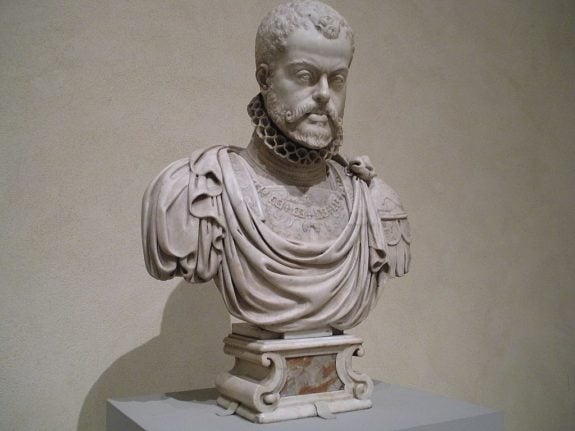 A marble bust of Philip II of Spain by Pompeo Leoni, Metropolitan Museum of Art. Philip II was king of Portugal and Spain. (Photo: Public Domain)
The breakdown by region was particularly interesting. The areas bordering Portugal, such as Galicia and Extremadura, showed notable support, probably due to their geographical and cultural proximity to the neighbouring country.
On the other hand, areas of inland Spain such as Castilla y León showed lower support, although still in the majority.
On a political level, voters from parties with a more nationalist or regionalist agenda, such as ERC (just 15.0 percent in favour), Junts per Catalunya (14.3 percent) and BNG (32.5 percent) were most against the idea of an Iberian union.
On the other hand, parties more centred on the conservative right, such as Vox (73.6 percent in favour) and the Partido Popular (80.3 percent) overwhelmingly supported the idea.
The precedent of unity
It wouldn’t be the first time Portugal and Spain had become one.
Between 1580 and 1640, two monarchies of Portugal and Spain united into one, forming the Iberian Union not long after the two kingdoms’ first voyages to American lands.
The union of the Kingdoms of Castile and Aragon and the Kingdom of Portugal under the Spanish Habsburg kings lasted until the Portuguese Restoration War when the House of Braganza was established as the new dynasty ruling Portugal and its colonial territories.
READ ALSO: The 20 maps that will help you understand Spain
Portugal’s status was maintained during those decades, with independent law, currency, and even a local government. It was only after a new king tried to raise taxes, decrease the relevance of the Portuguese nobility and increase his authority over Portugal that the country revolted.
After a period of war known as the Restoration War, Portugal was recognised as sovereign, and both kingdoms signed a peace treaty.
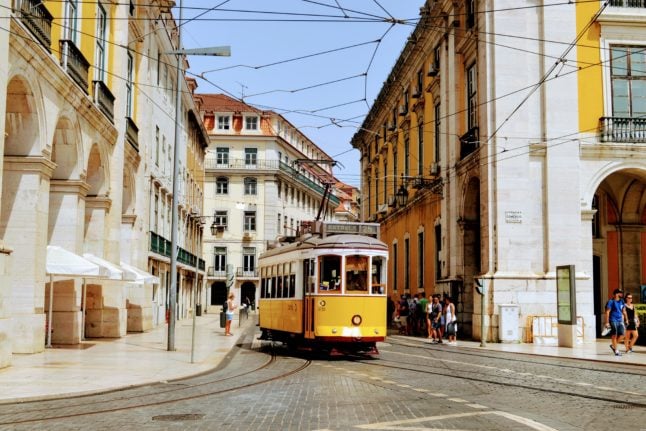 Could Lisbon ever be the capital of an Iberian Federation? And what would Madrid have to say about that? (Photo by Aayush Gupta on Unsplash)
What do people think?
Even centuries after the war, there are still minor feuds and rivalries between the Portuguese and the Spanish, primarily in the form of mockery.
A 2016 book covering 345 jokes Europeans tell about each other revealed how many Portuguese people feel about their Iberian neighbours when stating “in a recent survey, 11 out of 10 Spaniards said they felt superior to others”.
READ ALSO: The good, the bad and the ugly: What are the regional stereotypes across Spain?
Almost as if to justify the claims of Spaniards’ air of superiority vis-a-vis their neighbours, the book includes jokes Spaniards tell about the Portuguese people’s “ugliness and simple habits”.
Advertisement
These stereotypes, arguably outdated and not as widespread as they once were, reflect a ‘together but separate’ attitude between the Iberian countries.
Another example can be seen in a 2016 study by Spain’s Real Instituto Elcano think tank, which showed that six in every ten Portuguese believe that Spain “is not sufficiently interested” in Portugal. Still, 74 percent of them chose Spain as the EU country that should be Portugal’s biggest ally.
As things stand, the idea of the two countries working together but as separate entities is stronger than the concept of union as a single country.
Still, there are those, like the Sociedad Iberista, who believe a long-term goal would be to bring both countries together, starting with simple matters, such as “eliminating all the informational, educational, political-administrative, cultural and social asymmetries in the Iberian Peninsula”.
Others see it differently: “The idea of uniting Spain and Portugal into a great Iberian power resurfaces every so often, before hitting the wall of reality.
“On both sides, it is seen for what it is: a utopia,” wrote Spanish journalist Davi Jiménez in the New York Times in 2021.
Advertisement
READ ALSO: Spain and Portugal’s cost-cutting ‘energy island’ plan gets EU approval
“A glance at history and current links is enough to conclude that the project of a single state is unfeasible.
“Accepting this is a good first step towards seeking pragmatic alternatives to end the incomprehensible lack of communication between the Spanish and Portuguese. We share a little more than 1,200 kilometres of border, as well as close cultural, economic and historical ties, but it often seems that we live on different continents”, Jiménez concluded.
Whether Spain and Portugal will ever become one nation in the long run is impossible to predict, but geopolitical annexation (or separation) in the 21st century is an extraordinarily complex process, harder still without mass support.
For now, developing stronger economic ties, understanding and respect for one another appear a bigger priority for the two Iberian nations.


