• Login
Sunday, February 22, 2026
Geneva Times
  • Home
  • Editorial
  • Switzerland
  • Europe
  • International
  • UN
  • Business
  • Sports
  • More
    • Article
    • Tamil
No Result
View All Result
  • Home
  • Editorial
  • Switzerland
  • Europe
  • International
  • UN
  • Business
  • Sports
  • More
    • Article
    • Tamil
No Result
View All Result
Geneva Times
No Result
View All Result
  • Home
  • Editorial
  • Switzerland
  • Europe
  • International
  • UN
  • Business
  • Sports
  • More
Home Business

COP29 Ends With Deal on Climate Finance After Bitter Fight

GenevaTimes by GenevaTimes
November 24, 2024
in Business
Reading Time: 9 mins read
0
COP29 Ends With Deal on Climate Finance After Bitter Fight
0
SHARES
0
VIEWS
Share on FacebookShare on Twitter


Breadcrumb Trail Links

  1. PMN Business

Nearly 200 countries agreed to triple the amount of money available to help developing countries confront rapidly warming temperatures.

Author of the article:

COP29 Ends With Deal on Climate Finance After Bitter Fight

Bloomberg News

Jennifer A. Dlouhy, John Ainger, Akshat Rathi and Alfred Cang

Published Nov 23, 2024  •  Last updated 2 hours ago  •  3 minute read
You can save this article by registering for free here. Or sign-in if you have an account.

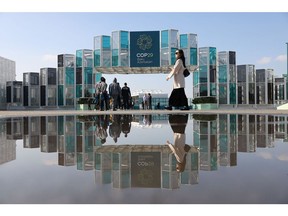
Attendees at the Baku Stadium ahead of the COP29 climate conference, in Baku, Azerbaijan, on Sunday, Nov. 10, 2024. The United Nations climate change conference runs through Nov. 22.
Attendees at the Baku Stadium ahead of the COP29 climate conference, in Baku, Azerbaijan, on Sunday, Nov. 10, 2024. The United Nations climate change conference runs through Nov. 22. Photo by Hollie Adams /Bloomberg

Article content

(Bloomberg) — Nearly 200 countries agreed to triple the amount of money available to help developing countries confront rapidly warming temperatures.

But the deal reached at the close of the two-week COP29 summit in Azerbaijan resulted from fractious and at times openly hostile negotiations, producing an agreement that even its supporters may see as insufficient and disappointing. The process of global climate cooperation will lurch forward from here under the weight of heavier existential questions.

Advertisement 2

This advertisement has not loaded yet, but your article continues below.

Financial Post

THIS CONTENT IS RESERVED FOR SUBSCRIBERS ONLY

Subscribe now to read the latest news in your city and across Canada.

  • Exclusive articles from Barbara Shecter, Joe O’Connor, Gabriel Friedman, and others.
  • Daily content from Financial Times, the world’s leading global business publication.
  • Unlimited online access to read articles from Financial Post, National Post and 15 news sites across Canada with one account.
  • National Post ePaper, an electronic replica of the print edition to view on any device, share and comment on.
  • Daily puzzles, including the New York Times Crossword.

SUBSCRIBE TO UNLOCK MORE ARTICLES

Subscribe now to read the latest news in your city and across Canada.

  • Exclusive articles from Barbara Shecter, Joe O’Connor, Gabriel Friedman and others.
  • Daily content from Financial Times, the world’s leading global business publication.
  • Unlimited online access to read articles from Financial Post, National Post and 15 news sites across Canada with one account.
  • National Post ePaper, an electronic replica of the print edition to view on any device, share and comment on.
  • Daily puzzles, including the New York Times Crossword.

REGISTER / SIGN IN TO UNLOCK MORE ARTICLES

Create an account or sign in to continue with your reading experience.

  • Access articles from across Canada with one account.
  • Share your thoughts and join the conversation in the comments.
  • Enjoy additional articles per month.
  • Get email updates from your favourite authors.

THIS ARTICLE IS FREE TO READ REGISTER TO UNLOCK.

Create an account or sign in to continue with your reading experience.

  • Access articles from across Canada with one account
  • Share your thoughts and join the conversation in the comments
  • Enjoy additional articles per month
  • Get email updates from your favourite authors

Sign In or Create an Account

or

Article content

Global temperature rise is on the cusp of 1.5C — a critical tipping point for avoiding the most catastrophic consequences of climate change.

“We needed to leave Baku with an agreement to keep the multilateral system alive,” said Juan Carlos Monterrey-Gomez, Panama’s special representative for climate change. “We kept the system alive. But I think 1.5 is dead.”

Rich countries have pledged to provide at least $300 billion annually by 2035, through a wide variety of sources, including public finance as well as bilateral and multilateral deals. The agreement also calls on parties to work toward unleashing a total of $1.3 trillion a year, with most of it expected to come through private financing.

Developed and developing countries entered the negotiations far apart. At one point on Saturday, the talks appeared to be on the brink of collapse, before numerous closed-door meetings brought a deal closer.

Rich nations are grappling with a slew of fiscal and political constraints, including inflation, constrained budgets and rising populism. The election of Donald Trump and his threat to pull the US out of the landmark Paris climate agreement also  cast a shadow on the summit.

Top Stories

Top Stories

Get the latest headlines, breaking news and columns.

By signing up you consent to receive the above newsletter from Postmedia Network Inc.

Thanks for signing up!

A welcome email is on its way. If you don’t see it, please check your junk folder.

The next issue of Top Stories will soon be in your inbox.

We encountered an issue signing you up. Please try again

Article content

Advertisement 3

This advertisement has not loaded yet, but your article continues below.

Article content

Under a compromise, rich nations eventually agreed to commit $50 billion more than called for in a draft agreement on Friday. They had also made any agreement contingent on reaffirming last year’s COP28 outcome in Dubai that included a vow to transition away from fossil fuels. 

But Saudi Arabia, leading a bloc of Arab nations, opposed the move to single out any sector. 

“There is definitely a challenge in getting greater ambition when you are negotiating with the Saudis,” John Podesta, the top US climate negotiator, told reporters. “At a time when the world is facing such catastrophic effects from climate change an inch at a time is not enough.” 

In the end, developed countries had to settle for simply reaffirming the deal reached last year at COP28 in Dubai, without explicitly referencing “fossil fuels” by name.

‘Too Little’ 

The promised funding falls short of the trillions of dollars poor and vulnerable nations say they need to climate-proof their economies. They also want more of that money to come in the form of grants and other affordable financial support, since market-based loans risk deepening their debt burdens.

Advertisement 4

This advertisement has not loaded yet, but your article continues below.

Article content

The deal’s adoption came over the objections of India, whose delegates had raised their hands in an attempt to intervene, and as the gavel fell, walked up to the stage in a failed bid to get attention.

India’s representative Chandni Raina called the deal inadequate. called the deal inadequate. “The goal is too little, too distant,” she said, her speech punctuated frequently by applause and cheers.

Still, for some the result will likely serve as proof the COP process is still the best approach for coordinating global action to meet the escalating challenges of climate change.

“COP29 took place in tough circumstances but multilateralism is alive and more necessary than ever,” Laurence Tubiana, chief executive office of European Climate Foundation, an architect of the landmark Paris Agreement.

The new agreement will help inform individual country commitments for cutting greenhouse gas emissions by 2035 as well as the next round of UN climate talks in Brazil. Many developing nations emphasized the smaller-than-hoped finance commitment would slow their transitions to emission-free energy and constrain their ambition in setting carbon-reducing targets due in February.

(Updates with comment from the fourth paragraph. A previous version of the story corrected the name of the Indian official)

Article content

Share this article in your social network

Read More

Previous Post

India’s ‘rebel’ Muslim princess who shot tigers and drove a Rolls-Royce

Next Post

Swiss vote on motorways, tenants’ rights and health insurance

Next Post
Swiss vote on motorways, tenants’ rights and health insurance

Swiss vote on motorways, tenants’ rights and health insurance

Leave a Reply

Your email address will not be published. Required fields are marked *

ADVERTISEMENT
Facebook Twitter Instagram Youtube LinkedIn

Explore the Geneva Times

  • About us
  • Contact us

Contact us:

editor@thegenevatimes.ch

Visit us

© 2023 -2024 Geneva Times| Desgined & Developed by Immanuel Kolwin

Welcome Back!

Login to your account below

Forgotten Password?

Retrieve your password

Please enter your username or email address to reset your password.

Log In
No Result
View All Result
  • Home
  • Editorial
  • Switzerland
  • Europe
  • International
  • UN
  • Business
  • Sports
  • More
    • Article
    • Tamil

© 2023 -2024 Geneva Times| Desgined & Developed by Immanuel Kolwin