


As Donald Trump searches for an exit from the Iran war, the narrow Strait of Hormuz increasingly looks like a labyrinth in which the commander-in-chief has no good options.
Any ceasefire or U.S. disengagement that cedes control of the strait risks creating new problems, including potentially triggering a nuclear arms race among Gulf states, experts say. But taking control of the strait militarily requires massive costs and risks, including a strategic invasion that comes short of occupying the country. Trump said March 31 he wants to leave Iran in two or three weeks, hours after he vented against allies to “go get your own oil!”
Continuing with the status quo, meanwhile—in which the U.S. and Israel pound Iranian targets, while Iran charges multimillion-dollar tolls to let select ships pass through the strait—could send the global economy into a recession.
“If this goes on for another two months, we’re in a global recession. There’s no way around it,” Jim Wicklund, a veteran oil analyst and managing director at the PPHB energy investment firm, told Fortune, arguing the U.S. is staring down the barrel of a credit crash and sky-high inflation.
Even a slight opening of the strait would bring only temporary relief. Oil and natural gas prices may fall as more traffic flows through the strait, but they would remain much higher than in February before the U.S. and Israel initiated the war, especially if Iran continues to charge a $2 million toll per vessel. “The whole world won’t stand for a long-term toll,” said Wicklund. “There will be a higher risk premium even if the strait opens tomorrow.”
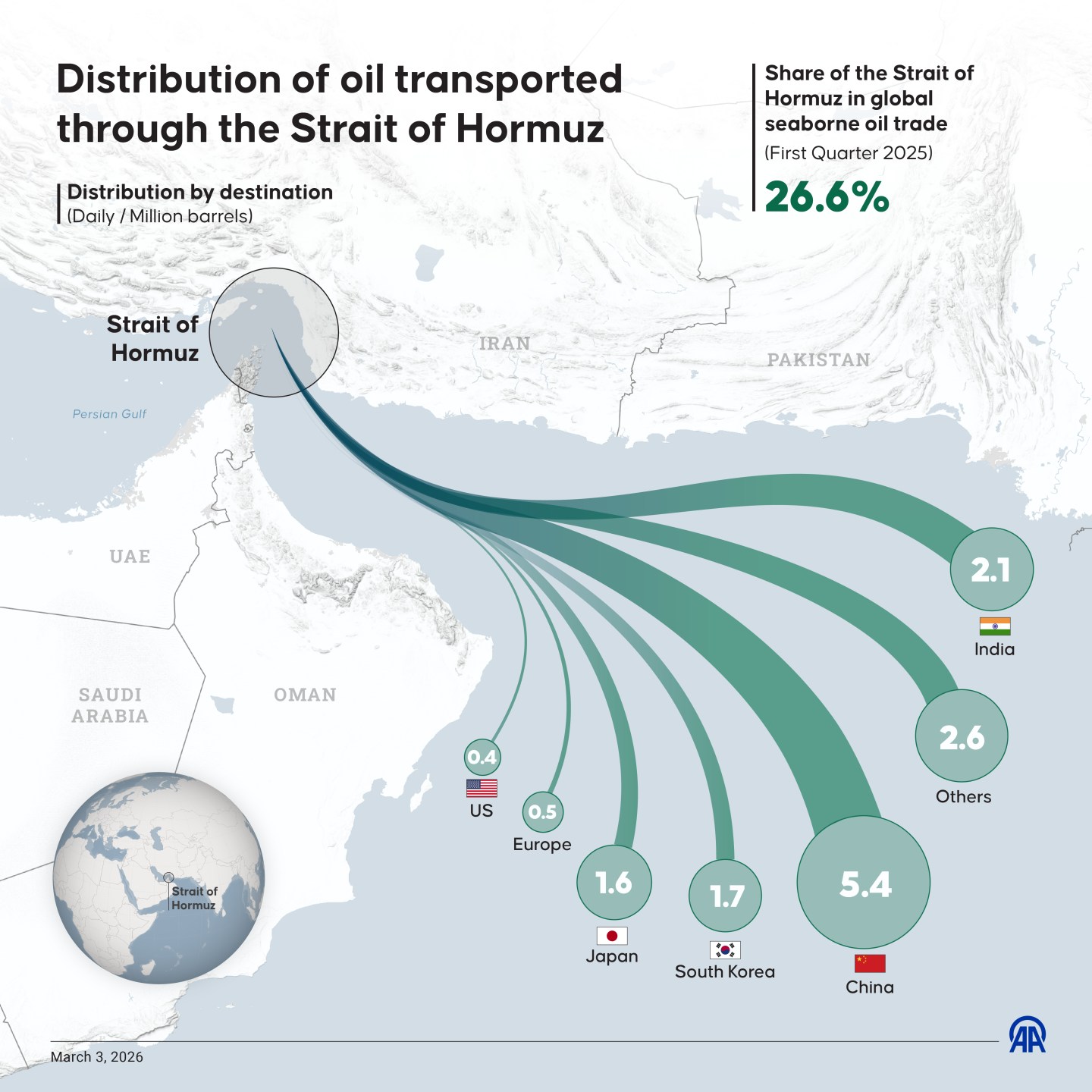
The U.S. must either put “boots on the ground” to take control of the narrow strait—through which 20% of the world’s oil, liquefied natural gas, and petrochemicals pass—or achieve some kind of truce that’s unlikely to last, he said. “Trump has to do something, and he has to do something soon.”
Bob McNally, former White House energy advisor under George W. Bush and founder of Rapidan Energy Group, took it a step further if the U.S. were to walk away without militarily seizing control of the strait.
“That would be a catastrophic setback for U.S. foreign policy interests that would, in my view, transcend even our defeat in Vietnam,” McNally told Fortune. “One would struggle to find a precedent or a parallel for what a defeat that would be.”
Where we are
More than a month into the slog of war, the average U.S. price for a gallon of regular gasoline rose above $4 on March 31 for the first time since 2022. California, Oregon, and Hawaii all exceeded $5.
And the impacts remain much worse in the rest of the world where supply shortages are mounting in Asia, and where Europe is now beginning to see scattered fuel shortfalls. This is where demand destruction escalates in April.
On March 30, Trump threatened “completely obliterating” Iranian power and water infrastructure if the strait is not opened—potentially a war crime. One day later, he lashed out at U.S. allies for not helping enough. “You’ll have to start learning how to fight for yourself, the U.S.A. won’t be there to help you anymore, just like you weren’t there for us. Iran has been, essentially, decimated. The hard part is done. Go get your own oil!” he posted on social media.
“We leave because there’s no reason for us to do this,” Trump later told reporters at the White House. “We’ll be leaving very soon.”
With Pakistan and now China increasingly serving as negotiation mediators, they offered a five-point peace initiative March 31 that included a call to “restore normal passage through the strait as soon as possible.”
Rystad Energy chief economist Claudio Galimberti sees a tenuous peace as the most likely outcome in the coming weeks. After all, only about 5% of the typical traffic is passing through the strait, which is not sustainable.
“It would be a very fragile ceasefire. It’s very unstable,” Galimberti said.
If a ceasefire only allows 50% or less of traffic to resume, then “this would be a very high inflationary scenario” for the world with oil prices likely remaining above $100 per barrel, he said. If it’s almost fully opened under a tolling scenario, then prices would fall further, but still remain well elevated above February levels before the war.
That is why McNally and Wicklund see U.S. boots on the ground as more likely to see the military campaign through. They think Trump is frustrated, but mostly posturing for now.
“What I think is likely is we’re going to see an intensification of combined operations—air, sea, and land—to degrade Iran’s ability to threaten Hormuz traffic,” McNally said.
The doctrine effect
The alternatives are much worse, McNally argued.
“The Arab Gulf countries and Israel would not accept Iran’s long-term domination of Hormuz. I think it would make another conflict just a matter of time. And it’s a conflict the United States would likely get dragged [back] into,” McNally said. “I don’t think it’s a durable scenario where we just sort of leave and say, ‘Hey, cut your deals with Iran. They’re the toll keeper now. Good luck.’”
The geopolitical precedent also would prove awful, McNally said, effectively canceling the Reagan Corollary to the Carter Doctrine. The 1980 Carter Doctrine said the U.S. would intervene militarily to protect its interests in the Middle East against external powers, which was in response to the Soviet Union’s invasion of Afghanistan. The 1981 Reagan Corollary, which came during the Iran-Iraq War, extended the doctrine but also pledged to secure internal stability in the Middle East, especially Saudi Arabia.
“We would be canceling the Reagan Corollary to the Carter Doctrine, and eventually, perhaps the doctrine itself,” he said. “I think eventually a China or Russia would want to step in there.”


