


Are you proud to be living in your region of Spain? Why not learn about the origins and interesting facts of the regional flag you see hanging from official buildings and balconies in your autonomous community?
Andalusia
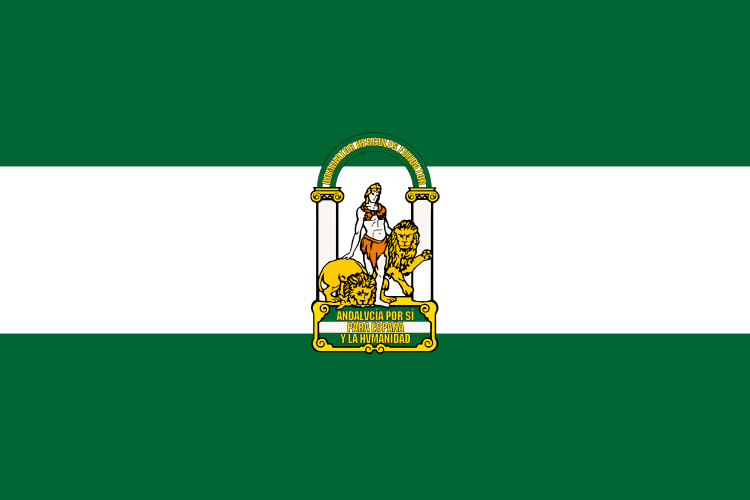
Andalusia’s flag has Moorish origins. The iconic green and white Andalusian flag was designed by Blas Infante, a politician and writer who’s widely considered the ‘Father of the Andalusian Homeland’. He was inspired by the flag that flew over the Moorish fortress of Almería (the Alcazaba) during the Al-Andalus period in the 12th century. In fact, the word “Arbonaida” supposedly comes from Andalusian Arabic and literally means ‘green flag’.
Advertisement
Aragón
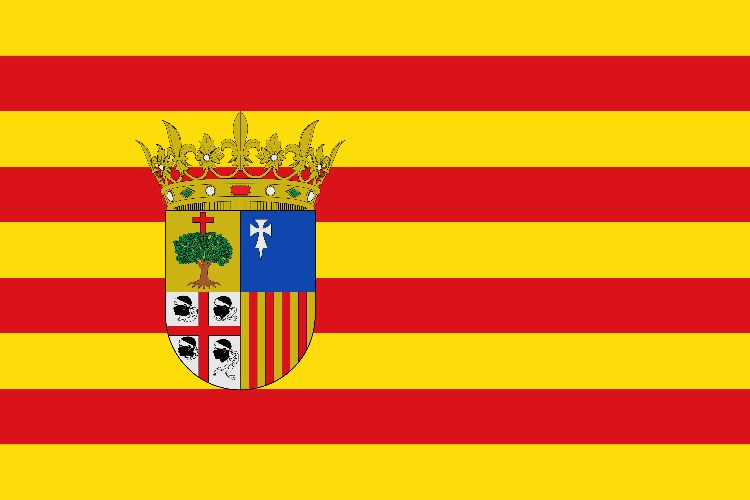
The red and yellow striped flag of Aragón has its roots in the Crown of Aragón, with a history that dates back to the 11th or 12th century. Flag lovers will recognise the black heads of Sardinia’s flag (actually called I quattro mori, the Four Moors), because the Crown of Aragón ruled over the now-Italian island for 400 years!
Asturias
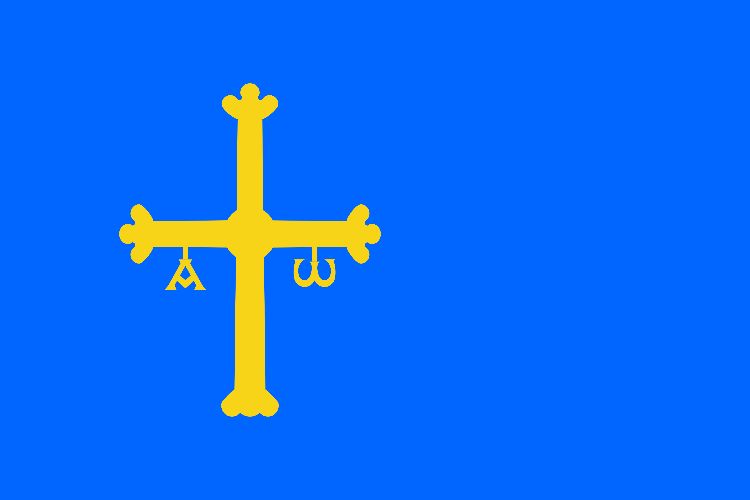
Against the blue background of the Asturian flag is the Cross of Victory, which you’ll see in sticker format on many cars in this northern region (probably due to a combination of patriotism and religious protection for drivers).
According to legend, it dates back to when the Battle of Covadonga, where Asturian folk hero Pelagius (Don Pelayo) initiated the Christian reconquest of the Iberian Peninsula from the Moors.
The Greek letters alpha (Α) and omega (ω) on the arms of the cross symbolise the beginning and end of all things, representing the eternity of God.
Advertisement
Balearic Islands
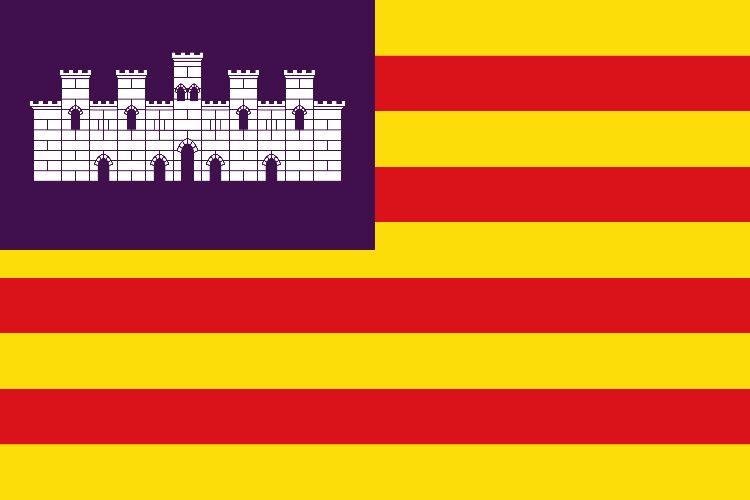
The flag of the Balearic Islands includes two facets you see a lot on Spanish regional flags: castles, and red and yellow stripes. It has its origin in the flag of the Crown of Aragón and the Kingdom of Mallorca, which joined symbols after the conquest. That castle in the upper left corner is the Almudaina Palace in Palma, the official residence of Spain’s King and Queen during their stays in Mallorca.
Canary Islands
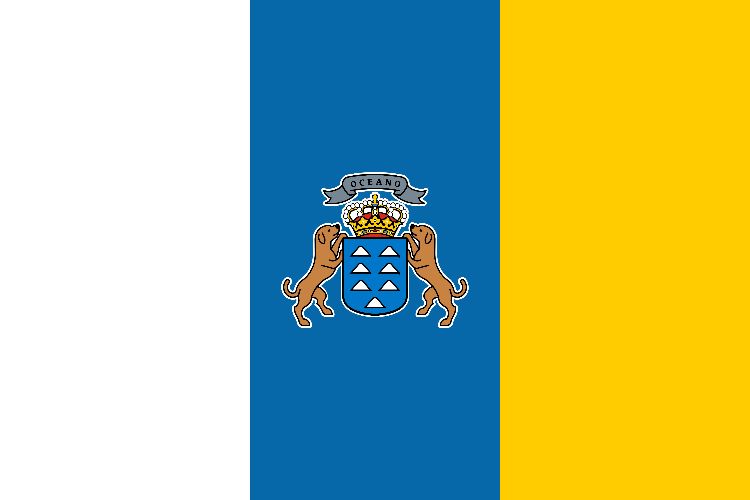
The white, blue and yellow of the Canary flag represent the snow on top of Teide (Spain’s highest peak), the Atlantic ocean (where the islands are located) and the sand of its beaches. It also features two dogs on its coat of arms, which incidentally is where the Canaries get their name from (Canis is dog in Latin), and not the Canary birds as many people assume.
Cantabria
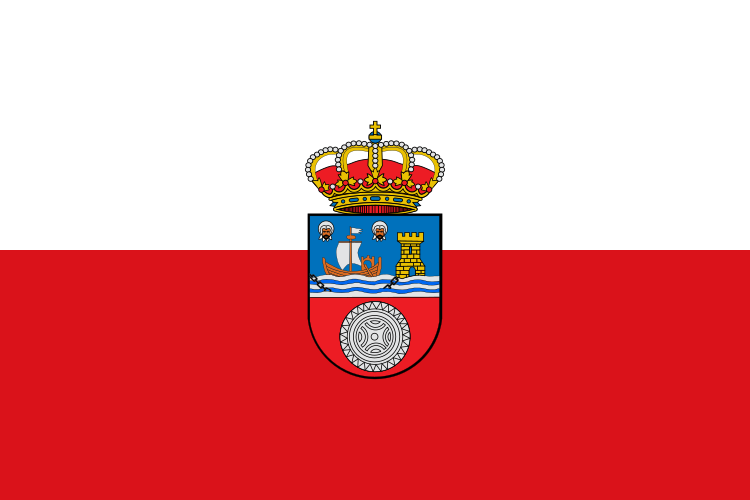
The northern region of Cantabria has distinctive red and white horizontal stripes, a nod to the naval history of its capital Santander. Historians believe the stripes are representative of Merchant Navy vessels with white symbolising the hull and red the keel.
Castilla-La Mancha
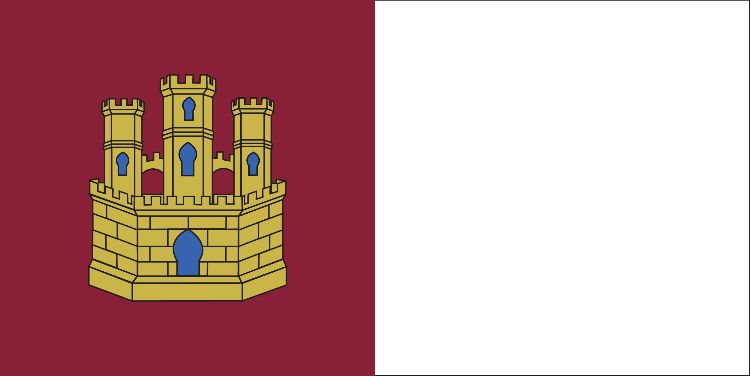
Castilla-La Mancha gets its name from its many castles, and because ‘La Mancha’ – derived from the Arabic Al-Mansha – means ‘dry land’. So it’s easy to see why there’s a fortress on the left side of the flag, but how about the white half? It symbolises the Military Orders of Calatrava, Santiago and San Juan, which had a great influence on the land of La Mancha.
Advertisement
Castilla y León
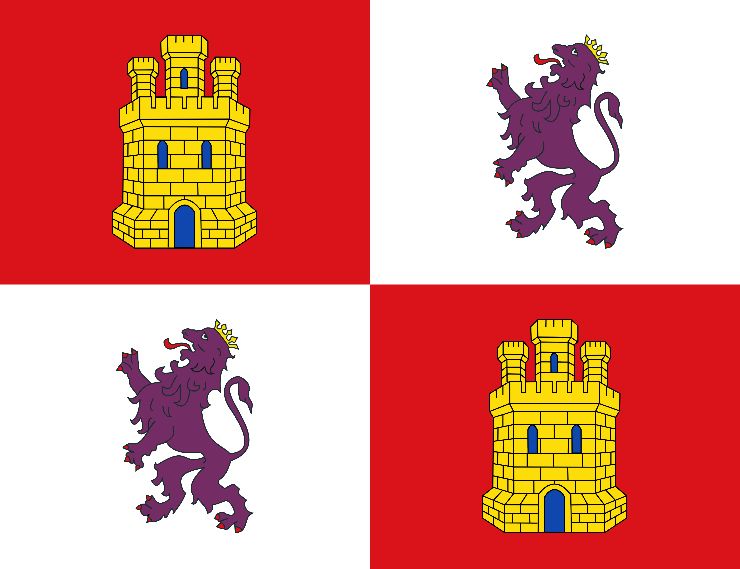
If a place is called ‘Castle and Lion’, what would you put on the flag? And why not add two castles and two lions to make it really, really clear where you are? Jokes aside, what’s really interesting are the theories about the lion in Castilla y León name and flag. Legend has it that King Pelagius (the one who started kicking out the Moors from what we now call Spain) had a lion painted on his shield to brag about the fact that he killed one. In any case, the etymology of León’s name is more likely to be derived from legión, as in a legion of soldiers.
Catalonia
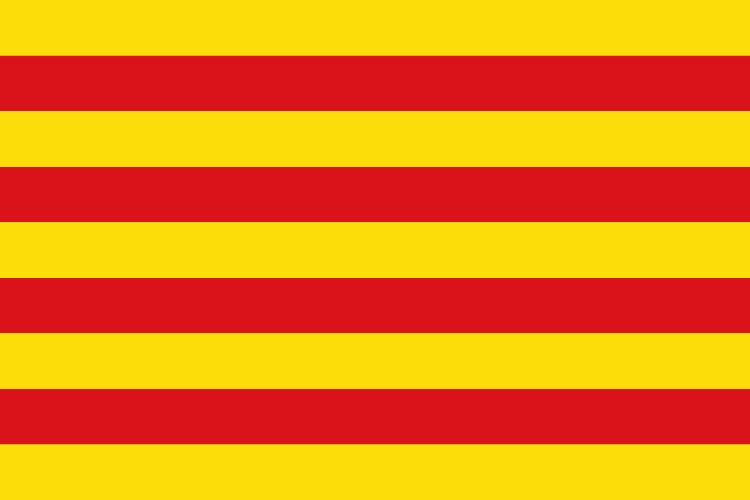
Not to be confused with the Estelada, the flag used of the Catalan independence movement which has a star on it, the Catalonian flag also incorporates the Senyera. Local legend says the stripes were inspired by Louis the Pious (son of Charlemagne) dipping his fingers in the blood of an injured Catalan count.
Advertisement
Extremadura
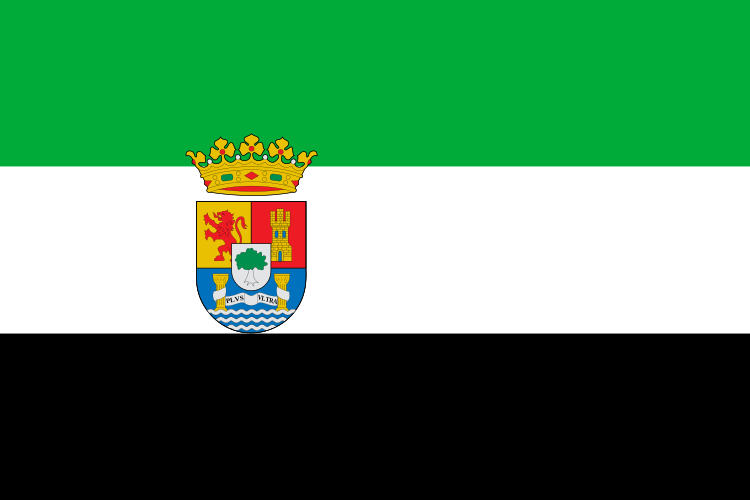
Extremadura’s flag is testament to its rich history. The green represents the Knights of St. Julian, one of the four Spanish military orders. The white pays heed to the Crown of León (Extremadura was partly governed by them, notice the castle and lion on their coat of arms), and the black refers to the Lusitanian peoples of Western Iberia and the Taifa of Badajoz (a Moorish kingdom). And we’re not done yet. The columns on the coat of arms represent Extremadura’s Roman past and the sea the conquest of the Americas (the most famous conquistadors were from this region – Pizarro and Cortés).
Advertisement
Galicia
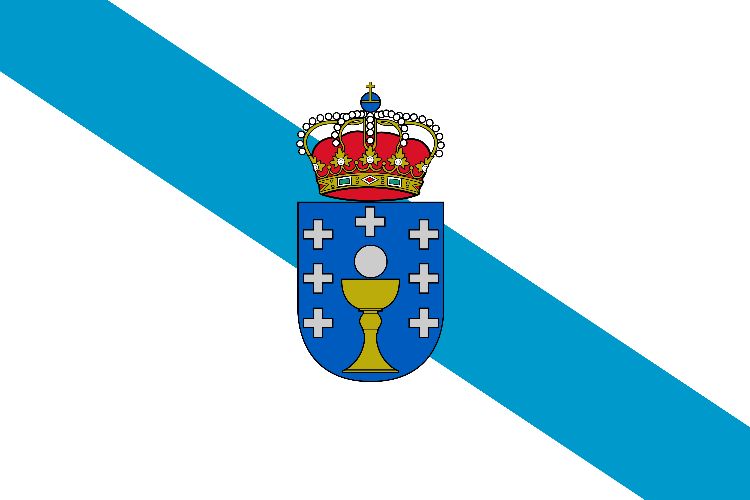
As you may have expected, the Galician flag’s light blue stripe is inspired by the sea and its maritime history. As for the coat of arms, the crosses represent the seven cities of the ancient kingdom of Galicia. The chalice may be there due to a medieval ‘lost in translation’ moment. As in the 13th century French was spoken in the English royal court, the word Galice (Galicia in French) may have been misinterpreted as chalice. That’s what some historians believe, at least.
La Rioja
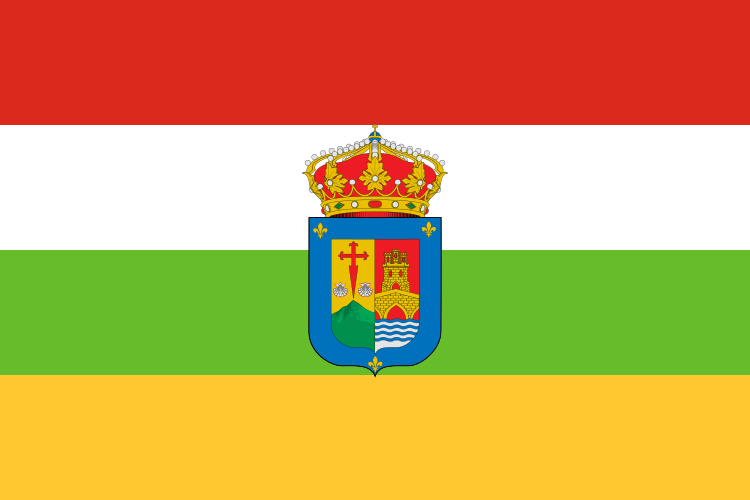
La Rioja’s jazzy flag resembles somewhat an African flag. It’s known as the cuatricolor (“four-coloured) because of its red, white, green, and yellow stripes. The red as you may have guessed is associated with vineyards and wine; the thought pattern behind the other colour choices a bit more liberal (white for light, rivers, and sky; green for the fields, orchards, mountains, and forests; and yellow for the land, monuments, and fertility).
Advertisement
Madrid
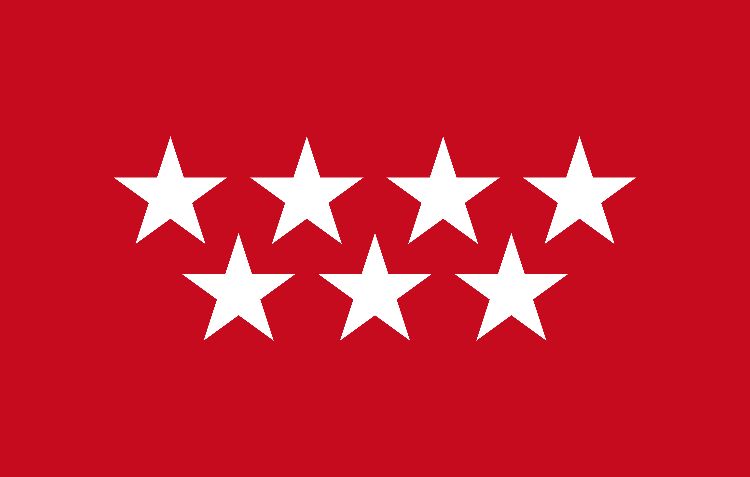
In the capital, the red colour of the flag represents the Castilian past of the region, and the seven stars symbolise the Ursa Major or Great Bear constellation, which can be seen from Madrid’s Sierra de Guadarrama mountain range.
Murcia
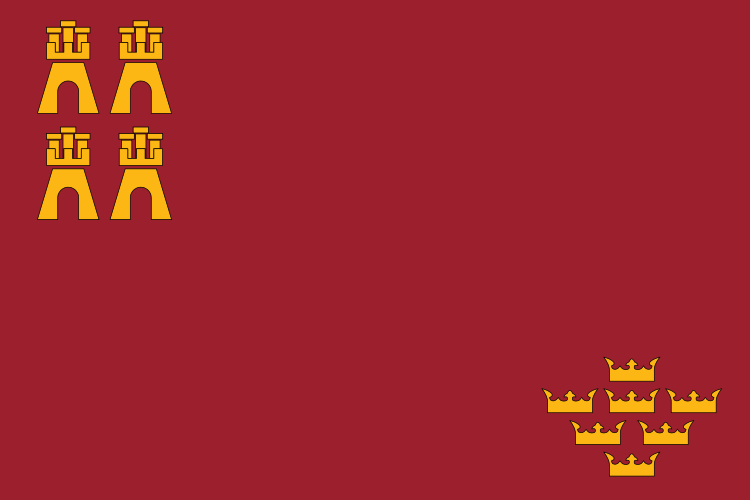
The distinctive colour selected for the Murcian flag is known as ‘Cartagena red’, and is representative of the historic port and naval city on the Murcian coast. The seven golden crowns are a symbol of the privileges and loyalty that the region swore to different kings of Castile and León throughout history.
Navarre
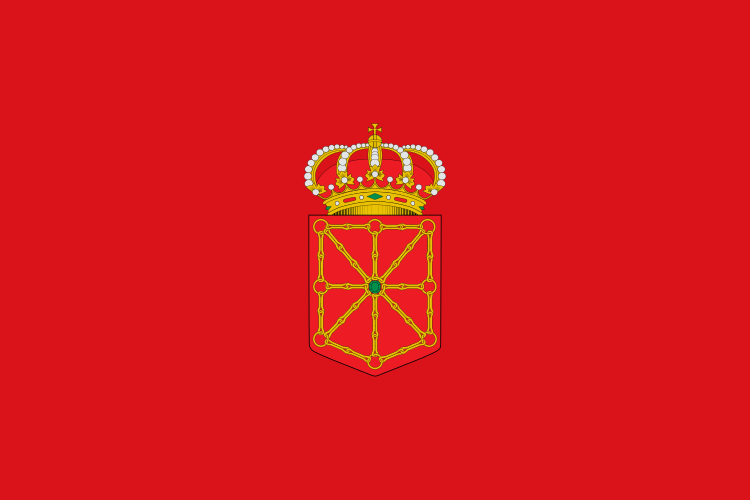
If you’ve ever been to the bull run in Pamplona, you’ll recognise that Navarra’s flag has the same red of the handkerchiefs all the pamplonikas and visiting revellers wear around their necks during the celebration. As for the coat of arms, it represents the war shield of Theobald I, the first Frenchman to rule Navarre.
Basque Country
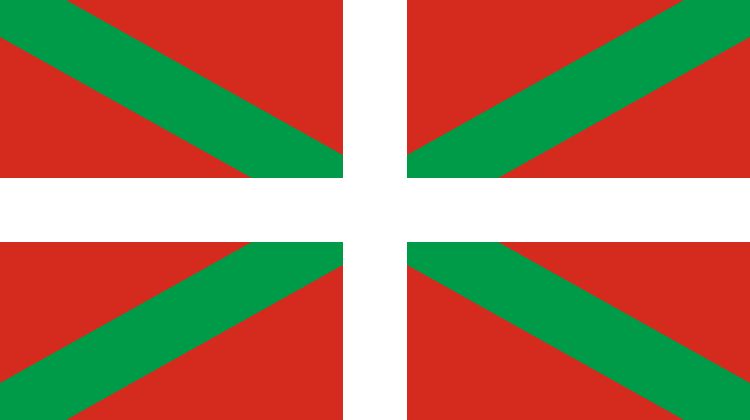
The Ikurriña (meaning ‘symbol of cloth’ in Basque) may look like a Christmassy version of the Union Jack, but it’s very much symbolic of Basque nationalism. It was designed to identify the province of Biscay in the 19th century, then banned during Franco’s dictatorship and in 1979 made the official flag of the entire Basque Country. The green cross of San Andrés represents the oak tree of Guernica, a symbol of Basque freedom and independence.
Valencian Community
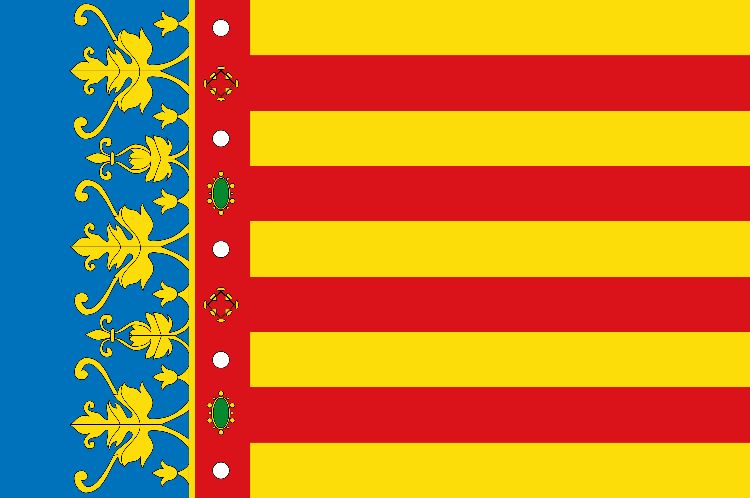
Again coming from the Senyera and the Crown of Aragón, Valencia also has the distinctive red and yellow horizontal stripes.
Interestingly, an earlier version of this flag known as The Banner of the Conquest (in Valencian Penó de la Conquesta), is frequently recognised as the oldest physical flag in the world that is still preserved at almost 800 years old!
Historical legend says that a Senyera was granted by King James I following the Christian reconquest from Moorish rule in 1238, which explains the regal fleur-de-lis against the blue background.
.


