In theory, Swiss citizens are quite willing to engage politically. There are, however, differences depending on gender, language region, and the size of the political entity.
Keystone / Alessandro Della Valle
Would you consider holding political office? Nearly half of Swiss citizens would, according to a study by the University of Basel. But what makes some more willing than others?
In theory, Swiss citizens are quite willing to engage politically. There are, however, differences depending on gender, language region, and the size of the political entity, as shown by a study by the University of BaselExternal link, based on the major national survey “How are you, Switzerland?” by the Swiss Broadcasting Corporation (SBC), SWI swissinfo.ch’s parent company.
Once again, we are keen to learn more about the everyday concerns of Swiss residents and Swiss emigrants. Take part in the third wave of our national survey “How are you, Switzerland” by clicking on the following image (the questionnaire is available in the four Swiss national languages):
The general willingness expressed by the survey participants surprised Alois Stutzer, who led the study group, the most: 44% have already considered holding a political office, 42% could imagine doing so if asked.
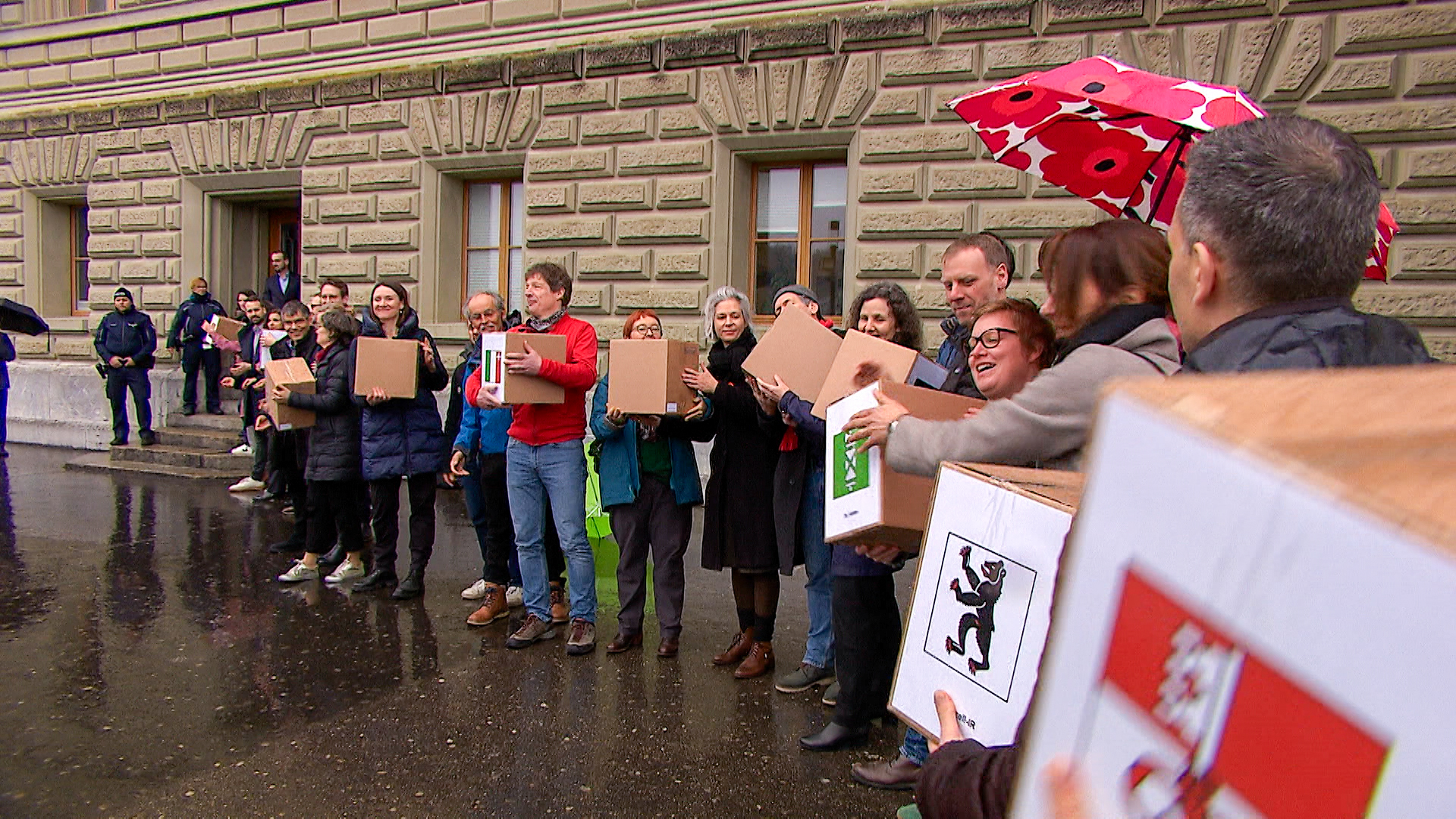
This figure is in line with the record number of candidates registered for the House of Representatives in the most recent federal elections in 2023.
Read more about this in the following article:
More

More
Record number of candidates standing for parliament
The situation changes somewhat at municipal level, where parties have more difficulty finding candidates interested in taking up a political office.
The authors of the study emphasise the difference between a general, rather theoretical willingness, and an actual candidacy, being confronted with the specific demands of an office, such as time investment or necessary knowledge. Only then the compatibility of political engagement with one’s life is truly considered.
The potential of the young
The study highlights the situation for younger age groups, who are more willing to consider a political office if asked, yet they are the group least likely to be asked to run. Stutzer therefore believes that there is untapped potential for encouraging a new political generation.
Women less motivated
One of the biggest differences found is between men and women, with women being significantly less willing to run for office, even if asked to do so. For older generations, this disparity could be explained by the late introduction of women’s suffrage in Switzerland in 1971, Stutzer explains. Several other studies conducted in the United StatesExternal link and in EuropeExternal link show that women rate their political skills lower than men and are therefore less likely to put themselves forward.
Regional differences
At national level, the study identifies a clear difference between German- and French-speaking Switzerland, where the willingness to engage in politics is significantly lower. However, when analysing the differences between cantons, major differences within the same language regions can be observed. The French-speaking cantons show a bit more cohesion, placing themselves in the middle-lower part of the scale, while Italian-speaking Ticino shows a rather high level of willingness.
More

More
Our newsletter on Swiss politics
The study further shows a decidedly higher openness to political engagement in smaller municipalities, where the sense of community is stronger and pending problems are perceived as more manageable.
At individual level, people who are more rooted in their local environment claim to be more ready to engage in politics. The study identifies two factors: that of an economic investment, through home ownership, or social commitment, with work in an association.
The study by the University of BaselExternal link is based on the first edition of the survey “How are you, Switzerland?”External link, conducted by the research institute gfs.bern on behalf of the Swiss Broadcasting Corporation (SBC), SWI swissinfo.ch’s parent company, between April and May 2023. A sample of 8,921 people was used, distributed across 1,463 municipalities and 26 cantons.
Adapted from Italian by Claire Micallef/ts