


Naturalisation fees in Basel will drop or be abolished altogether in certain cases; new night train is planned from Bern to European cities; and more news in our Monday roundup.
Basel set to reduce its naturalisation fees
Basel-City’s cantonal parliament voted last week in favour of lowering the fees for Swiss citizenship or – in some cases – abolishing them altogether.
Concretely, anyone under the age of 25 will no longer pay cantonal and communal fees, and will therefore only have to pay a 100-franc federal fee.
People on low incomes will also be exempted from fees.
Costs for adults aged 25 and over are also being cut: the new price is 900 francs instead of 1,750 francs until now.
READ ALSO: How much does it cost to become a Swiss citizen in 2025?
New night train is planned from Bern to European cities in 2026
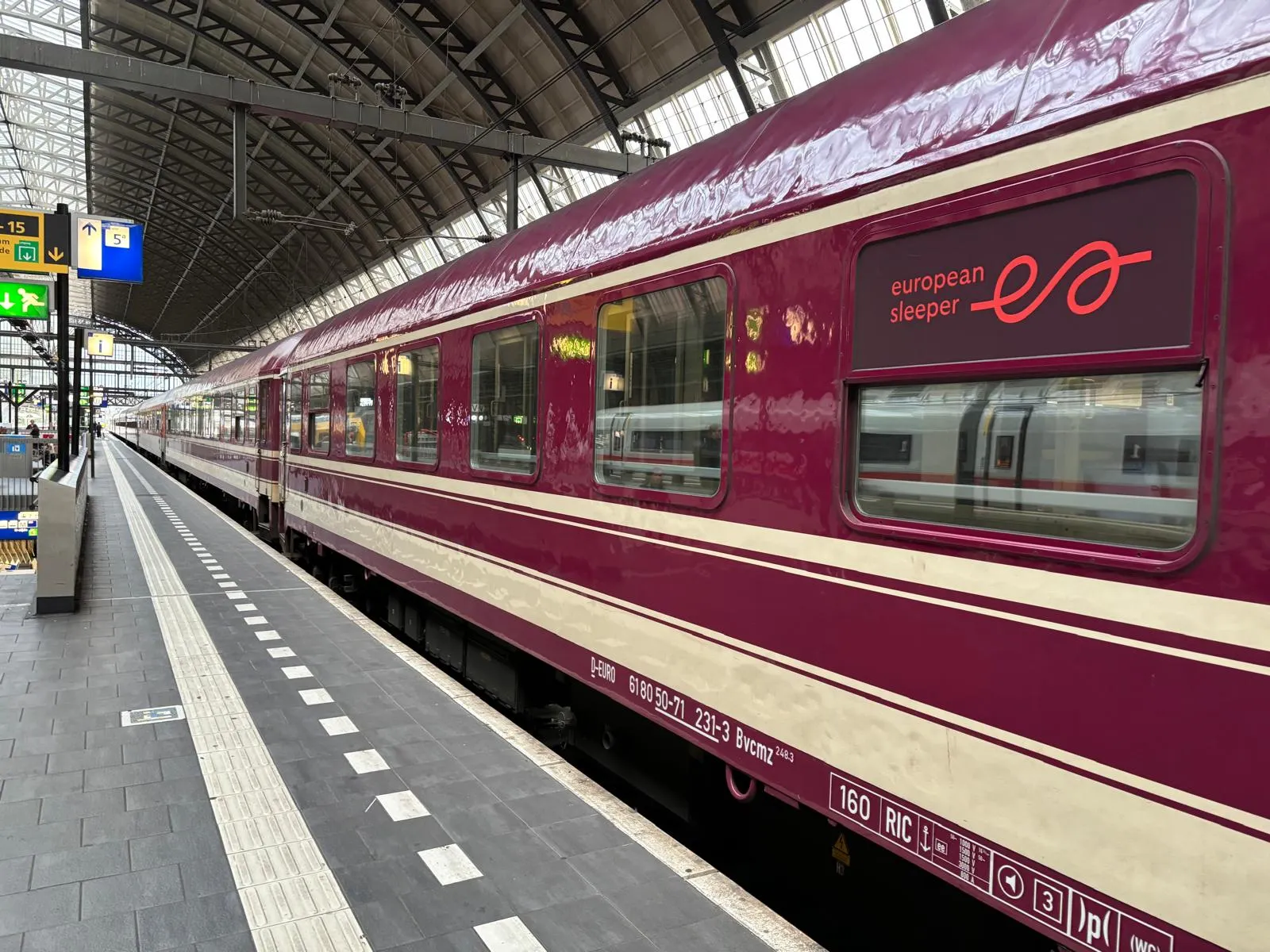
Starting in June, a private Dutch-Belgian operator, European Sleeper, plans to offer three weekly services in each direction between Switzerland’s capital city and Brussels, Amsterdam, and Milan.
While crossing Switzerland, the train will use the Simplon line.
Departures from Amsterdam and Brussels are scheduled for Monday, Thursday, and Saturday nights, arriving in Switzerland the following morning, before proceeding to Milan, the company announced.
Return journeys are scheduled for Wednesday, Friday, and Sunday nights.
Ticket sales are expected to begin in January or February.
READ ALSO: The new international train services from Switzerland in 2026
Advertisement
FAKE NEWS: No, Switzerland is NOT seeking to hire 85,000 unskilled foreign workers
The news has been making rounds of social media, going viral, for the past few weeks: Switzerland is supposedly recruiting 85,000 foreigners without qualifications, paying them up to 6,500 euros (6,000 francs) a month.
Shared widely online, the story has sparked interest within the EU, and even as far Tunisia, as reported by RTS public broadcaster.
According to theState Secretariat for Economic Affairs (SECO), the origin of this misinformation is unknown.
Therefore, “we recommend the utmost caution in interpreting these figures,” said SECO’s spokesperson Fabian Maienfisch.
Advertisement
Lack of funding delays the launch of Switzerland’s electronic identity card
The development of the e-ID, approved in a September 2025 referendum, was scheduled for the fall of 2026.
The Federal Office of Justice requested almost 2 million francs to pay the IT specialists to create the digital identity card by next autumn.
However, in the current session of the parliament, both chambers decided to cut the federal funding – apparently not being fully aware of the implications of their decision on the development of the e-ID card.
“That the introduction of the e-ID is affected wasn’t clear to everyone,” said MP Jakob Stark who chaired the Council of States’ Finance Committee.
Consequently, the project will be delayed for as yet undermined period of time.
If you have any questions about life in Switzerland, ideas for articles or news tips for The Local, please get in touch with us at news@thelocal.ch


