


Here are some of the greatest and most beautiful cycling routes across Spain for avid cyclists, from Don Quijote territory to the green north. Saddle up everyone!
Cycle tourism has been gaining popularity in Spain in recent years, with people seeing it as a more sustainable and relaxing way of travelling. It is also attracting the interest of public authorities, who see the economic and environmental potential of cycling holidays, particularly in rural areas.
“One of the problems facing Spanish tourism today is the overcrowding of destinations. Cycle tourism helps people discover other peoples and realities, and rural areas are greatly boosted by it,” Belén Calahorro, coordinator of PedalSpain and EuroVelo Spain, told news site RTVE.es.
Holidaymakers from the likes of the Netherlands, Britain, Germany, Sweden and Belgium are increasingly choosing Spain for cycling holidays.
Spain has also been one of the top countries in Europe that has recently expanded its cycling infrastructure, aiming to compete with the likes of France and Germany for cycle tourism.
Spain has more than 300 dedicated cycle routes covering more than 11,500 kilometres spread across several different regions. Check out this map to find them all.
There are even several special bike routes across the country called vías verdes or greenways. These greenways were built along old disused railway lines and have now become an environmentally friendly way to explore the country (here is a map showing all the greenways).
In the Catalan province of Girona alone there are 325 kilometres of cycling routes.
There are, however, many cycling routes all over Spain that are just as impressive and can be completed by avid low to mid-level cyclists.
Some of the best regions for cycling holidays according to the experts are Catalonia, Mallorca, Navarre, Andalusia and Valencia.
Here are ten bike routes in Spain that will take your breath away (at times in both senses of the word).
Advertisement
The TransAndalus, Andalusia
The TransAndalus trail is a 2,000km (1,240 miles) long circuit specifically designed for mountain bikes. It goes through the eight provinces of Andalusia and gives experienced riders a chance to pass through incredible natural sites, such as the Sierra Nevada, Doñana and Cabo de Gata national parks. There are a total of 23 stages, meaning that you can pick and choose which one or ones you do, without having to complete the entire trail. Less experienced cyclists can choose a specific shorter section. Stage one starts in Seville and is a mostly downhill ride to Chiclana de la Frontera.
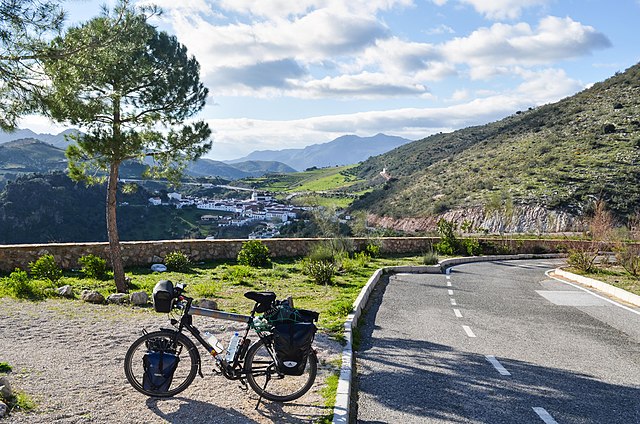 The TransAndalus passing through some of the region’s most spectacular scenery. Photo: jbdodane / Wikimedia Commons (CC 2.0)
Vía Verde de Ojos Negros, Aragon and Valencia
Running from the town of Ojos Negros, in the province of Teruel to Sagunto, on the Valencian coast, this is Spain’s longest greenway at 160km. It has been divided into two sections, so you can just choose to do one or the other if the whole route is too long. The first part follows the line of the Sierra Menera mining railway, in the Palancia river valley, while the second part descends towards the Valencian orange groves, on the shores of the Mediterranean.
 Cycling along the Vía Verde de Ojos Negros. Photo: Pacopac / Wikimedia Commons
Advertisement
Ruta Don Quijote, Castilla-La Mancha
Lovers of literature, Cervantes and Don Quijote will enjoy this route following in the unlikely hero’s footsteps. The whole route covers 2,500km (1553.4 miles) and runs through all five of the region’s provinces, but it’s split up into 10 sections, making it easy to select which one you want to do. Declared a European Cultural Route, it travels through two National Parks, six natural parks and six nature reserves, running along a combination of cattle trails, historic paths, riverbanks and disused railway lines.
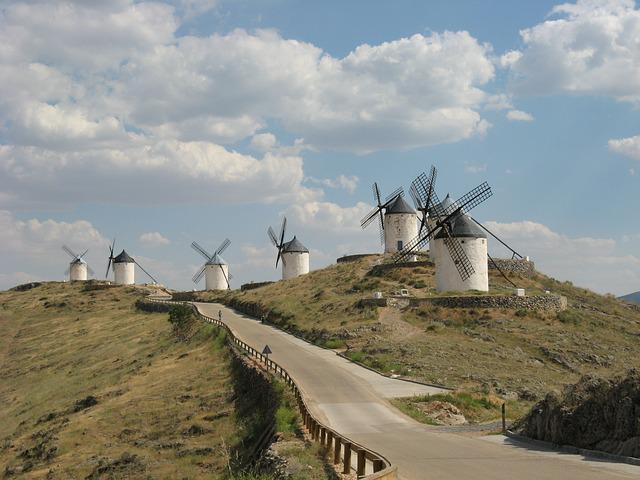 See the famous windmills of Consuegra along this cycle route. Photo: JamesHose / Pixabay
Vía Verde del Val del Zafán, Aragon and Catalonia
This spectacular route travels alongside the azure blue channels which eventually end up joining the grand Ebro River. It passes through the regions of Bajo Martín, Bajo Aragón, Matarraña, Terra Alta and Baix Ebre. Punctuated by viaducts, tunnels and protected natural spaces, it’s a pretty straight and easy greenway to follow, with some final twists and turns when you reach the Catalan coast at Tortosa near the Ebro Delta at the end.
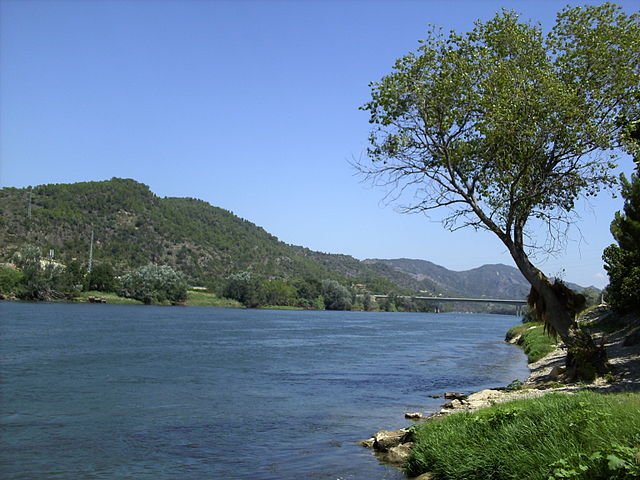 This route follows parts of the grand Ebro River. Photo: Future75 / Wikimedia Commons
READ ALSO: Cycling in Spain -12 fines you need to watch out for
Camino de Santiago
Pilgrims on foot are not the only ones who can enjoy this world-famous voyage. Cyclists can choose whether to complete the full 800km (500 miles) French Way or do the minimum 200km required to obtain the precious Pilgrimage Certificate.
READ ALSO: Top tips to safely enjoy Spain’s Camino de Santiago on foot or by bike
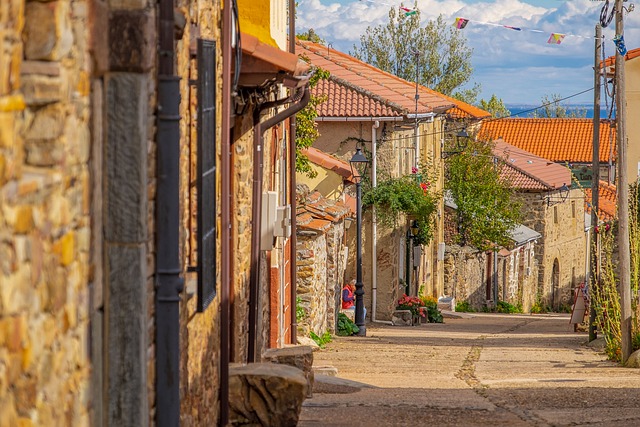 You can also do the Camino de Santiago by bike. Photo: Burkard Meyendriesch / Pixabay
Advertisement
Vía Verde del Carrilet, Catalonia
This route runs for 57km (35.4 miles), linking the town of Olot and the Garrotxa Volcanic Naural park with the city of Girona. Following the banks of the Ter, Brugent and Fluvià rivers, it winds its way between fields, forests and bridges, with the towering ancient volcanoes as your backdrop. The route is well signposted and is also suitable for hikers.
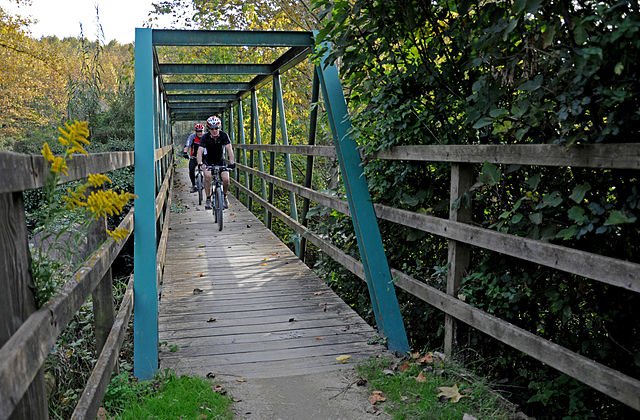 This route begins at the otherworldly Garrotxa volcanic natural park. Photo: Peremagria / Wikimedia Commons
Vía Verde Tajuna, Madrid
This spectacular bike path offers city dwellers the chance to escape the hustle and bustle without planning ahead. Simply get off at the last stop on Metro line 9 (Arganda del Rey) and hop on to your bici. The route runs along the river of the same name and runs for a total of 49km (30.4), passing through the quaint towns of Carabaña, Ambite, Oruco, Tielmes or Perales de Tajuna and Morata. This cycle path is also equipped for hiking and for people with disabilities or reduced mobility.
 You can see the ruins of the old station of Tajuna along the way. Photo: Malopez 21 / Wikimedia Commons
Advertisement
Vía Verde de la Sierra, Cádiz, Andalusia
This 37km (22 mile) vía verde runs from the village of Puerto Serrano in the province of Cádiz to Olvera, a small village north-east of Ronda. It passes through no less than 30 tunnels and over four viaducts, as well as valleys and river banks. Free of traffic and a relatively easy ride overall, it’s ideal for a family day trip – and if the little ones are too tired, taxis with bicycle racks are available for the return journey.
 The Vía Verde de la Sierra is ideal for the whole family. Photo: El Pantera / Wikimedia Commons.
Timanfaya National Park, Lanzarote, Canary Islands
Go for a ride through the land of volcanoes in Lanzarote’s Timanfaya National Park. Ideal for mountain bikers, there is even an 8km (5 mile) downhill track through the island’s unique landscapes and lava fields. The archipelago’s mild climate makes it a biking paradise throughout the year.
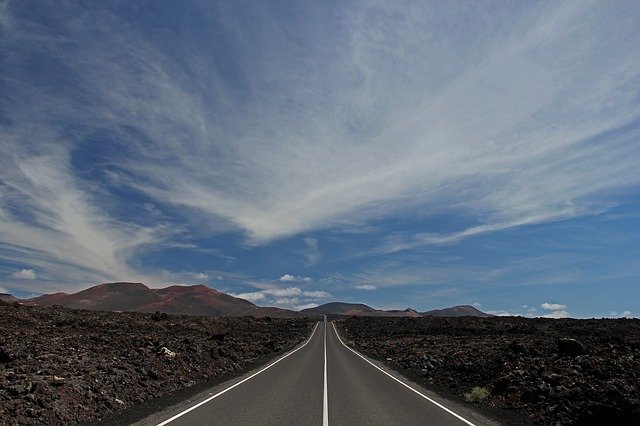 Ride through the volcanic landscapes of Timanfaya National Park. Photo: Manfred Zajac / Pixabay
Advertisement
Vía Verde del Plazaola, Navarra and the Basque Country
One of the most beautiful greenways is the 66.5km (41.3 miles) Vía Verde del Plazaola, traversing through the regions of Navarra and the Basque Country, passing through an array of forests and meadows. 41.9km of the route passes through Navarra and 24.6km through Gipuzkoa, so you can choose which section to do. The route also takes you through many tunnels, including the longest tunnel you can cycle through in Spain. The trail takes its name from the abandoned Plazaola mines, you’ll pass along the way.
 The Vía Verde del Plazaola takes you through many tunnels. Photo: Cherubino / Wikimedia Commons
READ ALSO:


