


Pamplona’s San Fermín is the world’s most famous bull-themed festival. Hate it or love it, there are lots of fascinating facts about the event that you probably didn’t know, from banned fountain jumping to bull runs for kids.
Man vs bull contests have long been an important part of Spanish culture, and while we don’t condone it here at The Local, the traditions surrounding these can tell you a lot about Spanish traditions.
The most important bull-themed event in Spain is probably the Running of the Bulls festival, better known as San Fermín.
Advertisement
San Fermín takes place from July 6th-14th every year in the Navarran city of Pamplona in northern Spain, with the standout event being a series of morning-time bull races through the city streets, with partygoers running ahead and alongside the animals, trying not to get gored.
There is also plenty of street drinking and eating, street bands, concerts, and other events, with a sea of people dressed all in white and with red handkerchiefs everywhere you go in Pamplona.
The running of the bulls doesn’t involve the animals being killed but the practice still receive heavy condemnation from animal rights groups.
It’s worth noting that actual bullfights do take place during San Fermín.
During the week of Sanfermines, the city goes from 200,000 inhabitants to more than 2.8 million people who come to watch and take part.
San Fermín was a French martyr
San Fermín was a martyr who died at the hands of the Romans in the year 303 in the French town of Amiens.
The first documents talking about him as a saint date from the 12th century. It is said that in 1186 an archbishop moved part of San Fermín’s relics to Pamplona.
The San Fermín festivals are believed to have started in medieval times as a commercial fair and somehow morphed into what we know today.
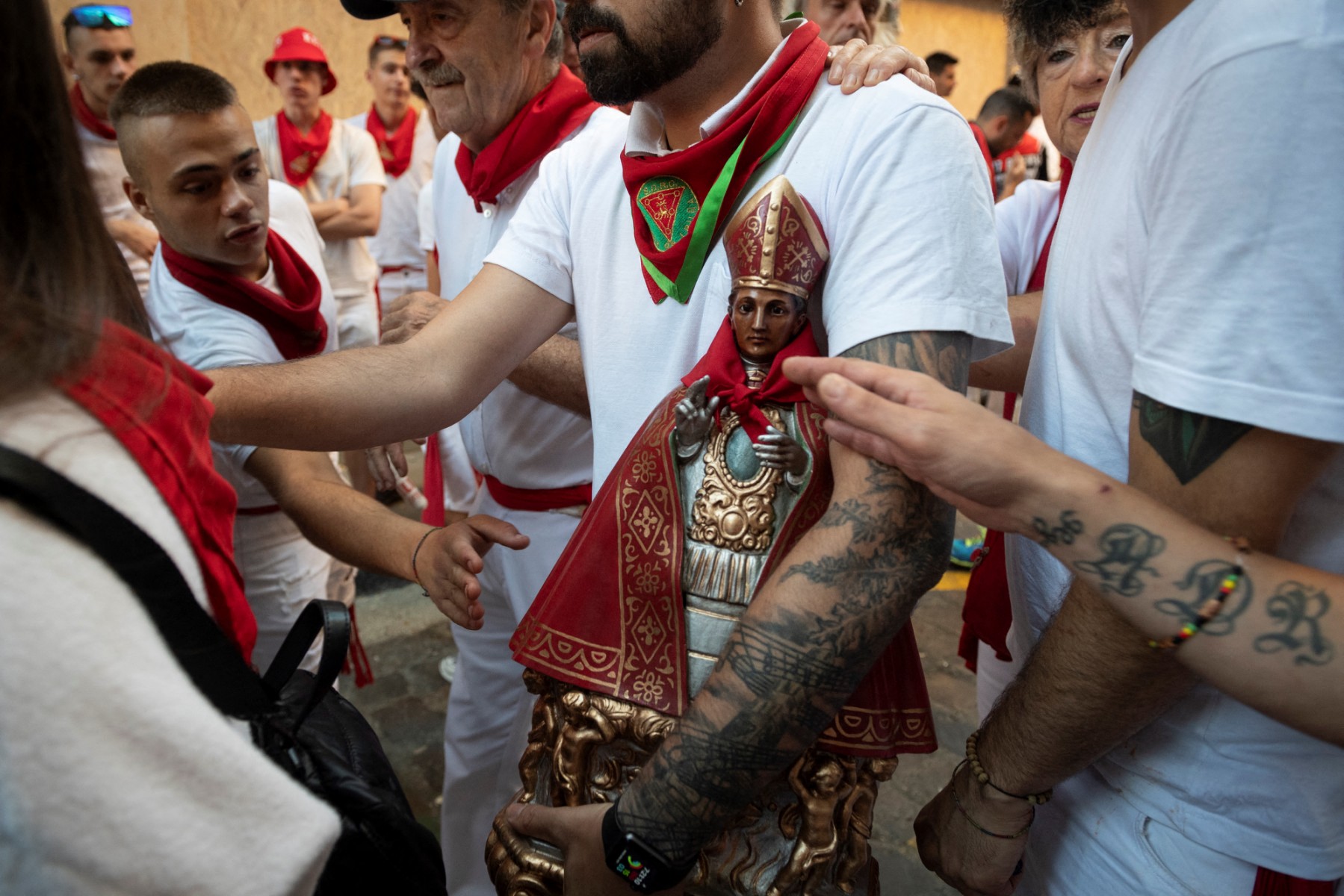
Bull runners touch a statue of Saint Fermín before running the “encierro”. (Photo by MIGUEL RIOPA / AFP)
The festival kicks off like a rocket
The chupinazo rocket measures 1 metre by 20 centimetres and marks the beginning of the festival.
When it’s fired, the noise reaches 133 decibels, similar to the noise of an airplane taking off.
The first chupinazo was set off in 1931 and the tradition has continued ever since, apart from in 2020 and 2021 during the Covid-19 pandemic.
Advertisement
The first chupinazo fired from Pamplona City Hall was in 1941. So many people cram into the square where the town hall is located that when the crowd disperses the floor is littered with shoes, wallets and other belongings.
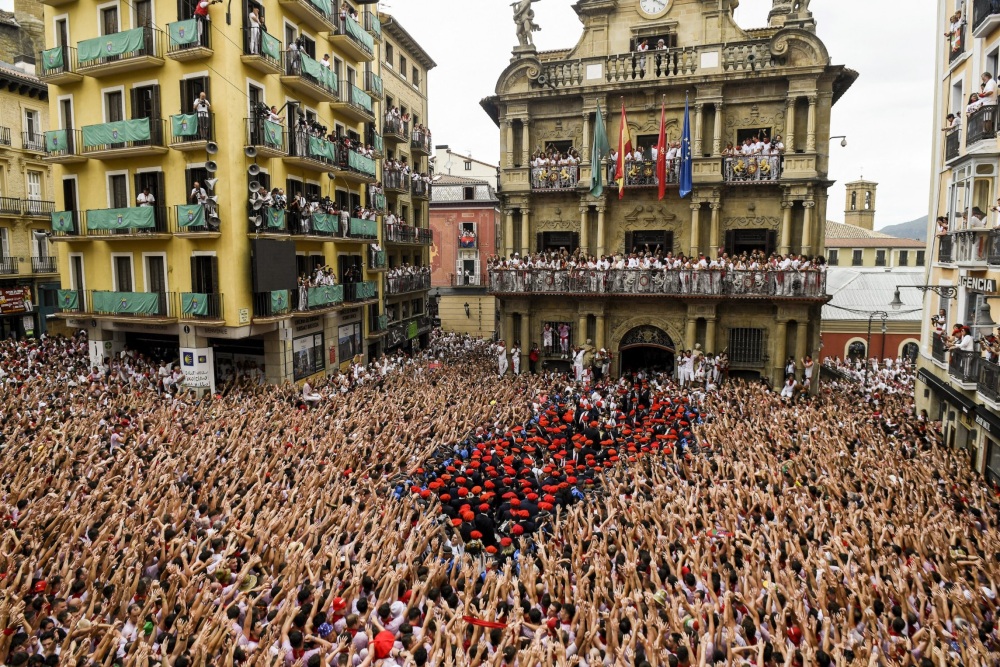
The “Pamplonesa” municipal music band performs during the “Chupinazo” (start rocket) opening ceremony. (Photo by MIGUEL RIOPA / AFP)
Foreigners’ dangerous fountain-jumping habits
During the 1980s, foreign tourists mainly from the US, Australia and New Zealand began to engage in what’s been dubbed fuenting, similar to the high-risk balconing trend but involving jumping off a fountain rather than a balcony.
As these often drunken guiris clamber up to the top of a tall fountain just after the chupinazo, revellers throw ice, glasses and bottles at them and hurl insults.
Once they reach the top without falling, they jump arms out into the crowd, in the hope the people below will catch them.
Advertisement
Needless to say, this practice is extremely dangerous, there have been plenty of injuries as a result of people falling as they climb or hitting the ground when they jump (one person is now in a wheelchair for life) and despite the fact that Navarran authorities banned the practice long ago, it continues to take place unfortunately (which probably explains all the insults and objects hurled at the jumpers).
And in case you were wondering, this isn’t a Sanfermines tradition that locals take part in.
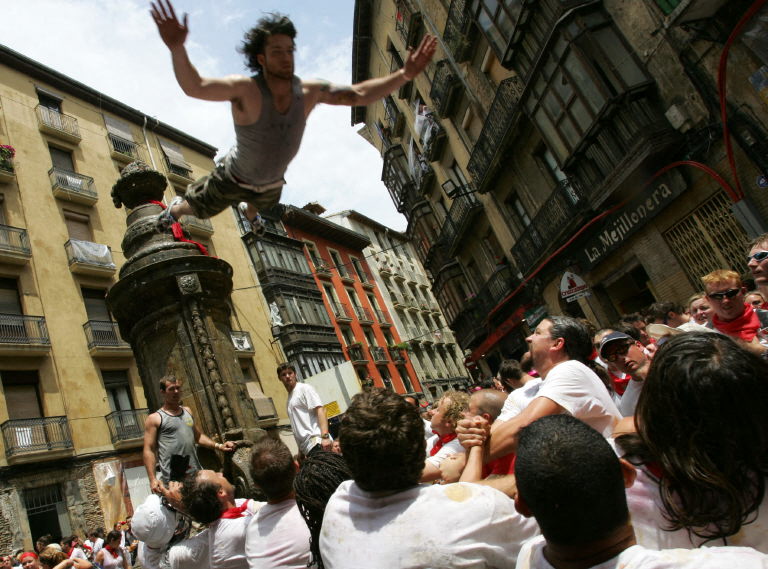
Fountain jumping is banned and dangerous, but some foreigners still do it. Photo: PIERRE-PHILIPPE MARCOU / AFP
The fastest and slowest bull runs
The San Fermín bull runs (known as encierros) take place at 8am for every morning of the festival (7th to 14th July). The course is 875 metres long in length, beginning in the narrow streets of Pamplona and ending in the bull ring. Anyone can take part, at their own peril that is, as the six bulls that are released seconds after the runners are rampaging 600-kilo purebred toros.
The longest bull run in history according to the book “Bullfighting Announcements and Anecdotes of Navarra” took place on July 11th, 1886 and lasted six and a half hours. It happened when one bull decided to stay in the plaza and had to be coaxed out leading it on a rope.
The fastest running of the bulls in history was by a bull named Huraño, who on July 11th, 1997 and completed the route in just 1 minute and 45 seconds. Most encierros last between two and three minutes. Runners who reach the bull ring too early (thus not having run next to the bulls) are usually booed by spectators.
Once everyone is in the plaza, the big bulls are replaced with younger and smaller vaquillas, which some runners dodge and jump over in front of thousands of onlookers in the stands.
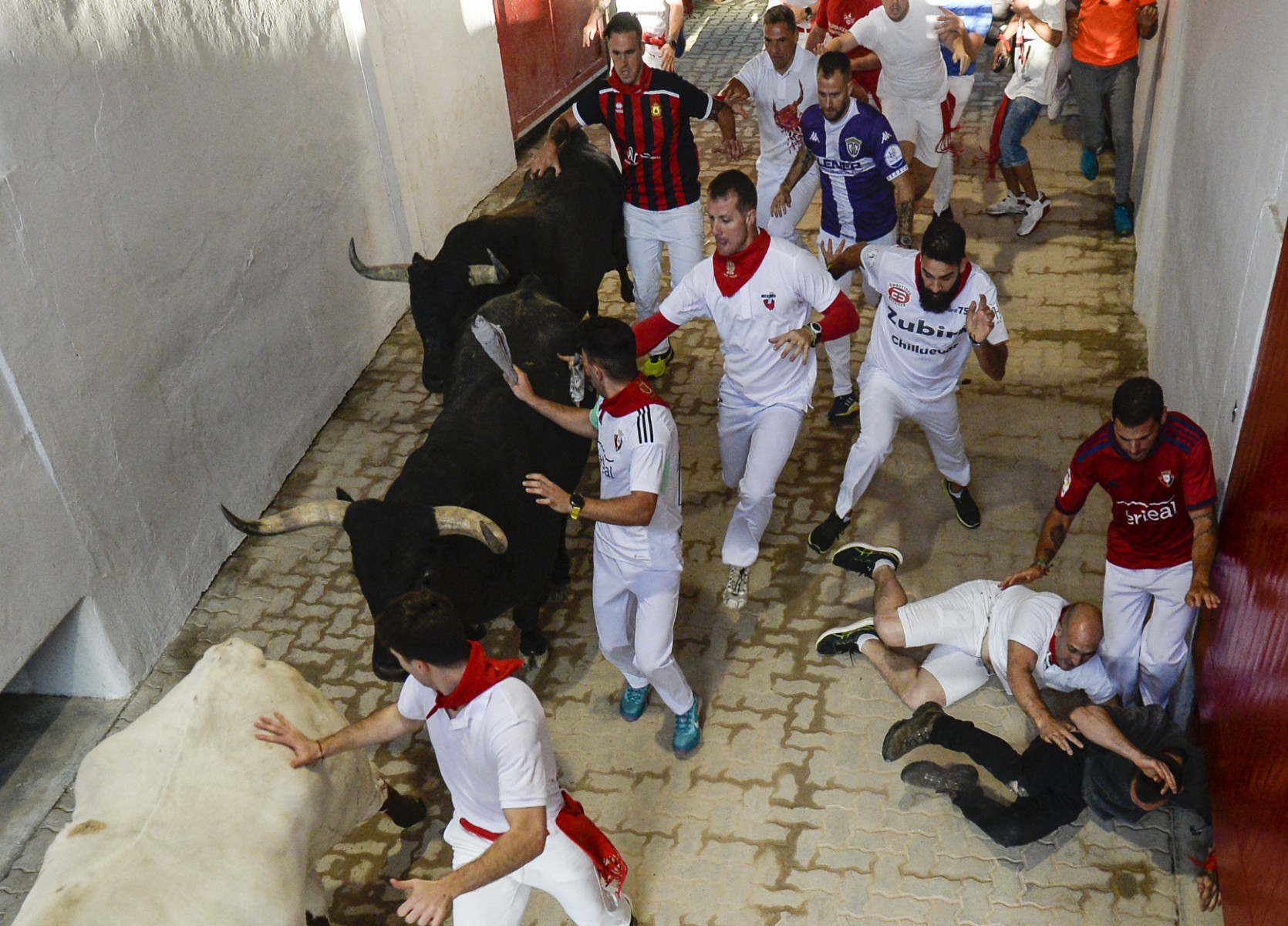
Participants fall as they run alongside the bulls at the entrance of the bull ring during an “encierro”. (Photo by ANDER GILLENEA / AFP)
Several people have died taking part in the festival
A total of 16 runners have died in the Running of the Bulls throughout its history. Most of these were Spaniards apart from a Mexican who died in 1935 and an American in 1995.
The last was Daniel Jimeno from Madrid, gored by a bull in 2009.
Injuries are far more common. In 2023, 92 people had to receive medical assistance after taking part in one of the 7 bull runs.
There are actually dozens of other running of bulls events held across Spain as well, but San Fermín is by far the most famous one.
Advertisement
There’s even a bull run for kids
Despite the risks that bull running entails, it’s a tradition that Pamplonikas (locals from Pamplona) have in their blood.
Enter the encierro txiki (the kids’ bull run), which sees hundreds of children mimic the adult race, only that the bulls are made out of cardboard and on cartwheels pushed by their parents.
There are still some bumps and falls, but local children learn from an early age how to avoid being gored or injured.
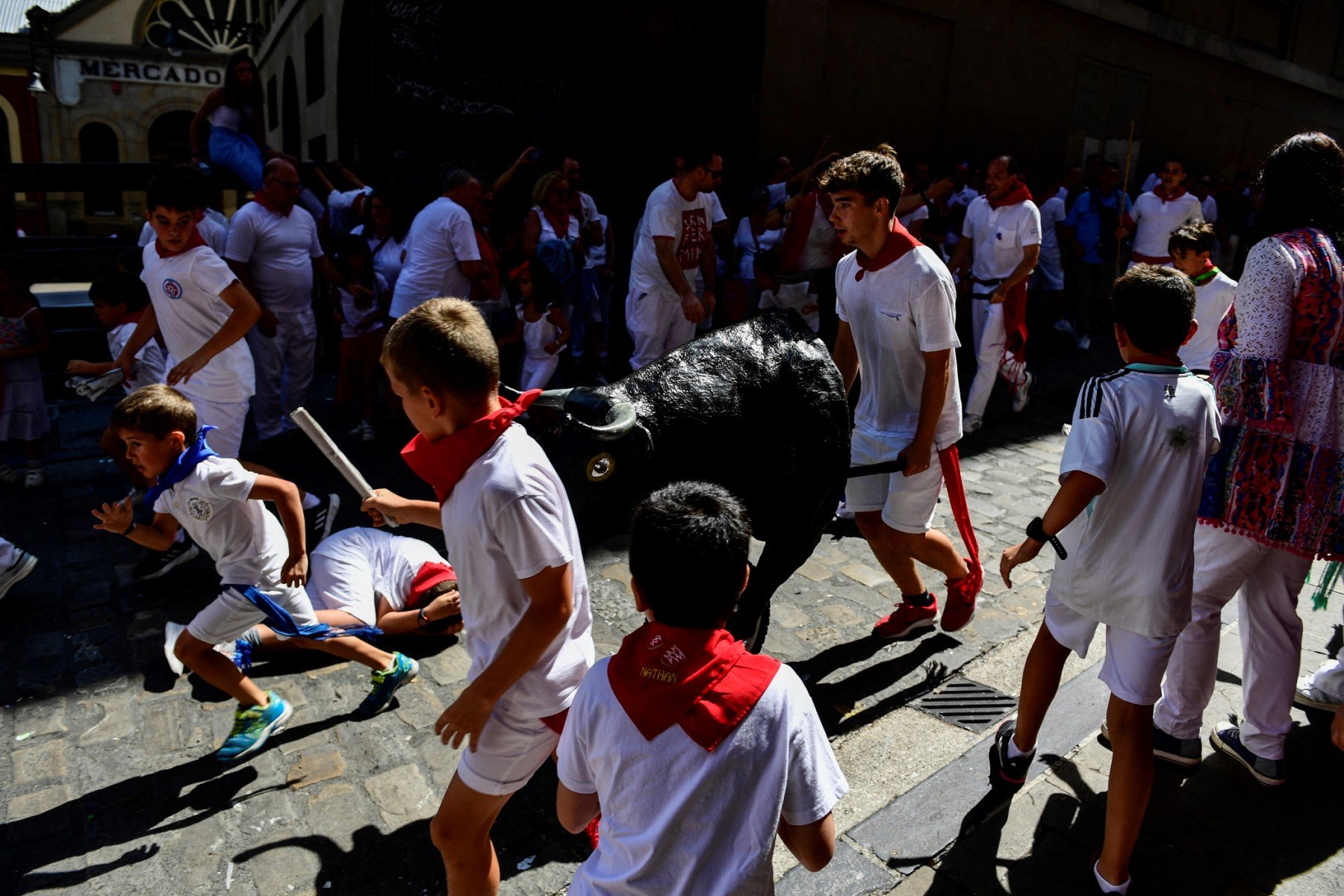
Children run during the “Encierro Txiki” (Small Bull Run) during the San Fermin festival in Pamplona. (Photo by ANDER GILLENEA / AFP)
Women were banned from taking part
It may come as no surprise for you to hear that women were prohibited from taking part in the running of the bulls for many years.
‘Macho Spain’ ensured that it was only until 1974 that they were officially allowed, and even now, some older people do not approve of women running and frown on those who choose to do so.
Female runners currently represent about 6 percent of total participants.
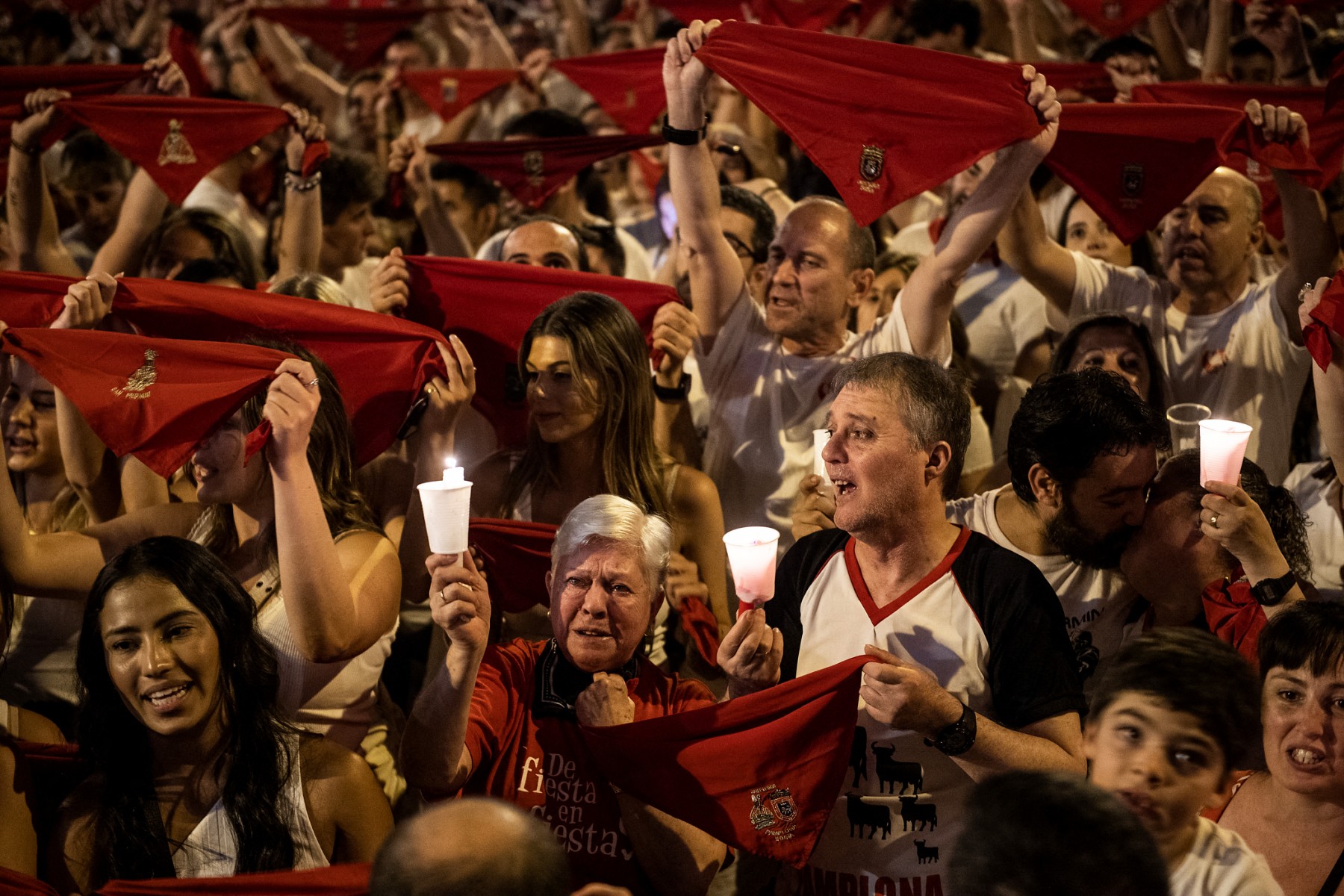
Revellers raise their red scarves and candles as they sing the song “Pobre de Mí”, marking the end of the San Fermín festival. (Photo by ANDER GILLENEA / AFP)
The festival is about much more than just the bulls
The running of the bulls is in fact a small part of the event, there are many activities including parades of giants, concerts, and fireworks.
Fireworks are set off at 11 pm every night during the festival, whilst there is also a religious element to it.
On July 7th, at 10am the San Fermín procession begins from Cathedral to the parish of San Lorenzo. They then collect the a statue of the saint to parade him around and say prayers.
On the final day, revellers gather en masse at midnight to sing Pobre de mí (Poor old me) and light candles, thus drawing the festival to a close.
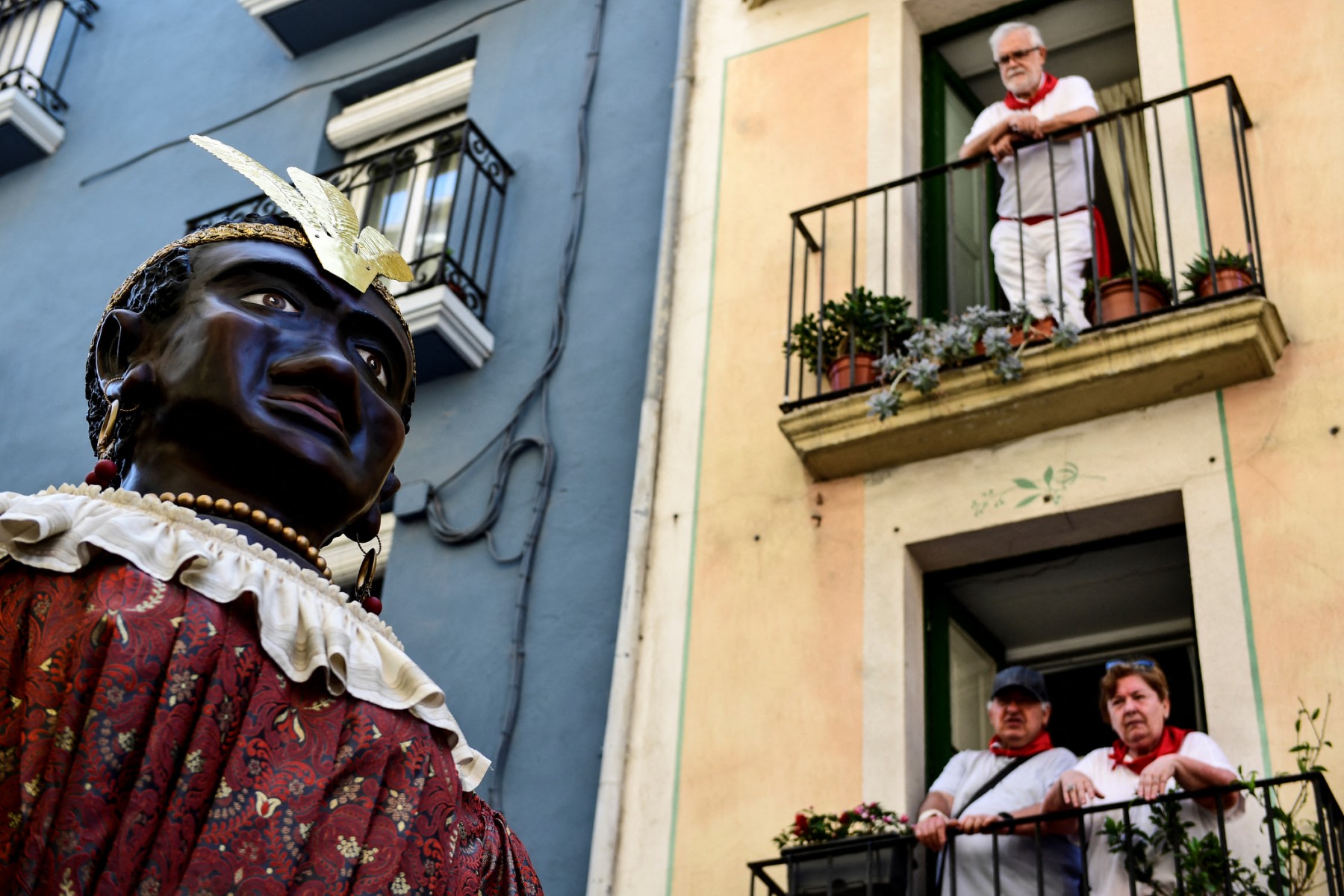
Locals watch the parade of “Gigantes and Cabezudos” (Giants and Large Head Puppets) from their balconies. (Photo by ANDER GILLENEA / AFP)
Everyone wears white and red
The official uniform of San Fermín is a white top and trousers with a red handkerchief. The all-white attire is said to have arisen because much of Pamplona’s population had some clothes in this colour already in their wardrobe, making it easier for them to take part.
Although the origin of the red pañuelo isn’t certain either, some suggest that the colour red symbolises the killing of San Fermín, who was beheaded.
Interestingly, the handkerchief or scarf is worn around the wrist until the chupinazo sounds, then everyone moves it to their neck.


