

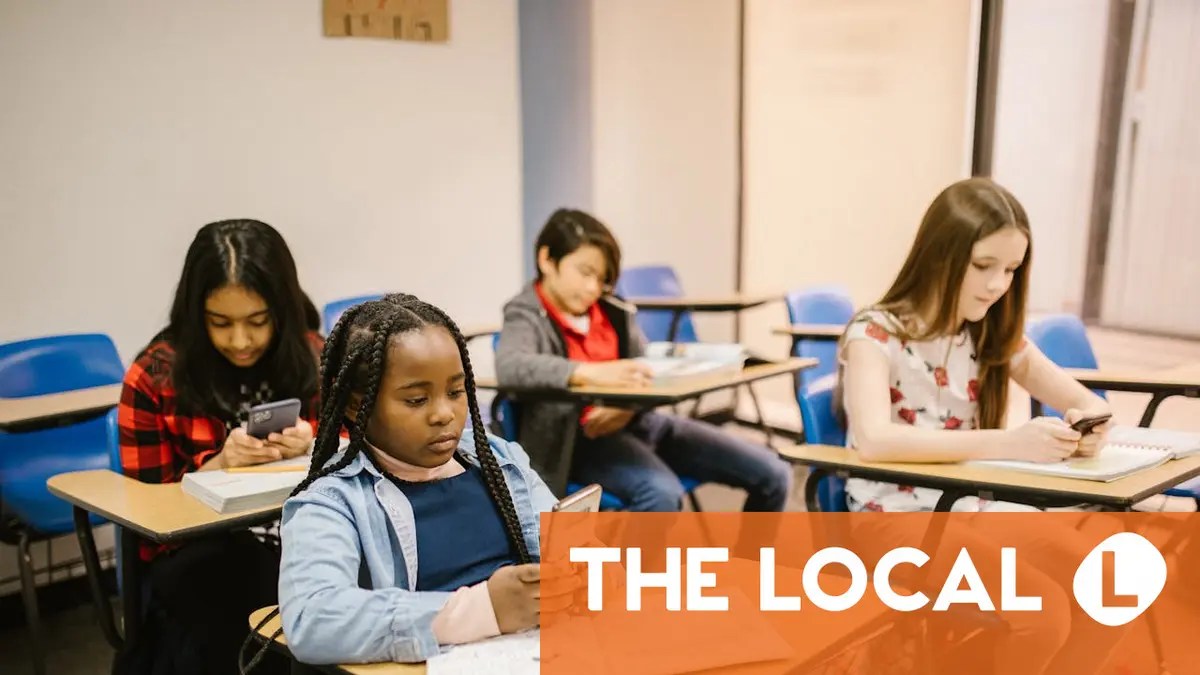
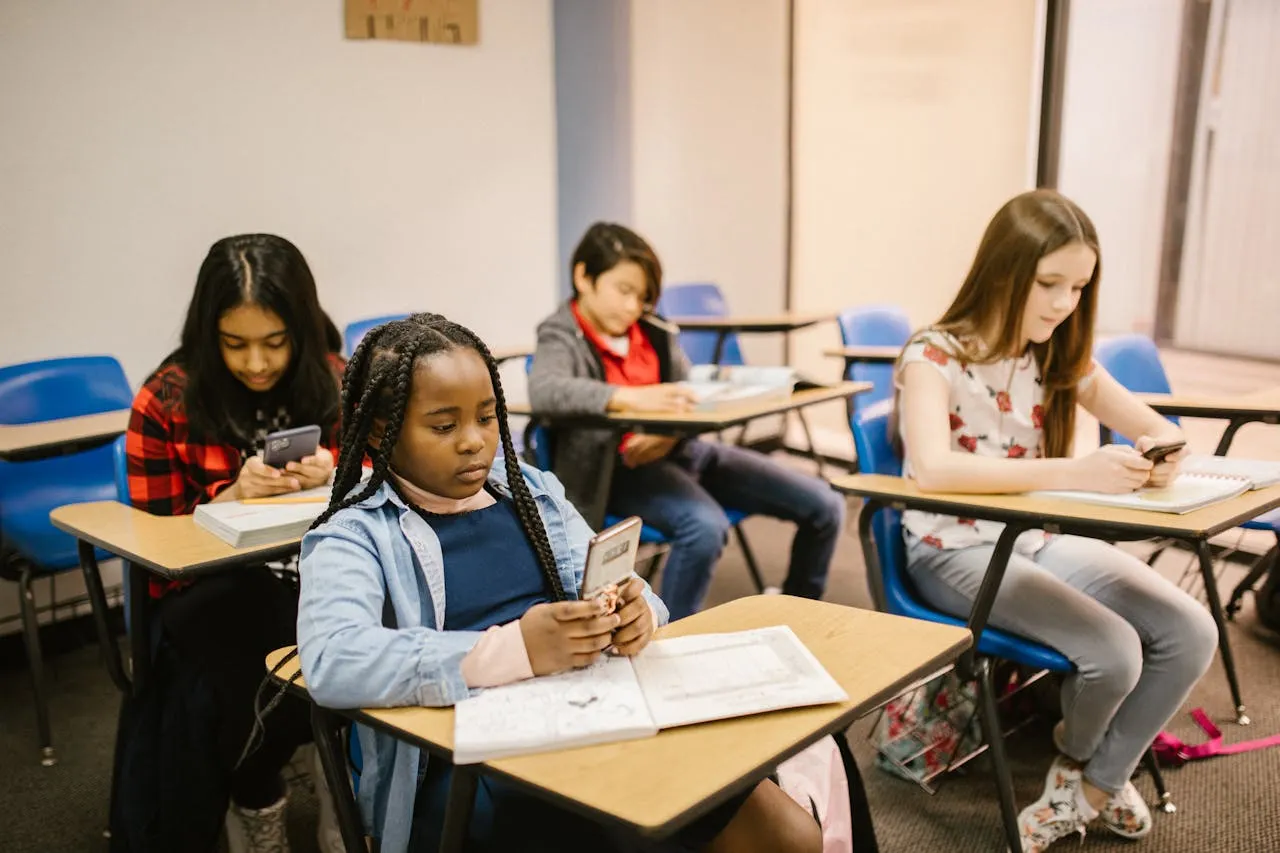
From the beginning of the new school year on August 18th, students in public schools in the Swiss canton of Geneva will no longer be allowed to use smartphones on school grounds.
While phones are already banned in Geneva’s primary schools and partially in secondary classes as well, the rules are not uniform,
Therefore, Geneva’s public school department “sought to strengthen and harmonise sanctions in the interest of equal treatment,” it said in a press release.
For the State Councillor Anne Hiltpold, who instigated the new measure, “schools must address the growing concerns of parents and professionals about the harmful effects of overexposure to screens, such as school dropouts and cyberbullying.”
“Reminding them of the ban on phones throughout the school grounds and toughening sanctions sends a clear message to both children and parents that owning a cell phone is not harmless,” she said. “It’s not about making them feel guilty, but rather about informing, preventing, and supporting them.”
Breaking the new rule will be punishable
To ensure compliance, a progressive system of sanctions is in place:
- First offence: phone confiscated, handed over to the principal or office, and returned at the end of the half-day.
- Second offence: detention with a reflection on the effects of excessive digital use.
- Third offence: principal summons the student and their parents.
- Fourth offence: student suspended for half a day.
Furthermore, personal digital devices will no longer be permitted for classroom activities, in line with the introduction of computer equipment provided by schools. An exception may be made during specific field trips, authorities said.
Advertisement
In Valais too
Valais will also ban smartphone use in public schools from the new school year.
All mobile phones in the canton’s schools will have to be turned off on all premises, including during breaks and at lunchtime.
The reason, according to Christophe Darbellay, the State Councillor in charge of education, is that “more and more children are experiencing learning and reading difficulties. Their ability to concentrate is diminishing.”
“School is an essential living space where it is important to create conditions conducive to learning, concentration, and personal development,” he added.
Darbellay specified that the ban doesn’t extend to all electronics: “there will still be tablets in the classroom. “


