


The Southeast Asian country has already raised close to $12 billion in thematic bonds, including blue bonds and Islamic investment instruments over the last seven years.
These efforts have been supported by development partners, including the United Nations.
Putut Hari Satyaka, is the Deputy Minister for Development Financing and Investment at Indonesia’s Ministry of National Development Planning (Bappenas). He spoke to UN News ahead of a key UN conference on financing for development which begins in Sevilla on 30 June.
UN News: How much money is needed in Indonesia to achieve the SDGs and what is your estimated funding gap?
Putut Hari Satyaka: The existence of an SDG financing gap remains a significant challenge, especially to developing countries. Indonesia is no exception. The financing gap to fully achieve all 17 goals and their targets remains significant. With an estimated $4.2 trillion needed for Indonesia to achieve the SDGs, there is a $1.7 trillion financing gap that is yet to be resolved.
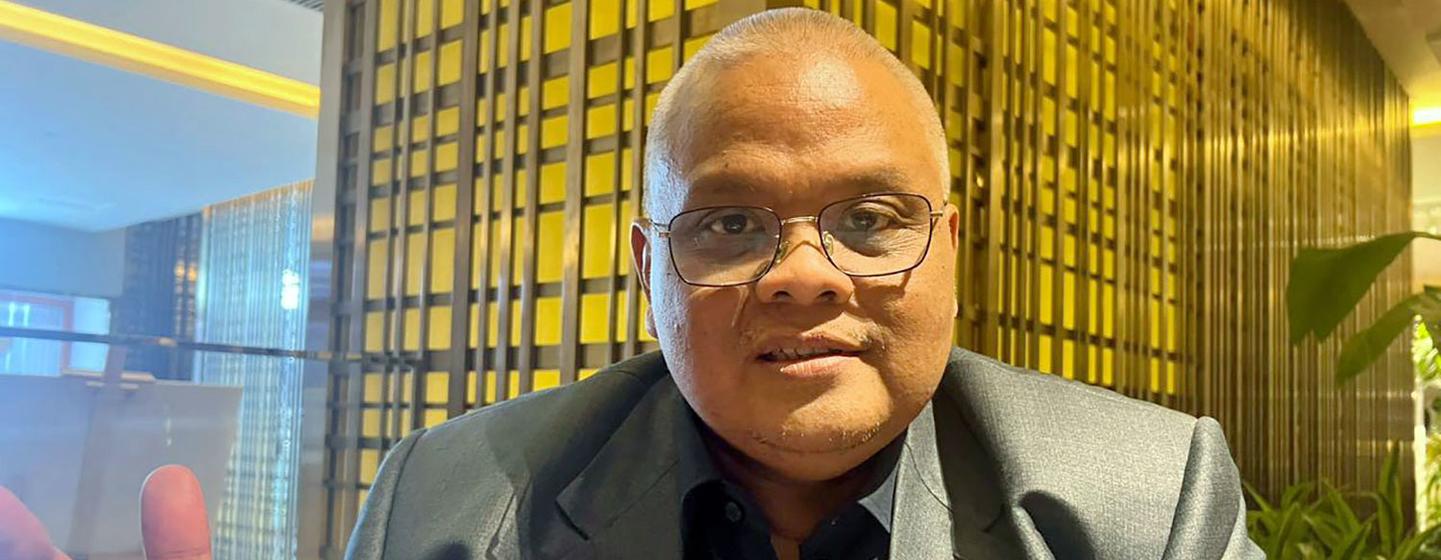
Putut Hari Satyaka, Deputy Minister for Development Financing and Investment at Indonesia’s Ministry of National Development Planning (Bappenas).
UN News: How can that gap be closed?
Putut Hari Satyaka: We need an integrated and transformative approach, going beyond “business as usual”. For us, this means two things.
Firstly, we must enhance the use of public finances to be more efficient, resilient and transparent. This includes improving budgetary alignment with SDG targets, strengthening expenditure efficiency, and ensuring that resources are effectively prioritized and utilized for sectors generating spill-over transformative effects to sustainable development.
Secondly, we must be creative and innovative – meaning that we need to scale up the existing innovative financing methods and explore new ones. Some of the most prominent instruments and approaches are blended finance, thematic bonds and faith-based financing.
Indonesia has been making great progress in this regard. We have created an ecosystem of a wide range of innovative instruments, attracting a diverse range of stakeholders and entities, supporting necessary regulations, and developing the enabling environment to nurture the market.
UN News: What is faith-based financing and what has been Indonesia’s experience so far?
Putut Hari Satyaka: Faith-based financing, especially within the Indonesian context, refers to financial practices grounded in religious principles, most notably, in the principles of Sharia law in Islam.
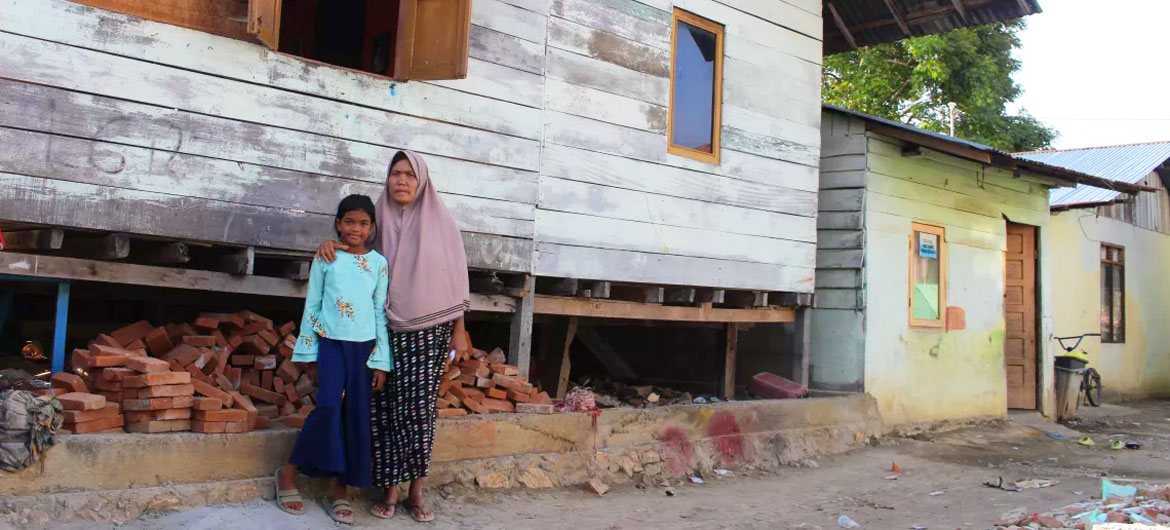
Families in Ache, Indonesia, have received faith-based cash grants to make improvements to their homes.
As Indonesia has 241.5 million Muslims, 85 per cent of the population, and faith-based social financing like zakat and waqf have been a long-standing practice, deeply rooted in our society.
What is new is the allocation of these instruments towards the SDGs. Indonesia has made strong progress in advancing Sharia finance as part of its inclusive growth agenda.
Sharia financing is now growing by 14 per cent a year, outpacing conventional finance. We are also championing scaling-up, green sukuk, which is a Sharia-compliant bond specifically issued to finance environmentally friendly projects.
This reflects Indonesia’s strong commitment to building a competitive financial ecosystem for faith-based instruments, and we will continue to strengthen collaboration, drive innovation, and ensure that faith-based financing plays a central role in our economic development.
UN News: Are you able to raise new funding through these faith-based instruments? Critics sometimes say this is just another way to reach the same funds you could get otherwise.
Putut Hari Satyaka: Yes, we are. With the world’s largest Muslim population, there is a massive potential in channeling faith-based financing towards the SDGs.
In 2018, Indonesia issued the world’s first sovereign green sukuk, raising $1.25 billion to fund renewable energy and climate adaptation projects.
Between 2019 and 2023, the government raised approximately $1.4 billion through domestic retail green sukuk, engaging individual investors in climate financing. This demonstrates the strong potential of green sukuk, both domestically and internationally.
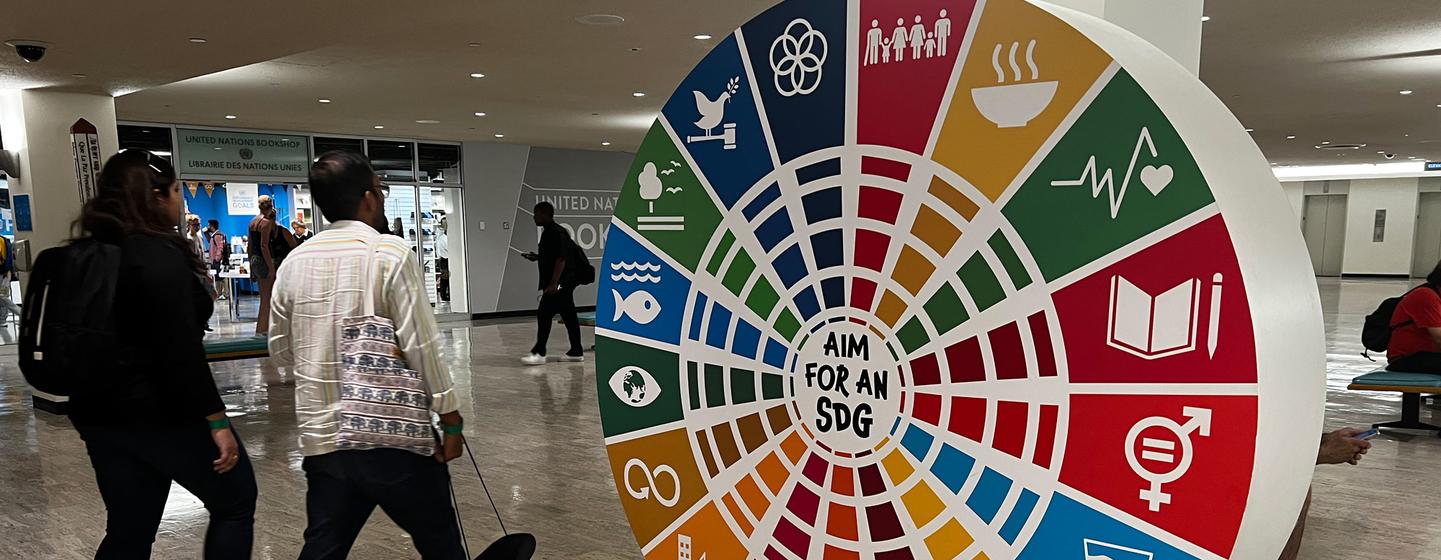
The 17 Sustainable Development Goals provide the blueprint for a more equitable world.
We also see great potential in Islamic Social Financing. Indonesia’s zakat potential is estimated at between $18 billion and $25 billion per year. The actual collection remains below 5 per cent of that potential, so there is clearly a vast opportunity to strengthen social finance.
UN News: What lessons have you learned over the years and what advice do you have for national or subnational governments interested in faith-based financing?
Putut Hari Satyaka: Although we have made great progress in faith-based financing, we have much room for enhancement, improvement and even exploration. Here are a few potential lessons:
First and foremost, awareness raising is key. As many view faith-based financing also as community-based financing, society’s participation in these instruments starts with their understanding of their importance and the way the money will be used.
Secondly, we see that the close coordination and concerted actions of relevant stakeholders are crucial. Overlaps are unavoidable without proper coordination. It is coordination – including with subnational governments, where we see room for improvement in order to scale-up faith-based financing in Indonesia.
Finally, building trust takes time. Faith-based financing relies heavily on public confidence, both in the institutions managing the funds and in how the funds are used.
Just like many other financing instruments, we have learned that transparency, accountability and consistent communication are essential to earn and maintain that trust.


