
New home, new rules: life in another country is often very different to what you are used to in Switzerland.
KEYSTONE/WESTEND61/ZELJKO DANGUBIC
From culture shock to new friendships: experts share their advice for integrating in a new country and building new friendships
Some are lured abroad by their dream job; others are looking for the perfect climate. Older people may decide to spend their retirement abroad for financial reasons. Around 30,000 Swiss people leave their home country every year. In 2023, more than 813,000 Swiss citizens were living abroad. Regardless of the reason, everyone faces the challenge of integrating into a new culture.
Further helpful articles on moving and living abroad can be found on our page “Moving abroad made easy”. Official information from the Swiss federal government is available on the Swiss foreign ministry website, and the Organisation of the Swiss Abroad (OSA) is available for additional advice.
However, those who understand and embrace cultural differences may settle more quickly. These steps can help:
1. Integration begins before departure
Rahel Siegenthaler has lived in different countries for 15 years and now works as an intercultural trainer and coach. She says: “It is crucial to find out about the history, values, norms and traditions of the new culture before emigrating. This allows you to show an interest in the customs and everyday life, and, to an extent, begin to participate in discussions.”

Rahel Siegenthaler has a master’s degree in intercultural communication and advises companies, schools, administrations and individuals.
Picture provided
2. Language is the key to integration
Taking a language course before departure can significantly reduce barriers to emigration. “A comprehensive course is ideal, but even simple tools such as online platforms like Duolingo can be helpful,” says Claudia Doron, who coaches emigrants professionally and has lived in America and Israel. Also think about regional dialects and expressions, such as bthe Swiss-German expressions “Auä” or “Hitzgi”. “It is important to pay attention to conversational etiquette in your new home to be better integrated into the community,” says Siegenthaler.
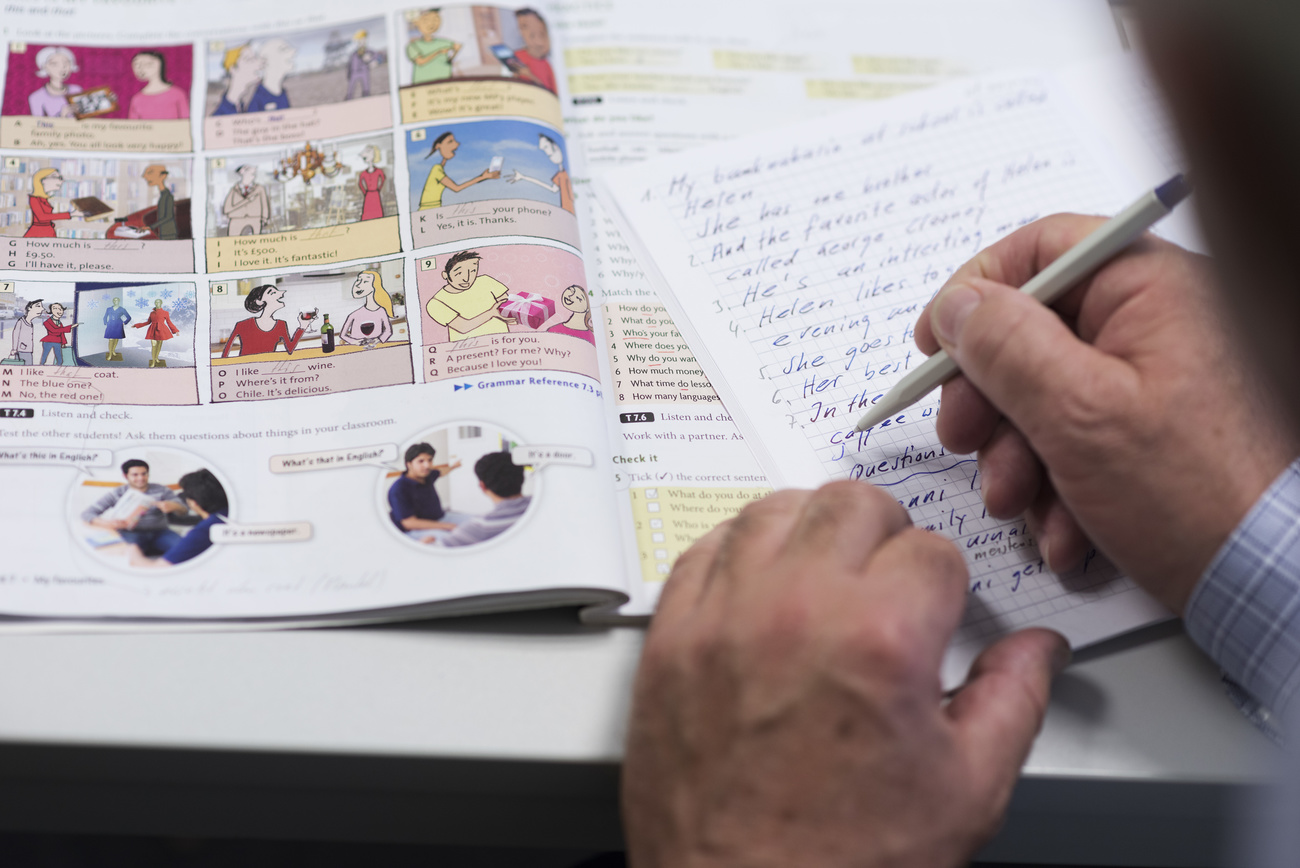
Taking a language course prior to moving abroad can be very helpful.
Keystone / Christian Beutler
3. Adapting to the new culture
Many things work differently in other countries than in Switzerland. Crucial to successful integration is understanding local customs and adapting to everyday life in your new home country. “Avoid comparing everything to Switzerland and approach the new country with an open mind,” stresses Doron. Culture-specific literature, a course, or coaching before leaving the country can help ease the transition and those first steps into a new life.
“It’s important not to compare everything with Switzerland, but to accept the circumstances of the new country with an open mind.”
Claudia Doron, Relocation Coach
Cultural differences in the working environment should also be taken into account. Anthony Adam, research project manager at HR services provider Page Executive, says: “Swiss professionals, especially the older generations, often prioritise a good work-life balance and tend to separate work and private life. In the USA, for example, more emphasis is placed on networking after hours.” In addition – it sounds clichéd but it’s true – not everyone has the same understanding of punctuality as the Swiss.
Features of popular emigration countries:
Emigrating to Germany
The Swiss have a reputation for being rather averse to conflict. Siegenthaler says: “In Germany, communication is much more direct and even in the event of disagreements, everything is addressed and negotiated in a direct verbal exchange until it is resolved.”
Emigrating to the USA
Making new contacts in the USA is straightforward and quite easy, says Siegenthaler. She compares it to a peach – soft and mellow on the outside, but with a hard centre: “You come into contact with people very quickly, make small talk, but it takes time to build a closer relationship and break through that hard inner layer.”
More

More
Subscribe to our weekly top stories
4. Preserve your own identity
It is important not to lose sight of your own traditions and values, stresses Siegenthaler: “Successful integration means preserving your own identity and background while at the same time establishing a connection to the new culture. The balance between these two aspects is crucial in the long term.”

Claudia Doron coaches people on emigration.
Picture provided
5. Making new friends
Making new friends helps you feel at home. Local offerings such as integration programmes, language courses, counselling services or cultural events are available. Siegenthaler says: “The easiest way is to look for activities that you already enjoyed in your home country.”
Doron advises actively planning time afterwards to have a coffee together, do sporting activities or organise an excursion. Such moments encourage socialising and strengthen social cohesion.
Swiss communities across numerous countries are listed on the Organisation of the Swiss AbroadExternal link website, and there are local groups on Facebook such as «Swiss People Living In The USA»External link, «Schweizer in Deutschland»External link or «Auslandschweizer»External link. Embassies and consulates often provide additional networks.
Especially at the beginning, when the local language is still difficult, contact with your compatriots is helpful. Doron says: “Ordering pizza in English is easy, but it quickly gets complicated when it comes to medical concerns.”
InterNations External linkcan also be a valuable resource: This platform facilitates the exchange of information about life in various global cities, fosters networking and organizes excursions.

Making friends can make integration easier.
Islandstock / Alamy Stock Photo
7. Establish a routine
After arriving abroad, everyday life can seem overwhelming at first. To make the transition easier, it helps to establish a clear structure. This could be through work, language courses or leisure activities. Doron says: “If the move is linked to a career move for one partner and the other is not (yet) working, it’s worth using the time creatively. This might be a good time to take a cooking class or try hobbies you wouldn’t have pursued in Switzerland”.
The American anthropologist Kalervo Oberg divides integration into four phases, addressing the culture shock often associated with moving to a new country. You can read more about this in the following article:
More

More
Culture shock: The four phases of emigration

SWI swissinfo.ch

SWI swissinfo.ch
Edited by Balz Rigendinger
Adapted from German by Katherine Price/amva