


Nobody celebrates festivities with quite the same flair and diversity as Spain, and Saint John’s Eve (June 23rd or 24th) is no exception.
Saint John’s Eve or the feast of Saint John, known as El Día San Juan in Spain, is a celebration that usually involves elements of fire, dancing and animals.
In Spain, San Juan is either celebrated on June 23rd or 24th, but it falls close to the summer solstice on June 21st and bears some resemblance to Midsummer celebrations in Scandinavia and other northern countries.
Advertisement
In simple terms, Spain’s Día San Juan was born from the Christianisation of the pagan ritual of celebrating the summer solstice.
Whether it be effigy burning, dousing each other with water, or touching the belly of a prancing stallion, San Juan revelries take place from coast to coast and are some of the most popular fiestas in all of Spain.
Townsfolk in coastal areas of Spain will head to the beach for a night of revelry around huge bonfires, with dancing, drinking and feasting often culminating in a midnight dip in the ocean.
There are however other San Juan celebrations that are even more bizarre, in some cases – as is often the case during Spanish festivals – with some questionable treatment towards animals.
In Alicante elaborate effigies are paraded through the town before being thrown into the flames while the streets pulsate with music, dancing and firecrackers, similar to Valencia’s festivities during Las Fallas.
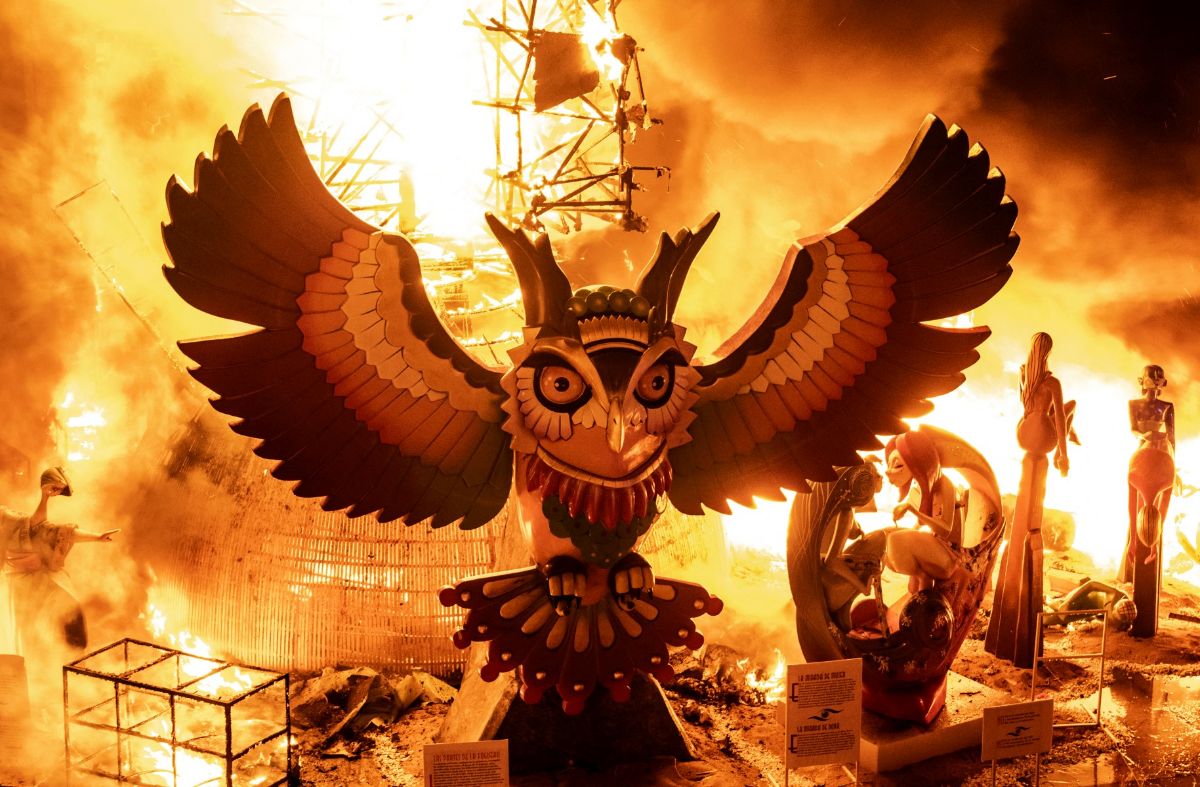
A huge papier-mâché effigy burnt during San Juan in Alicante. (Photo by JOSE JORDAN / AFP)
Menorca has a strange tradition which sees horses (and their riders) gallop, dance and prance through crowds while onlookers attempt to touch the equine’s belly, a feat that ensures good luck for the year.
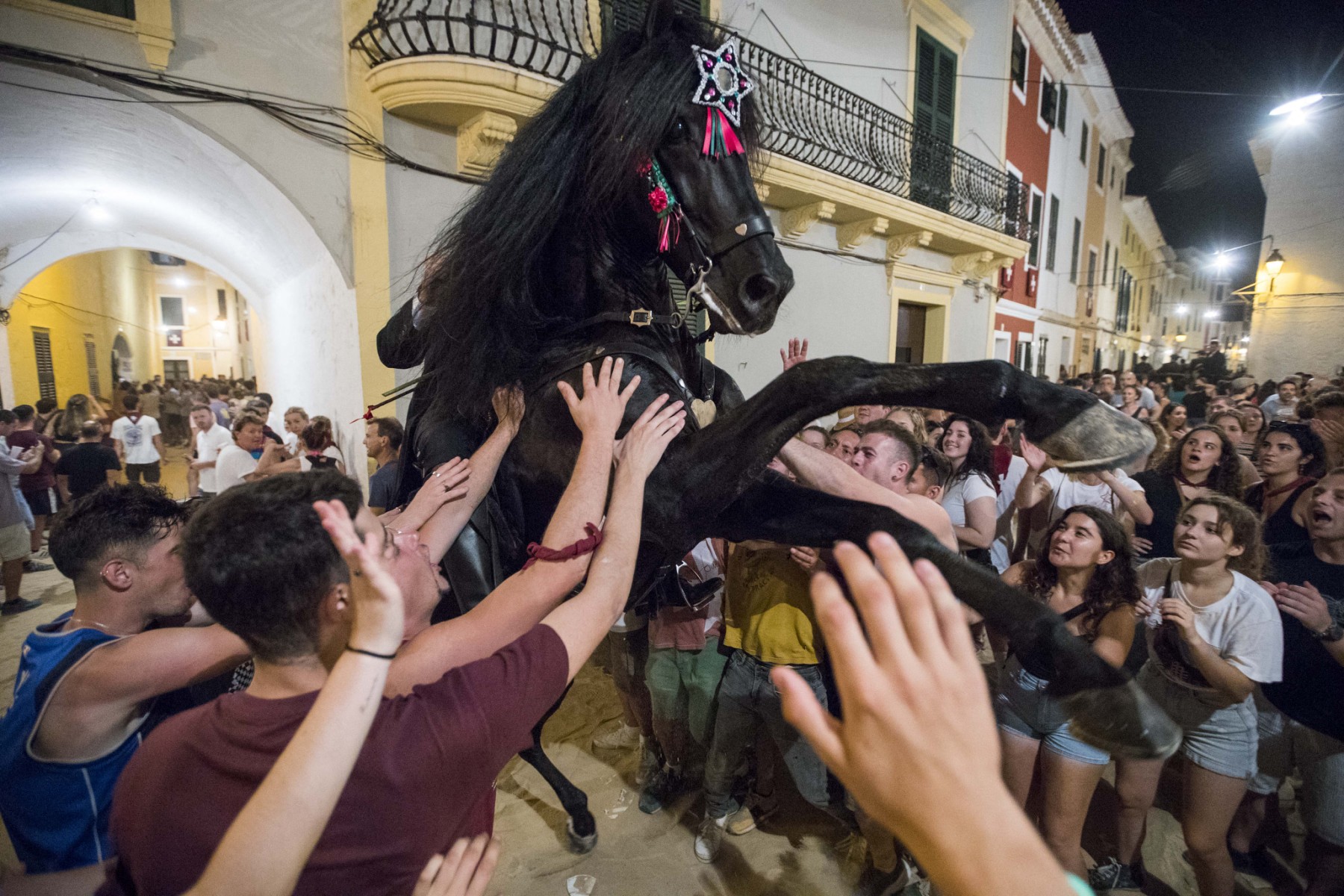
A horse rears up on its hinds legs as the crowd tries to touch it during San Juan celebrations in Menorca. (Photo by JAIME REINA / AFP)
In Catalonia, the Sant Joan parties are held on the night of June 23rd. The following day is also a public holiday, which residents usually need to recover from the night before. The firework explosions begin at least a week beforehand as everyone readies themselves for the big night. On the night itself, crowds gather on beaches to set off and watch spectacular firework displays, whilst eating coca (a local type of sweet bread) and drinking cava.
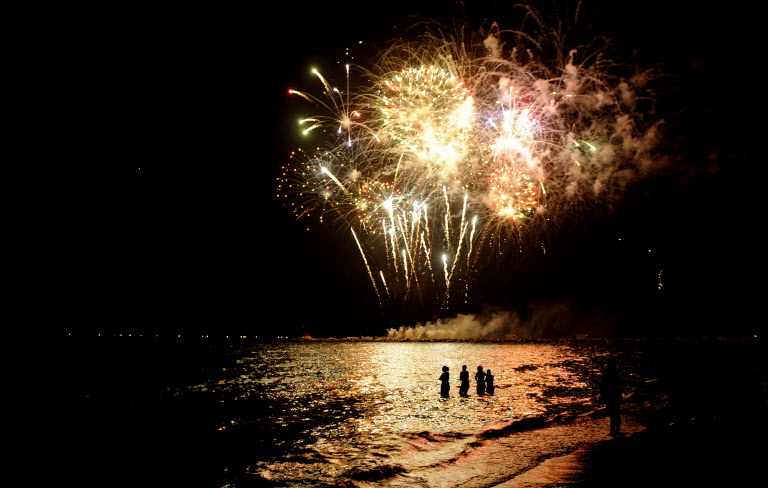
Revellers in the sea enjoy the Sant Joan fireworks display in Catalonia. (Photo by JOSE LUIS ROCA / AFP)
Revellers in Lanjarón, in the Alpujarras area south of Granada, choose to celebrate midsummer with an almighty water fight when residents use every receptacle at hand – hoses, buckets, water pistols – to drench each other.
In the Pyrenean town of Isil near Lleida (Catalonia), residents mark Sant Joan by zigzagging from mountain top to town square carrying burning branches. After a huge bonfire, townsfolk dance until dawn.
Advertisement
In the Tenerife town of Puerto de la Cruz, goats take centre stage during the celebration of the Baño de las Cabras. Goat herders bring their herd to the beach and the bleating animals are (somewhat reluctantly) dunked into the sea. The event has its origins in an aboriginal ritual celebrated by the Guanches – the first Canary islanders – to mark the summer solstice.
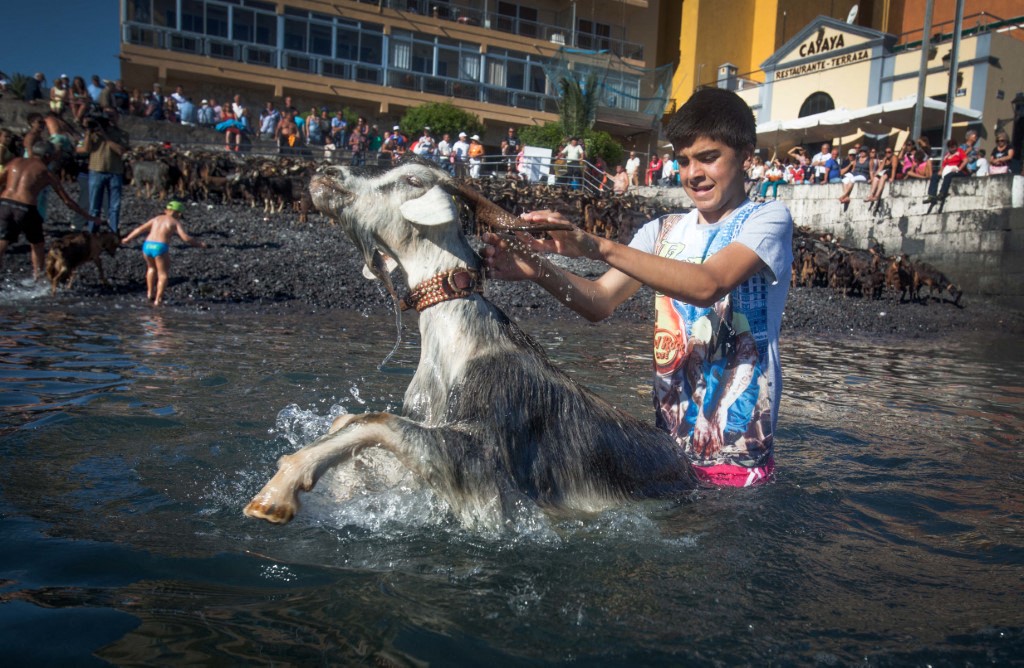
A boy plunges a goat into the water during the traditional “Baño de las Cabras” (goats bathing) as part of San Juan celebrations in Puerto de la Cruz in Tenerife. (Photo by DESIREE MARTIN / AFP)
In the Basque village of Bakio, evil spirits are banished by the “Zanpanzar” who stomp to the rhythm of giant cowbells.
While in San Pedro Manrique in Soria province (north-central Spain), the midsummer ritual involves men walking barefoot over hot coals without burning their feet… Oh, and with the added challenge (and weight) of carrying a woman on their back.
Wherever you are in Spain, Happy San Juan!


