


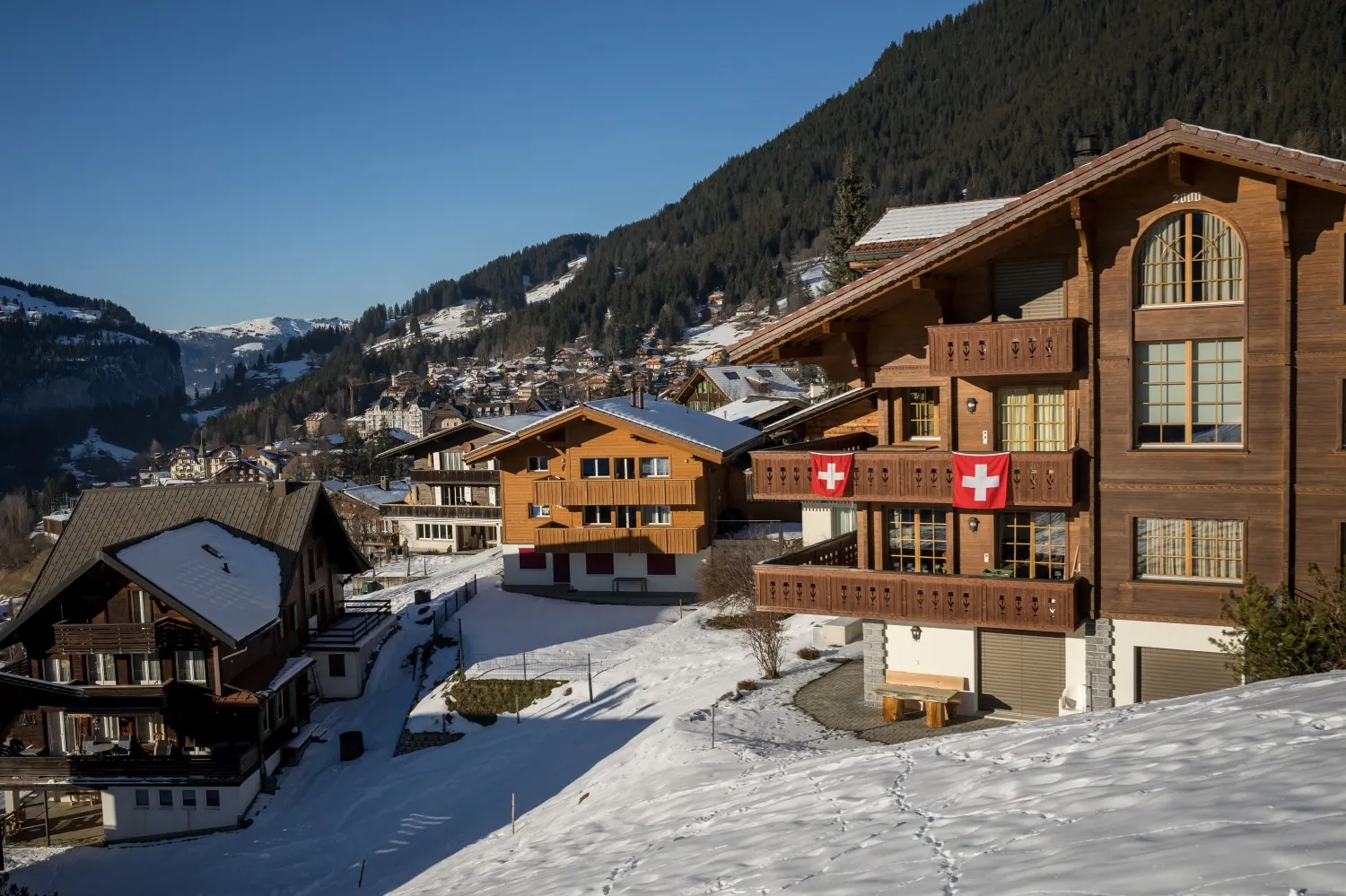
The Swedish government’s plan to tighten asylum rules to the strictest level allowable under EU law was supposed to be the crowning glory of its ‘migration paradigm shift’. But the inquiry’s first proposal could claim an unexpected victim: everyone from Switzerland.
What does the proposal say?
The proposal, which is mainly focused on abolishing permanent residency for asylum seekers, also includes a section on phasing out permanent residency for long-term residents of the EU, a status known as varaktigt bosatt.
Currently, non-EU citizens who have been living in Sweden with a residency permit for five years, with no breaks, can apply for status as varaktigt bosatt, or long-term residence, which grants them an EU residence permit with at least five years’ validity, and which is automatically renewed when it expires. This is a residence permit which is granted under EU law rather than Swedish law. It allows holders to move more freely to work in another EU country.
For primarily practical reasons, people in this group have previously been granted permanent residency under Swedish law at the same time as long-term residency under EU law.
Under the new proposal however, people who are registered as varaktigt bosatta would no longer be granted permanent residency and would instead be granted temporary five-year residence permits.
This effectively means that the only way for people in this group to gain the right to live in Sweden permanently is through obtaining Swedish citizenship.
The other groups affected by the proposal are refugees, people in alternative need of protection, quota refugees, people who have been granted residence permits because of “exceptionally distressing circumstances” (synnerligen ömmande omständigheter) or an “impediment to enforcement” (verkställighetshinder). These groups would in some cases be able to apply for residence permits on other grounds, if they qualify.
Advertisement
Why does this affect Swiss citizens in particular?
Switzerland is not an EU member state nor is it a member of the European Economic Area (EEA), but it does have a number of bilateral agreements with the EU, including agreements on freedom of movement, and it’s a member of the European Free Trade Association (EFTA), along with Norway, Iceland and Liechtenstein, which are also members of the EEA.
This means that Swiss citizens, unlike the other three EFTA countries, do not qualify for right of residence under EU rules (uppehållsrätt), but they also can’t get residence permits under non-EU rules (uppehållstillstånd), as they have a special status due to agreements with the EU. Swiss citizens are unable to receive, for example, a work permit or study permit for non-EU citizens instead of their special Swiss permit.
Currently, Swiss citizens, along with their family members, apply for their own special residence permits with the Migration Agency once they move to Sweden. After five years, they can apply for status as varaktigt bosatta, which also grants permanent residency.
Swiss citizens, due to their special status, are also ineligible for other types of Swedish residence permit which provides a path to permanent residency, such as the EU Blue Card or ICT (Intra-Corporate Transfer) permit issued to non-EU citizens moving to a different country but staying within the same company.
This means, as the Migration Agency has confirmed to The Local, that the only way for Swiss citizens to get permanent residency in Sweden is by registering as varaktig bosatta.
By proposing to remove the possibility for people in this group to get permanent residency, Sweden would essentially close the only path Swiss citizens have to gain the right to live in Sweden permanently without getting citizenship.
Sweden’s commitments to the EU
Advertisement
University union SULF raised the question of whether this breaks the agreements between the EU and Switzerland in an official response to the government’s proposal to abolish permanent residency for varaktig bosatta.
“If this is the case, then the proposals put forward by the inquiry represent a serious deterioration in the situation for these citizens which can hardly have been the goal of the directive,” the union’s response reads.
“SULF can see no signs that the inquiry has provided its reasoning for this, or whether it has investigated whether a change is compatible with the commitments towards Switzerland that Sweden has as a member of the EU.”
Swiss citizens would therefore be the only so-called third country citizens who would be barred from permanent residency solely as a result of their nationality, SULF writes.
Advertisement
So why has Sweden put forward this proposal?
It is not clear whether Sweden meant to include Swiss nationals in its crackdown on asylum seekers or whether citizens of the Alpine nation have been accidentally caught up in the tightening of the laws. The Local has requested an explanation from the government.
One of the key policies of the so-called “migration paradigm shift” in the Tidö Agreement between the government and the far-right Sweden Democrats is to tighten Swedish asylum laws to the lowest level permitted under EU law.
In October 2023 it appointed judge Josephine Boswell to lead an inquiry into phasing out permanent residency for refugees and asylum seekers.
The first part of the inquiry, described above, is currently making its way through the legislative process, with relevant organisations and public authorities given until June 18th to comment on its proposals.
The next stage of the inquiry, which is due to be presented on October 2nd, 2025, will look more closely at the situations in which permanent residency permits which have already been granted could be changed or revoked.


