


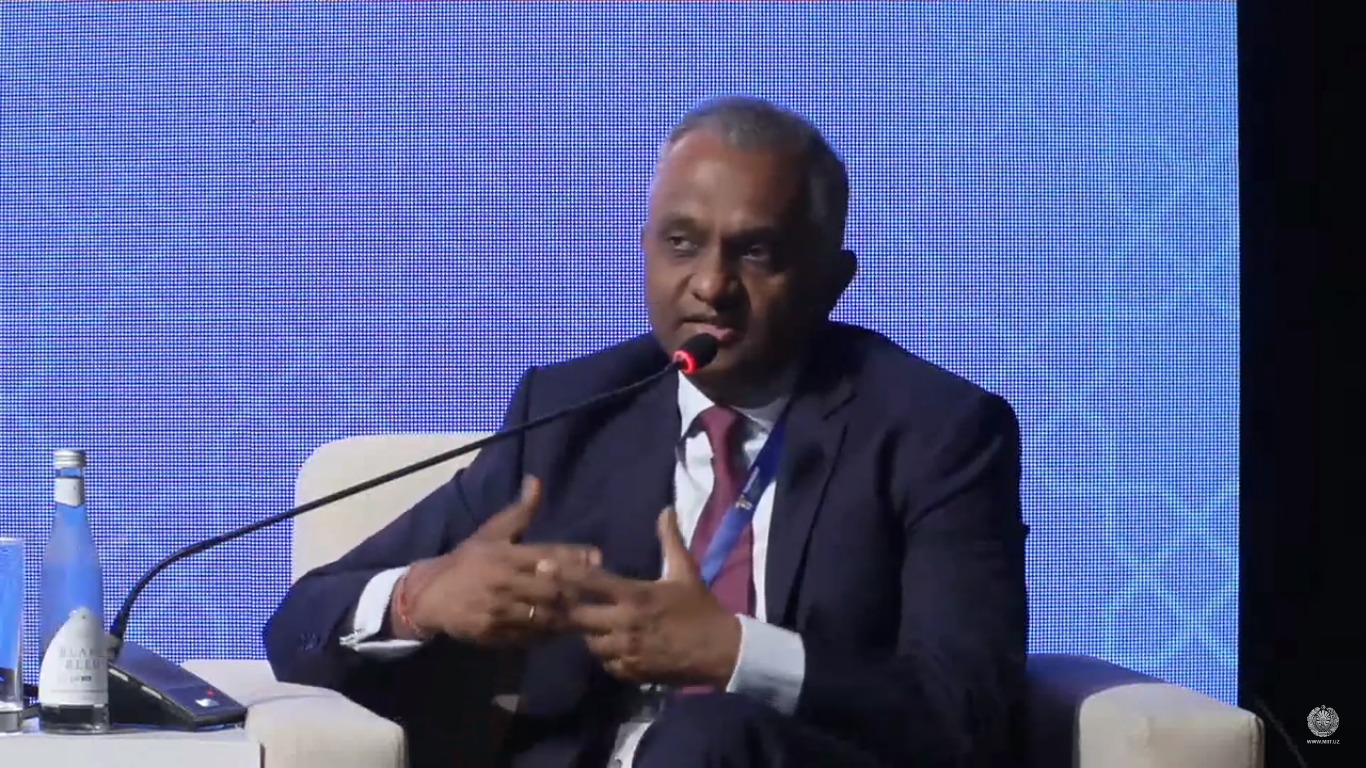
BAKU, Azerbaijan, June 12. Uzbekistan, which
lies at the heart of the Silk Road corridor, has received the
largest share of investments, totaling over $12 billion, with the
Asian Development Bank (ADB) investing more than $3 billion in road
and rail infrastructure, said Mayank Choundhary, Director of the
Private Sector Infrastructure Division at ADB, at the panel
discussion Transportation Infrastructure: Today’s Silk Road
Pathways within the IV Tashkent International Investment Forum,
Trend reports.
He explained that the corridor today is a multipolar network
that includes roadways, railways, ports, airports, energy
pipelines, and digital infrastructure such as data centers and
fiber optic cables.
” Since 2001, the Central Asia Regional Economic Cooperation
(CAREC) program has invested around $52 billion across these
countries, with ADB contributing more than $18 billion.
Approximately 50 to 60 percent of ADB’s investments have targeted
transportation, while about 30 to 35 percent have focused on
energy,” he added.
“In Uzbekistan, the focus now, especially in railways, is on
digitization,” Choundhary noted.
He highlighted ongoing projects aimed at modernizing the
southern railway network, improving efficiency and connectivity
through digital technologies.
Looking ahead, Choundhary expressed optimism about opportunities
for private sector involvement and the expansion of public-private
partnership (PPP) models.
“We see a lot of potential to replicate the success we had in
the energy sector, transforming transportation and connectivity
through strong, bankable structures and attracting large global
players,” he said.
The key sectors for growth include aviation, roads, railways,
and related services.
As an example of ADB’s regional efforts, Choundhary pointed to
its cooperation with Georgian Railways, where the bank helped
secure $500 million in green bonds. This funding supported upgrades
to rolling stock, decarbonization initiatives, and improvements to
train speeds, contributing to both environmental goals and enhanced
transport efficiency.
The official also mentioned ongoing projects across Asia-Pacific
focused on decarbonizing transportation by electrifying buses and
personal vehicles and shifting rail traction from hydrocarbon fuels
to electric power.
“There is a lot to discuss, but I’ll stop here to allow others
to contribute,” Choundhary concluded, underscoring the scale and
importance of investments shaping the future of transportation
infrastructure along the modern Silk Road corridor.


