


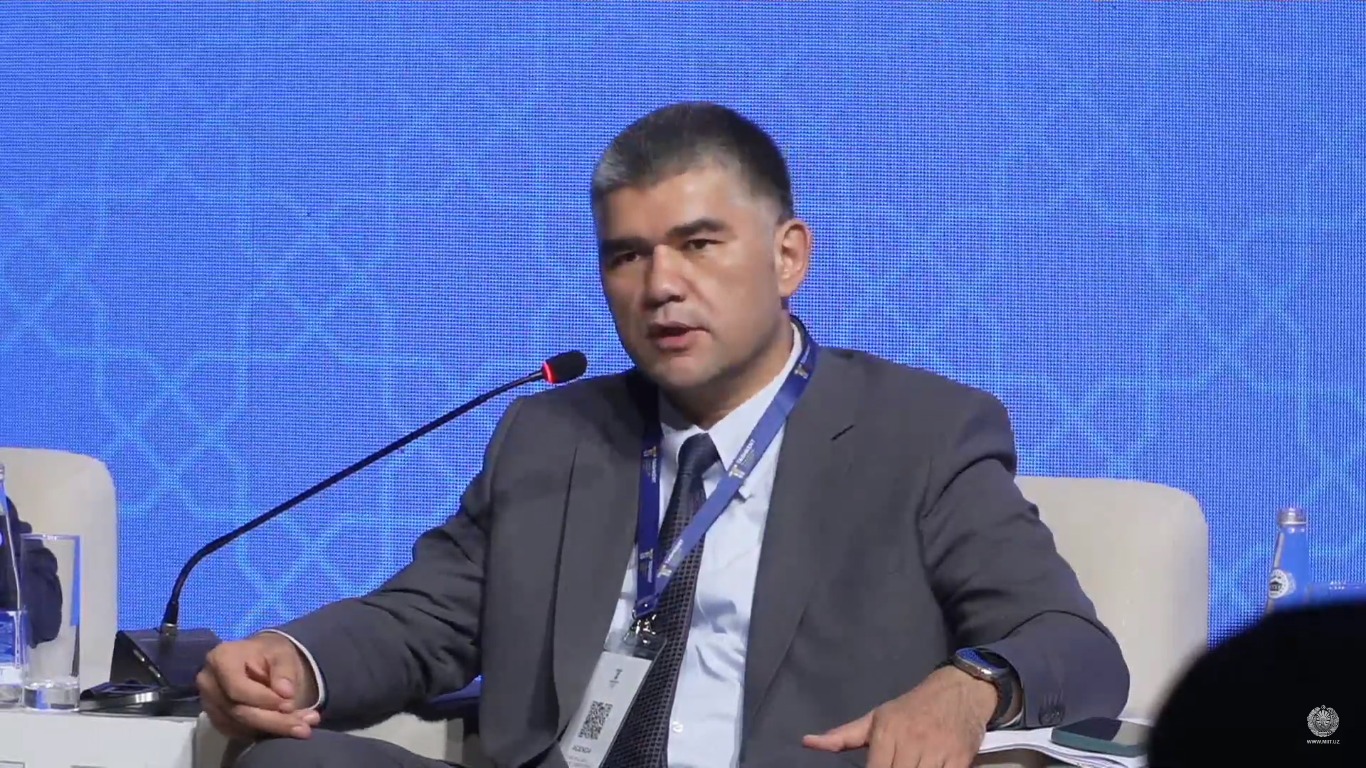
BAKU, Azerbaijan, June 11. Our priority is
green transport. We aim to complete rail electrification by 2025
and achieve 75 percent coverage by 2030, said Jasurbek Choriyev,
Deputy Minister of Transport of Uzbekistan, during the panel
discussion “Transportation Infrastructure: Today’s Silk Road
Pathways” within the IV Tashkent International Investment Forum,
Trend reports.
“We are already halfway there. Compared to neighboring and other
developing countries, Uzbekistan is ahead. This comprehensive
approach focusing on every sector and region is key to sustainable
economic growth,” he added.
Choriyev noted that the development of rail transport remains a
cornerstone of long-term national progress. While Uzbekistan’s
overall economy is growing at around 5.5 percent, the transport
sector is expanding at 4.4 percent, highlighting the need to
accelerate efforts to match broader economic ambitions.
The Deputy Minister also highlighted major achievements in the
aviation sector. Uzbekistan is currently home to 16 domestic
airlines and serves 46 foreign carriers operating through 11
international airports, along with three newly launched domestic
airports. These domestic hubs already meet international standards
and have the potential to become fully certified international
airports.
” Uzbekistan has also signed public-private partnership (PPP)
agreements with four airports, including Urgench Airport, the
country’s eastern gateway. The airport recently entered into a PPP
agreement with Incheon Airport, a globally recognized hub known for
its operational excellence and ability to attract tourism and boost
traffic volumes. In parallel, the government is advancing the
development of a new Tashkent Airport designed as a major regional
hub, enhancing connectivity with neighboring countries and
expanding both passenger and cargo transport capacity.
The aviation sector has seen rapid growth, with Uzbekistan
recording a 38 percent increase in air traffic in 2024, the highest
in the region,” he added.
Choriyev acknowledged that road infrastructure has historically
lagged behind other sectors. However, ongoing partnerships with
international financial institutions, including the Asian
Development Bank, various European banks, and infrastructure funds,
have sparked a wave of modernization projects across the country.
These initiatives are expected to fully transform transportation
infrastructure in Tashkent and other regions by 2030, generating
new jobs and economic opportunities.
“Digitalization and regional integration are critical components
of our long-term strategy. By 2030, Uzbekistan will emerge with a
modern, unified transport network that supports sustainable
economic growth both nationally and across Central Asia, ” Choriyev
concluded.


