


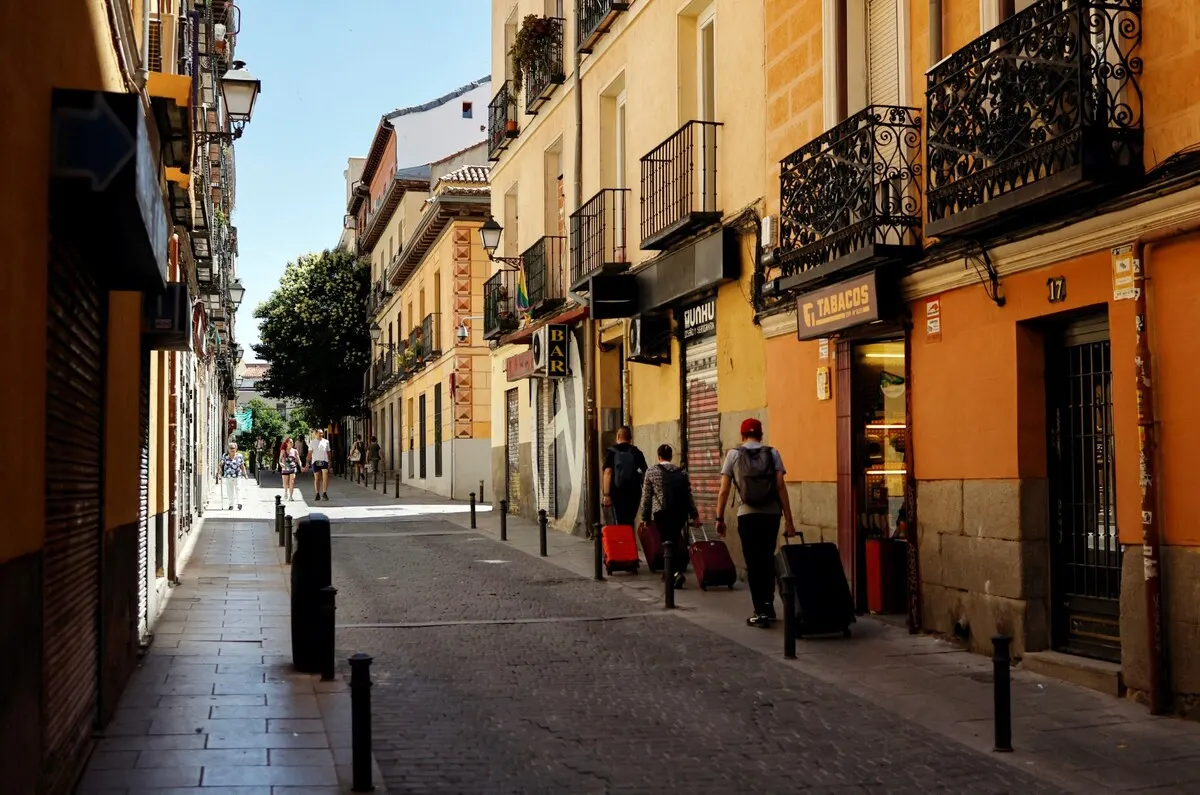
Madrid city council has approved new plans to better regulate tourist flats in the Spanish capital and separate residential and holiday let buildings. Here is a breakdown of the new rules.
The city council in Madrid on Wednesday approved a comprehensive new action plan to try and regulate tourist flats in the capital, with the vast majority in the city illegal and inflating the local rental market.
Figures reported here by The Local show that 86.5 percent of tourist flats in Madrid don’t have the proper licence or, if they do, don’t include it on the listing. Like in many cities, the issue of pisos turísticos has grown in recent years.
READ ALSO: Where are most of Spain’s illegal tourist lets?
The new measures include splitting the city up into two zones with a focus on protecting residential areas, as well as new rules on ground floor properties and tertiary buildings.
Borja Carabante, the city’s planning delegate, said in the Spanish press that the action plan presents an “opportunity to improve coexistence” between residents and tourists and “boost the residential area.”
“We want there to be tourist flats in the city,” added Carabante, but “without pushing out locals.”
The Reside Plan, as it’s known, will divide the city into two areas: the historic centre or old town – where the majority of tourist accommodation is located – and the rest of the city.
Under the plan, the old town comprises around fifty streets, including the districts of Centro, Chamberí, Salamanca, Retiro and part of Arganzuela, Moncloa and Chamartín.
On the other side are the districts located beyond the M-30 and some areas located inside the ring road, including barrios such as Legazpi or Atocha (Arganzuela), a large part of Chamartín and Moncloa-Aravaca, Tetuán or the districts of Estrella and Adelfas in Retiro.
Advertisement
Holiday let rules in Madrid city centre
Within that defined perimeter of the historic centre, three rules will apply: no tourist flats may be “scattered” in residential buildings — that is to say, individual or clusters of tourist flats in residential buildings — even on the ground floor. Under the new rules, no new licences will be granted for scattered properties, but it will allow entire buildings to be used for tourist use.
“We will move towards an exclusive building model: some for residents and others for tourists,” Carabante explained.
In non-residential buildings, they will be permitted without restrictions, and in residential buildings located in a non-tertiary street (i.e. not considered commercial), they may only be turned into tourist flats in an exclusive building for 15 years, with a direct licence linked to the rehabilitation and restoration of the building. Thereafter, it will revert to residential use.
The plan not only seeks to better regulate tourist accommodation, but also to create new residential housing opportunities in the capital.
To this end, owners are to be offered incentives for converting tertiary buildings into residential use so the works can be made profitable. Another measure will allow private buildings in disuse or classified as convents or schools to be converted into residential buildings for affordable or collective housing.
Advertisement
Holiday let rules in other Madrid neighbourhoods
In the rest of the city, the council will allow some new tourist flats under the current conditions (with the obligation to have independent access via separate doors, for example) both in complete buildings and in the so-called scattered apartments that coexist with residential use.
The plan also modifies aspects of the 2019 Accommodation Plan, in particular the transformation of commercial premises on the ground floor into tourist flats — known as bajos in Spain. This has long been an issue in Spain, and was repeatedly raised during last year’s wave of anti-tourism measures because ground floor tourist flats often replace local businesses, many of them family-owned and long-standing.
This transformation is pointed to as an example of the gentrifying nature of short-term tourist rentals in Spanish cities.
From 2015 to 2024, 3,306 ground floor commercial premises were transformed into dwellings and/or tourist flats in Madrid. Under the Reside Plan, converting them into tourist flats in the old town and on “tertiary roads” is no longer allowed.


