


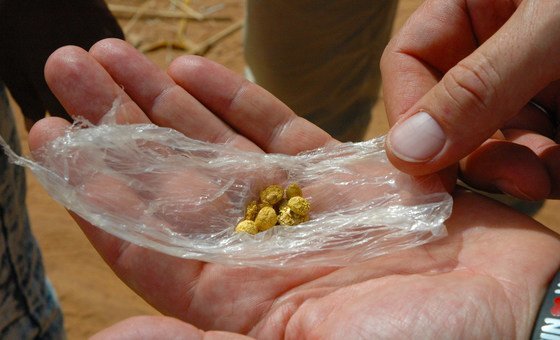
Criminal networks are increasingly seeking to gain control over extraction sites, trade routes, and refining infrastructure.
According to a new report from the UN Office on Drugs and Crime (UNODC), these groups have become deeply embedded in gold supply chains, drawn by the sector’s high profitability and rising gold prices.
‘Serious global threat’
Organized crime has become so involved in the gold supply that it now constitutes a “serious global threat”, with illegal networks constantly adapting in order to enable and hide their operations.
Exploiting advances in transportation, finance, and communications, many of these groups have a foothold in regular businesses, enabling them to both launder proceeds and move illegal gold with relative ease.
Apart from heightened violence, corruption and environmental degradation, crime gangs also expose vulnerable populations to exploitation, the UN highlights, increasing the risk of sexual exploitation, forced labour, and displacement.
Bypassing regulations
While legal mining operations are regulated to minimise environmental harm, illegal mining bypasses these safeguards entirely.
By clearing forests to access mineral deposits, illicit operations directly contribute to environmental destruction, degrading fragile ecosystems and accelerating biodiversity loss – particularly when such activities occur within protected areas.
One of the most severe environmental impacts of illegal gold mining is the use of hazardous or banned chemicals by criminal organisations.
Opportunities
Although the majority of gold mining sites are located in sub-Saharan Africa, Latin America, the Caribbean, and Southeast Asia, most gold refineries are concentrated in Europe, Asia, and North America. As a result, the precious metal often crosses multiple borders before it even reaches a refining centre.
This transnational movement creates opportunities for both criminal exploitation and law enforcement intervention.
Criminal groups frequently introduce illegally sourced gold into the supply chain by exploiting weak oversight, inconsistent documentation, and regulatory loopholes along trade routes.
However, the geographical concentration of refineries offers a strategic point for disruption, the UNODC report noted.
Focusing regulatory efforts on these key hubs could significantly reduce the flow of illicit gold into the global market, the report concluded.


