The WHO’s ongoing financial crisis and the planned pandemic treaty are at the centre of the World Health Assembly in Geneva, which runs until May 27.
Keystone-SDA
Generated with artificial intelligence.
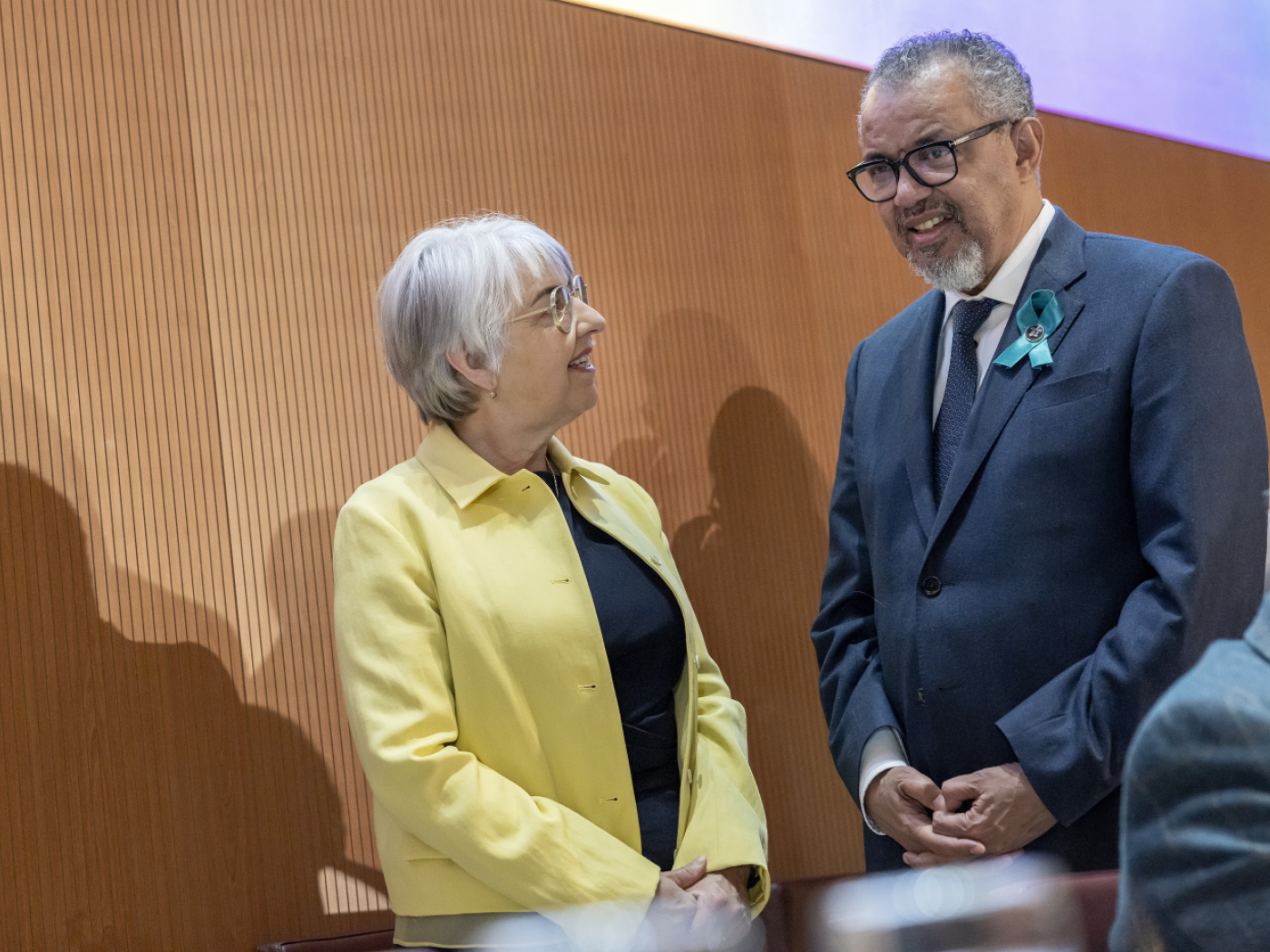
The World Health Organization (WHO) boss, Tedros Adhanom Ghebreyesus, says the Geneva-based UN agency has revised down its budget to $4.2 billion (CHF3.5 billion) for 2026-2027. He made the announcement at the start of the eight-day World Health Assembly meeting in Geneva of 194 member states.
The meeting opened without the United States and Argentina, which have decided to withdraw from the WHO. The UN agency’s ongoing financial crisis and the planned pandemic treaty are at the centre of the meeting in Geneva, which runs until May 27.
The US previously contributed around 20% of WHO’s budget. The agency has had to cut its planned two-year budget for 2026/27 by around 20% to $2.1 billion a year.
Tedros Adhanom Ghebreyesus said $2.1 billion a year was not much: such a sum is spent on defence equipment worldwide every eight hours, he commented.
More
More
US withdrawal from WHO puts global health in jeopardy
This content was published on
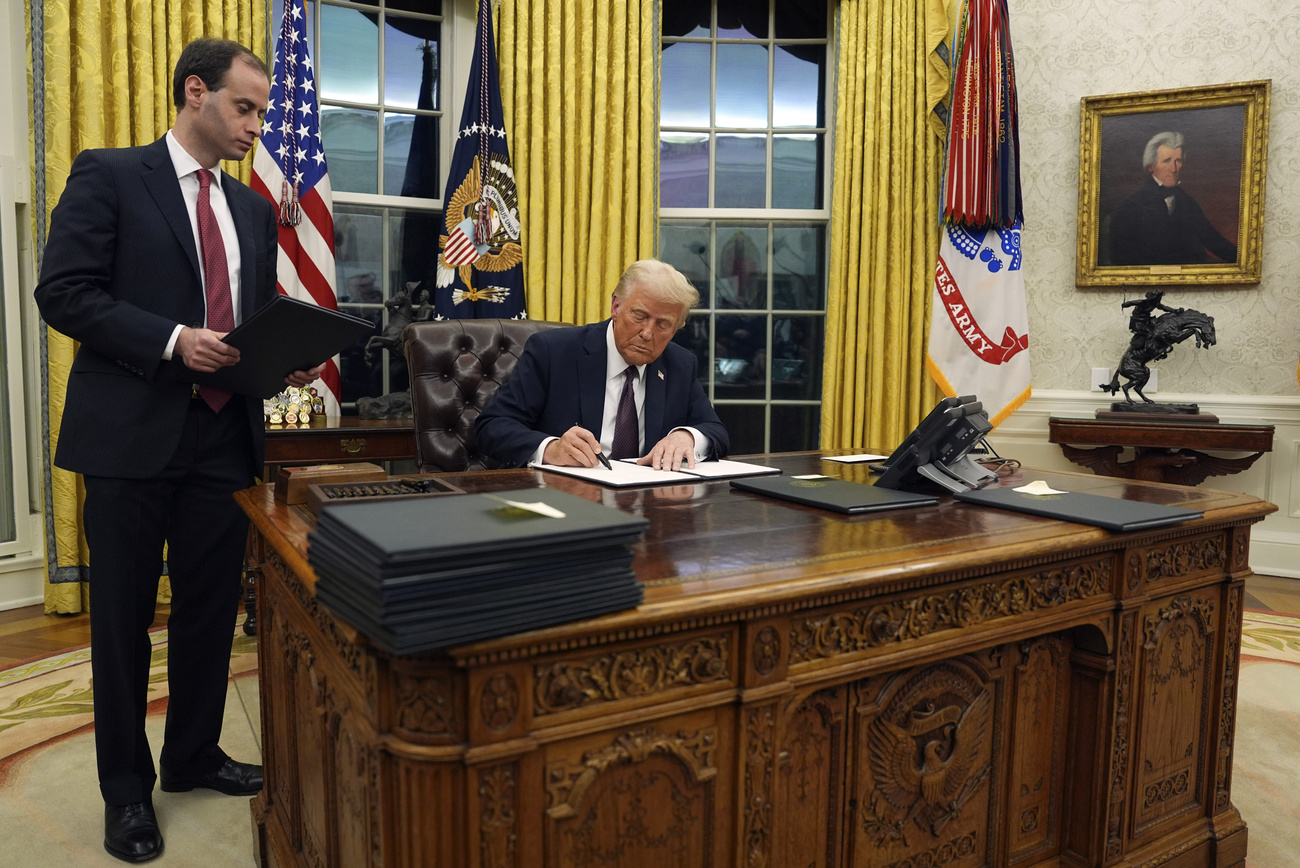
Donald Trump’s decision to leave the World Health Organization (WHO) will leave a gaping hole in the budget of the Geneva-based health agency.
The WHO has been forced to cut top management jobs, from 14 to seven senior positions, and slash the number of internal departments from 76 to 34.
Among those leaving is Emergency Relief Coordinator Mike Ryan, who was a familiar figure during the Covid-19 pandemic. According to internal plans, the number of employees worldwide is set to drop by 20% from around 9,500.
The US must still pay to WHO around $130 million for 2025. However, it is unlikely the money will materialise. Their withdrawal will take effect at the beginning of 2026.
More
More
Switzerland pledges $80 million to WHO
This content was published on
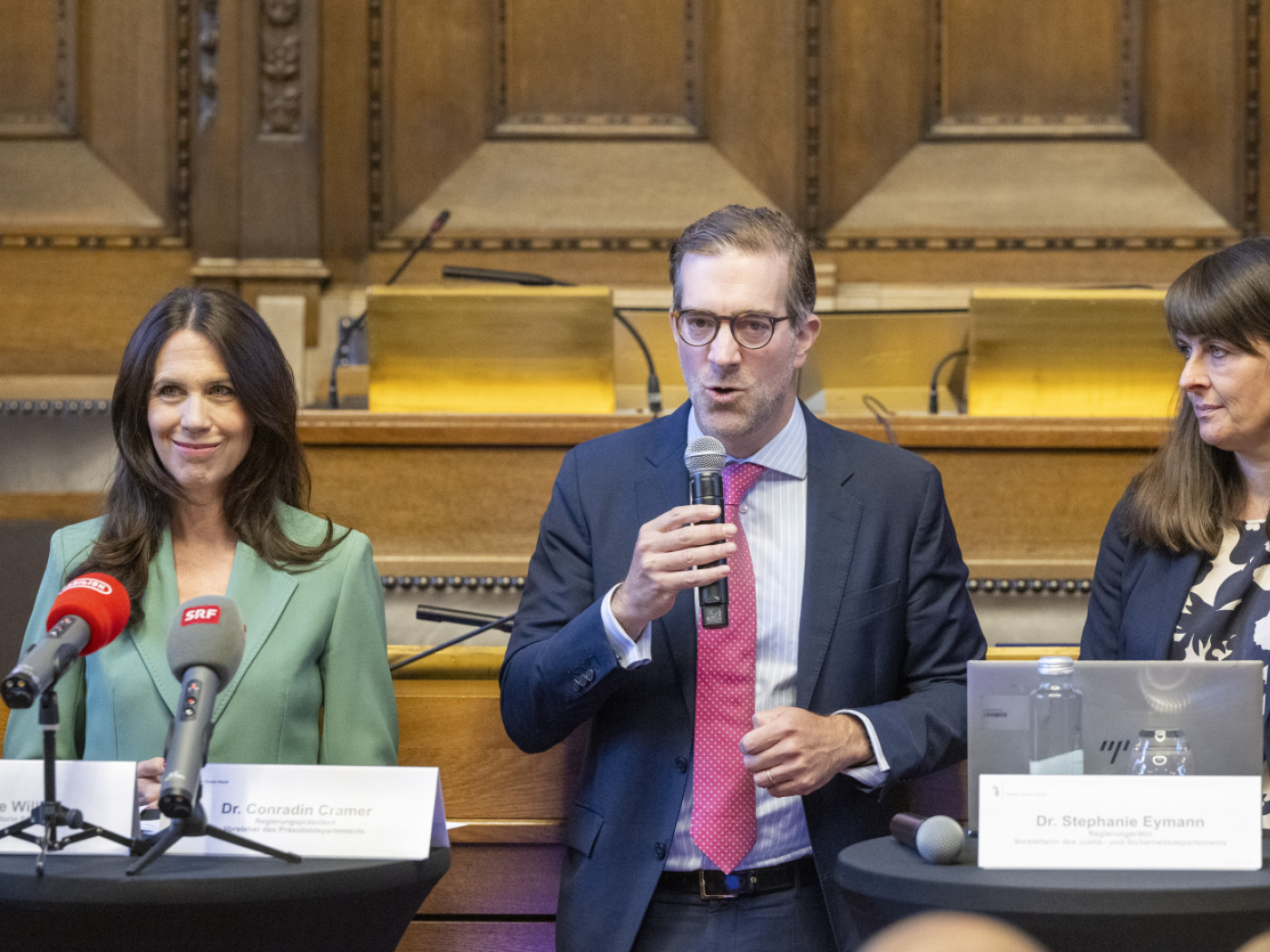
Switzerland plans to give an additional $80 million (CHF67 million) for the 2025-2028 period to the World Health Organization (WHO), which is facing financial difficulties.
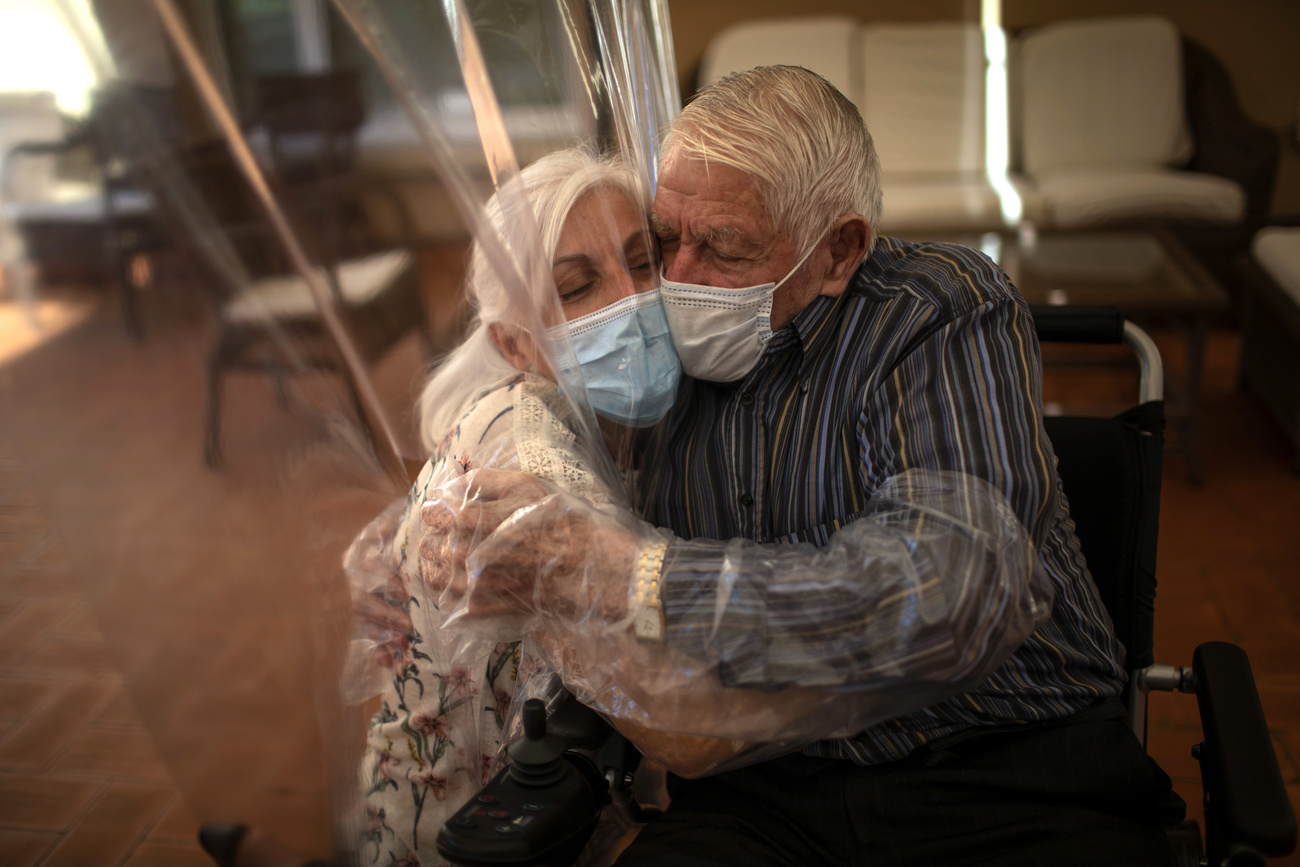
On Tuesday, the WHO Assembly plans to formally adopt the previously negotiated pandemic treaty. In the event of future pandemics, the global treaty is intended to avoid chaos in the procurement of protective material, such as during the coronavirus pandemic, when countries disputed each other’s masks. It should also ensure that rich countries do not hoard vaccines while poorer countries do not receive any.
But it is likely to be years before the convention comes into force. One of the most controversial issues has been shifted to an annex that has not yet been negotiated.
This concerns the conditions under which countries provide vaccine companies with dangerous pathogenic microorganisms or viruses and how they are compensated, for example with preferential deliveries of vaccines.
More
More
Pandemic treaty comes as welcome sign of multilateralism
This content was published on
Can the pandemic treaty withstand the withdrawal of the United States from the WHO?
We select the most relevant news for an international audience and use automatic translation tools to translate them into English. A journalist then reviews the translation for clarity and accuracy before publication.
Providing you with automatically translated news gives us the time to write more in-depth articles. The news stories we select have been written and carefully fact-checked by an external editorial team from news agencies such as Bloomberg or Keystone.
If you have any questions about how we work, write to us at english@swissinfo.ch.
More
Swiss police break up major Chinese trafficking ring
This content was published on
Bern cantonal police have broken a major human trafficking ring. Five people are accused of luring over 100 Chinese women to Switzerland to exploit them as sex workers. The complex case will soon be brought to court.
Swiss health survey: 52% of men are overweight, 34% of women
This content was published on
The results of the Swiss Health Survey 2022 reveal clear differences between men and women: 55% of women and 44% of men live with at least one chronic illness.
Switzerland plans to give an additional $80 million (CHF67 million) for the 2025-2028 period to the World Health Organization (WHO), which is facing financial difficulties.
Over half a million people attended Eurovision shows or events in Basel
This content was published on
Over 500,000 people attended Eurovision Song Contest (ESC) shows or related events in Basel last week, the organisers said on Monday, celebrating its “great success”.
Swiss centre records almost 300 victims of human trafficking
This content was published on
Last year, 208 victims contacted the specialist unit FIZ Advocacy and Support for Migrant Women and Victims of Trafficking. For 59 others, an examination is still underway.
Swiss mountain village threatened by serious landslide risk
This content was published on
The situation in the mountain village of Blatten, canton Valais, remains serious due to the threat of a landslide, Swiss officials said on Sunday afternoon.