


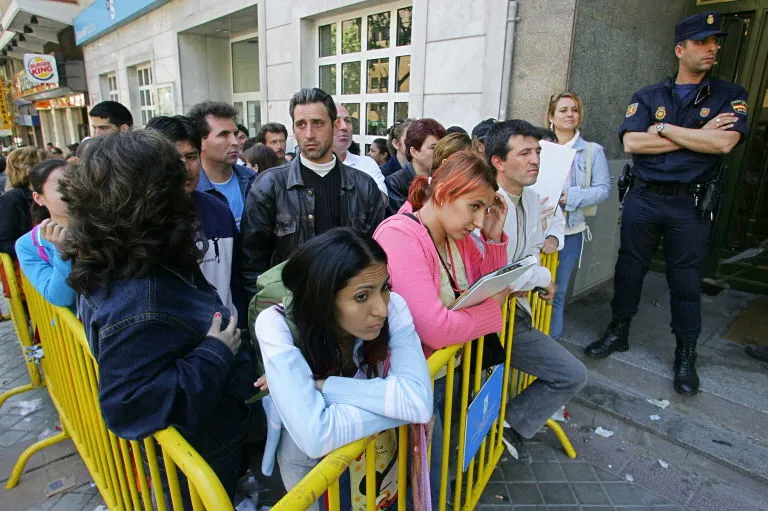
New migration legislation affecting hundreds of thousands of migrants is set to considerably increase the workload of already overstretched immigration staff, in Spain, thus lengthening waiting times for residency papers for all foreigners.
Processing visas and residency permits could take even longer now due to the fact that extranjería offices are reportedly already “overwhelmed”, before new immigration regulations that could worsen the situation considerably.
Back in November 2024, Spain announced it was going to make it easier for foreigners to get residency and work permits by approving a series of new immigration reforms, legislation which although good on paper has been met with some doubts by litigators as it could leave some asylum seekers in an increased state of vulnerability.
These changes are due to finally come into force this month on May 20th.
The new rules are designed to supposedly simplify the regularisation process for migrants living in Spain illegally, as well as making it easy for people to change to different residency options. For example, it will allow foreigners who have studied in Spain to move more easily from a study visa to a residence and work permit.
At the same time, however, all this extra paperwork will also greatly increase the workload of administrators.
Spanish trade union Comisiones Obreras has even called for a strike due to a “lack of resources” to implement these new regulations, as well as a steep increase in the workload.
“We denounce the unsustainable workload, the precarious working conditions of public employees, and the disastrous management, which is leaving thousands of citizens trapped in a bureaucratic labyrinth with no way out,” the union said in a recent statement.
Advertisement
The strikes will take place from 12:30 to 2:30pm at all immigration offices in Spain next Tuesday May 19th, one day before the regulations come into effect.
In essence, understaffed, overworked and underpaid extranjería staff are fearful of the sheer volume of residency processes immigration officers they are going to have to carry out.
Catalan authorities alone say they are looking at regularising the residency and work papers of 200,000 migrants in two years.
To make matters worse, just days before the reform of the Immigration Regulations comes into effect, Spain’s Ministry of Inclusion has made several amendments to the rules. While these aim to clarify the interpretation of the new regulations, it is also causing more confusion among extranjería workers.
Even before the new reforms come into force, long waiting times, trouble getting appointments (citas previas) and phones that are never answered have been chronic issues at many of Spain’s extranjería offices.
This was recently brought to light by an article in Cadena Ser, where they reported how in order to process an appointment to obtain protected status at Valencia’s foreigner office, you have to call on only one particular day of the week at a specific time.
Advertisement
Obstacles such as these leave many foreigners in limbo and vulnerable.
Appointments are so hard to come by due to the fact that ‘mafia’ gangs are blocking them all with the help of computer bots and then selling them to desperate foreigners, when in reality appointments should be completely free. For years, Spanish authorities have been unable to stamp out this scam.
READ ALSO: What to do when Spain’s ‘cita previa’ website doesn’t work
As Spain’s population continues to increase largely due to the arrival of more documented and undocumented foreigners, an already overstretched and trouble-ridden immigration department will have to deal with a sizable increase in its workload, something that is certain to reflect in waiting times for foreigners.


