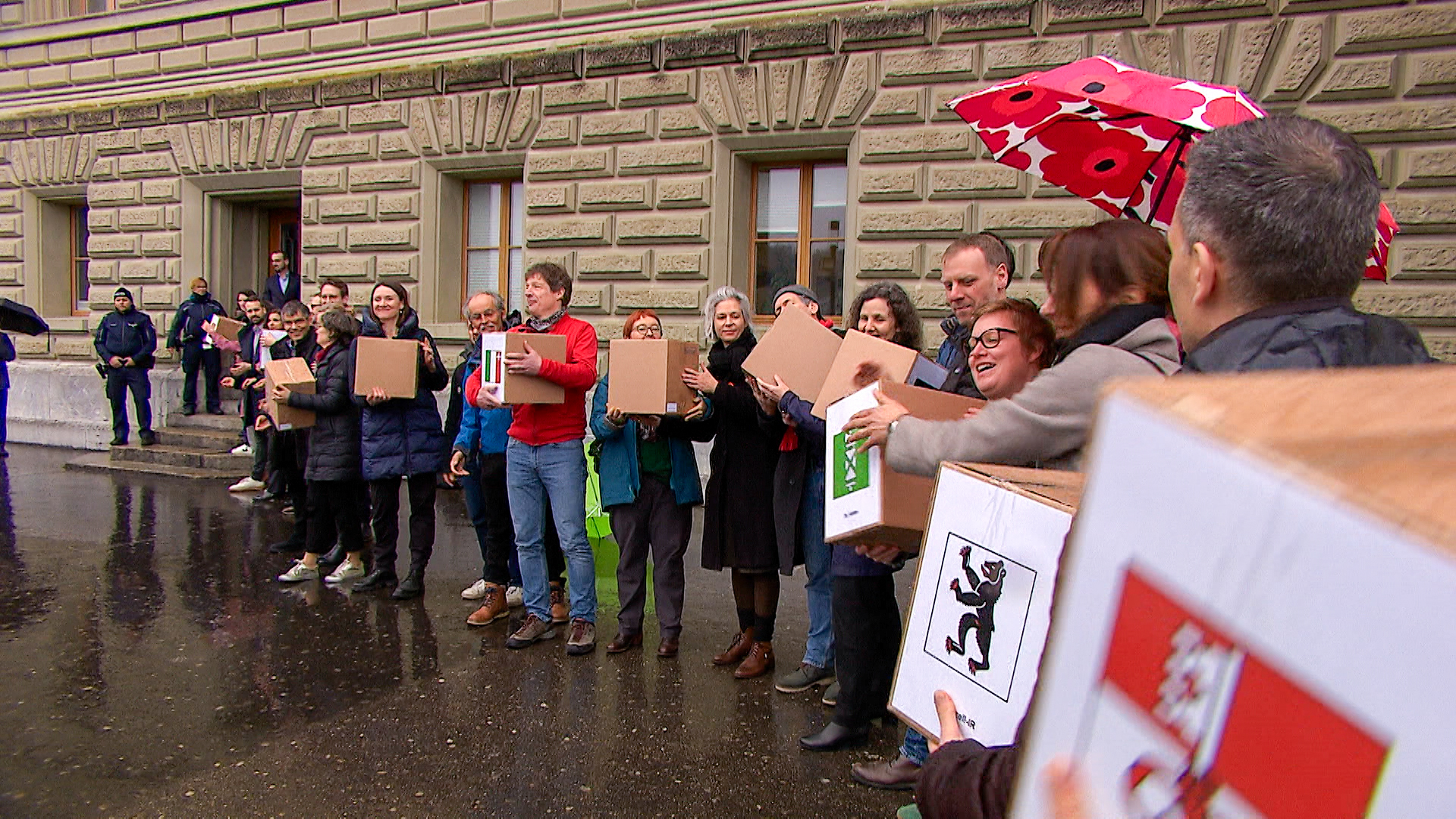
The initiator of the “horned cow” initiative, Armin Capaul, promoted his cause in a way that appealed to many – but not enough – Swiss.
Keystone / Laurent Gillieron
By far the most referendums in the world take place in Switzerland. So it’s no wonder that some are a bit odd, for example whether to ban absinthe, driving on Sundays or cutting off cow horns.
Switzerland is a paradise of popular rights. If a citizen or group can collect 100,000 valid signatures in favour of an idea within 18 months, this people’s initiative to amend the constitution must be put to a nationwide vote. What’s more, laws can be challenged in a referendum, for which 50,000 signatures must be gathered within 100 days. Also, whenever the government and parliament want to change the constitution, a vote is held.
Swiss voters have made around 650 decisions since 1848. Here are some of the most peculiar ones, and ones that seem strange from today’s perspective.
More
More
Why do some people vote against their best interests?
New marriage law (1985)
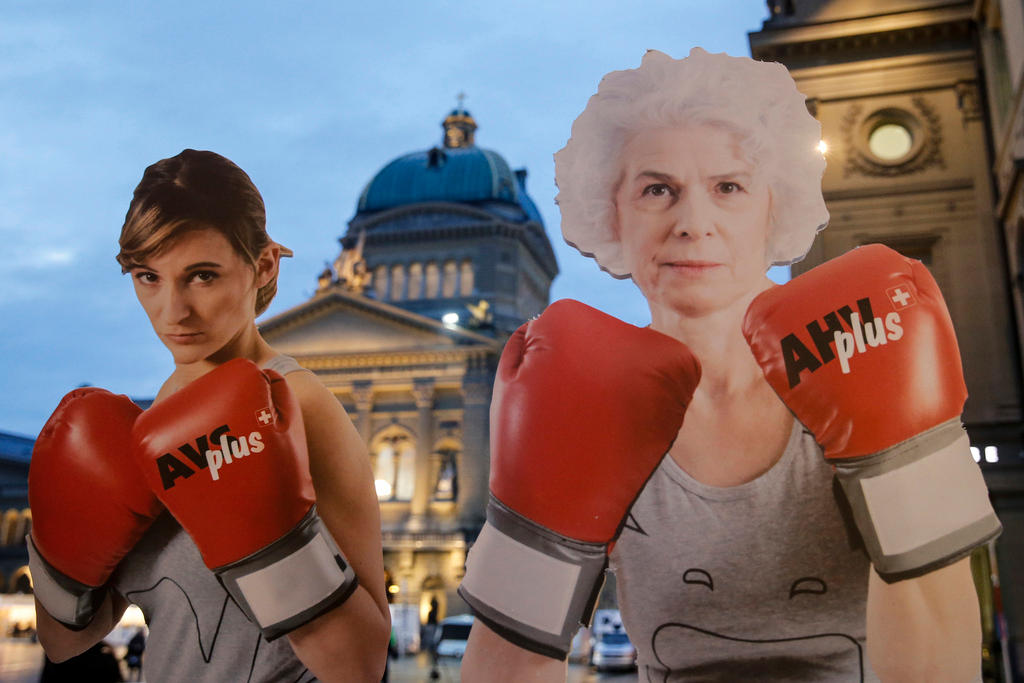
The vote on the new marriage law in 1985 is one of many votes in the “yesterday is not so long ago” category. Previously, the husband took the decisions in a household. He could cancel the tenancy agreement or sell the house without his wife having any say. He even managed the assets that the wife brought into the marriage. A husband could also forbid his wife from working.
The government legislated to change this, but a conservative committee challenged the new law in a referendum. In the end, 54% of those who voted in September 1985 backed the new marriage and inheritance lawExternal link. If only men had voted (the case until 1971), the old marriage law would have remained in place.
More
More
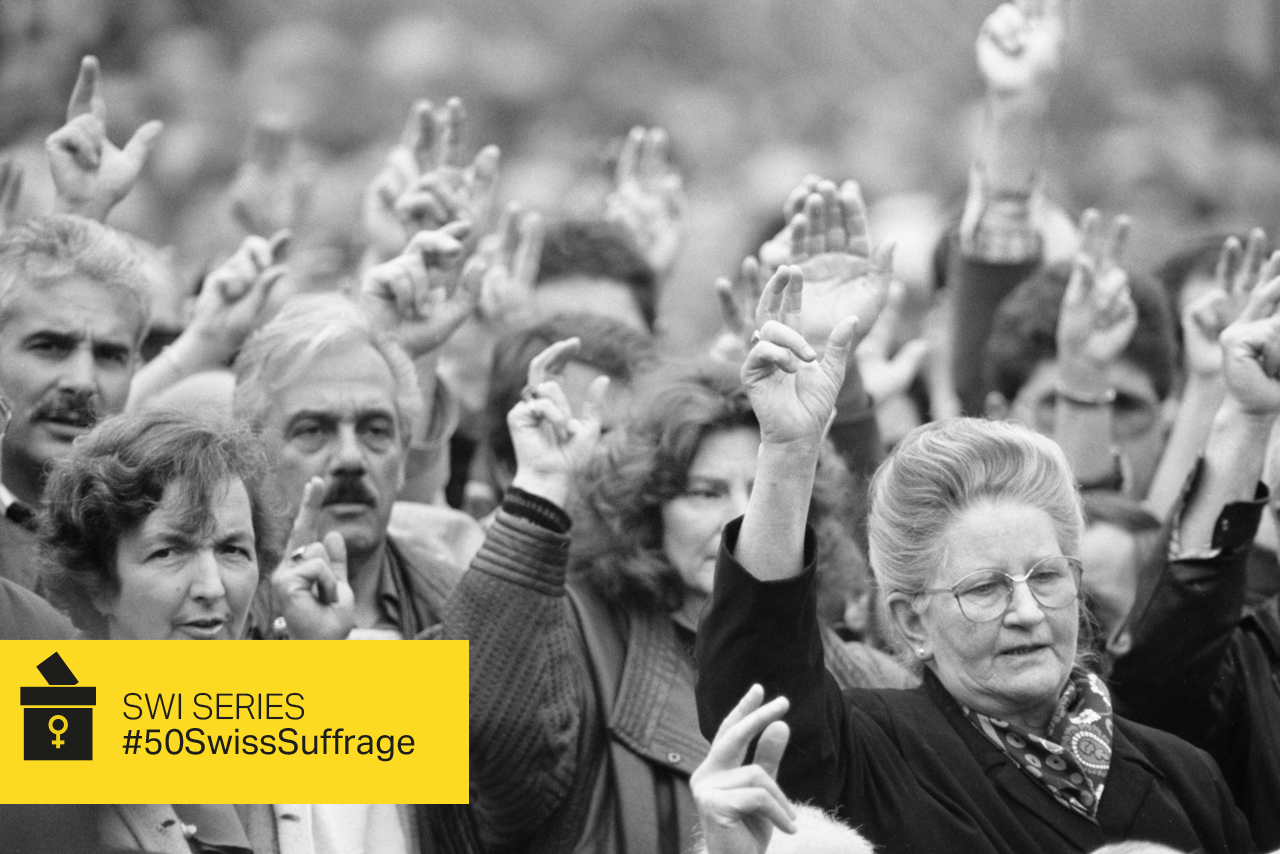
Appenzell Inner Rhodes: the last Swiss canton to give women the vote in 1991
Initiative ‘for 12 motor vehicle-free and motorised aircraft-free Sundays per year’ (1978)
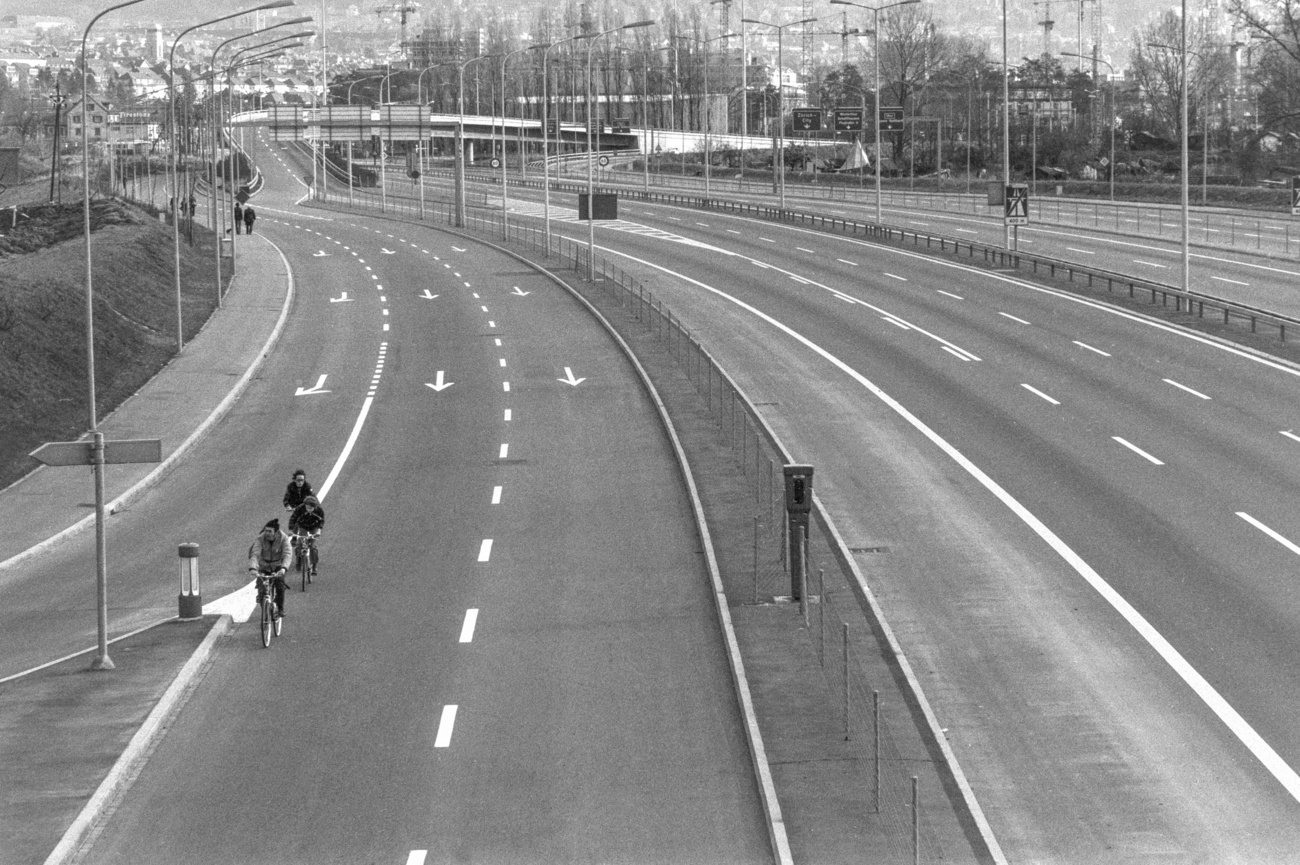
The images of empty Swiss motorways in 1973 are still astonishing. During the oil crisis, the three car-free Sundays were an attempt to save resources.
A group of students wanted to make this part of a new Swiss normality. On the second Sunday of every month, not only cars would have been banned, but all motorised traffic “on land, on water and in the air”. As the initiators wanted to write every single adjustment screw into the constitution, e-bikes would probably also be banned today. “Vehicles with an auxiliary motor” were explicitly mentioned.
More
More
Car-free Sundays head for the scrapyard
Had the initiative been adopted, the leisure-sport-mad Swiss would no doubt have been able to buy some interesting books: Cycling tours in the fast lane for example, or The 12 most beautiful motorway hikes and – for contemplative minds – Resting places on the central reservation.
But it didn’t come to that. Although small parties across the political spectrum supported the initiative for 12 motor-free Sundays a year, more than 63% of voters rejected itExternal link in May 1978.
Initiative for a ban on absinthe (1908)
A “moral panic” at the turn of the 20th century led young Swiss at the turn of the 21st century to believe that absinthe was comparable to cocaine or LSD.
The “green fairy” has been legal to buy in Switzerland since March 2005, when the government removed an “outdated special regulation”, wrote the Federal Office of Public HealthExternal link.
After an absinthe-addled man in canton Vaud killed his wife and two children in 1905, petitions and bans were organised in some cantons. These were boosted by organisations campaigning against alcoholism or even for abstinence – and a wine and beer lobby irritated that absinthe was cheaper than what they produced.
More

More
When absinthe was a clandestine affair
Politically, the Social Democrats and the Catholic Conservatives supported the initiative. The dispute over the drink from the Val de Travers flared up mainly in French-speaking Switzerland. As it turned out, however, it was proportionately many people from German-speaking and eastern Switzerland who wanted to take the drink away from people in western Switzerland. In Nidwalden and Graubünden, for example, over 80% of voters (all men back then) backed the absinthe ban. Nationwide, more than 63% voted in favour of it in July 1908.
Increase in the maximum stake in casinos (1958)
Another vote from the “whole country debating unhealthy addictive behaviour” section. Casinos had been banned in Switzerland since 1874. After some back and forth in the 1920s, a maximum stake was introduced in 1928, which today seems like the pocket money rule of worried parents: CHF2 per round.
The vote at the end of the 1950s then freed gamblers’ souls: they could now fritter away CHF5 in one go.
Centrist small parties and church circles opposed this CHF5 madness, but almost 60% of (male) voters decided in favourExternal link in December 1958. Today, CHF5 is the minimum bet in roulette at the Grand Casino Bern.
‘Horned cow’ initiative (2018)
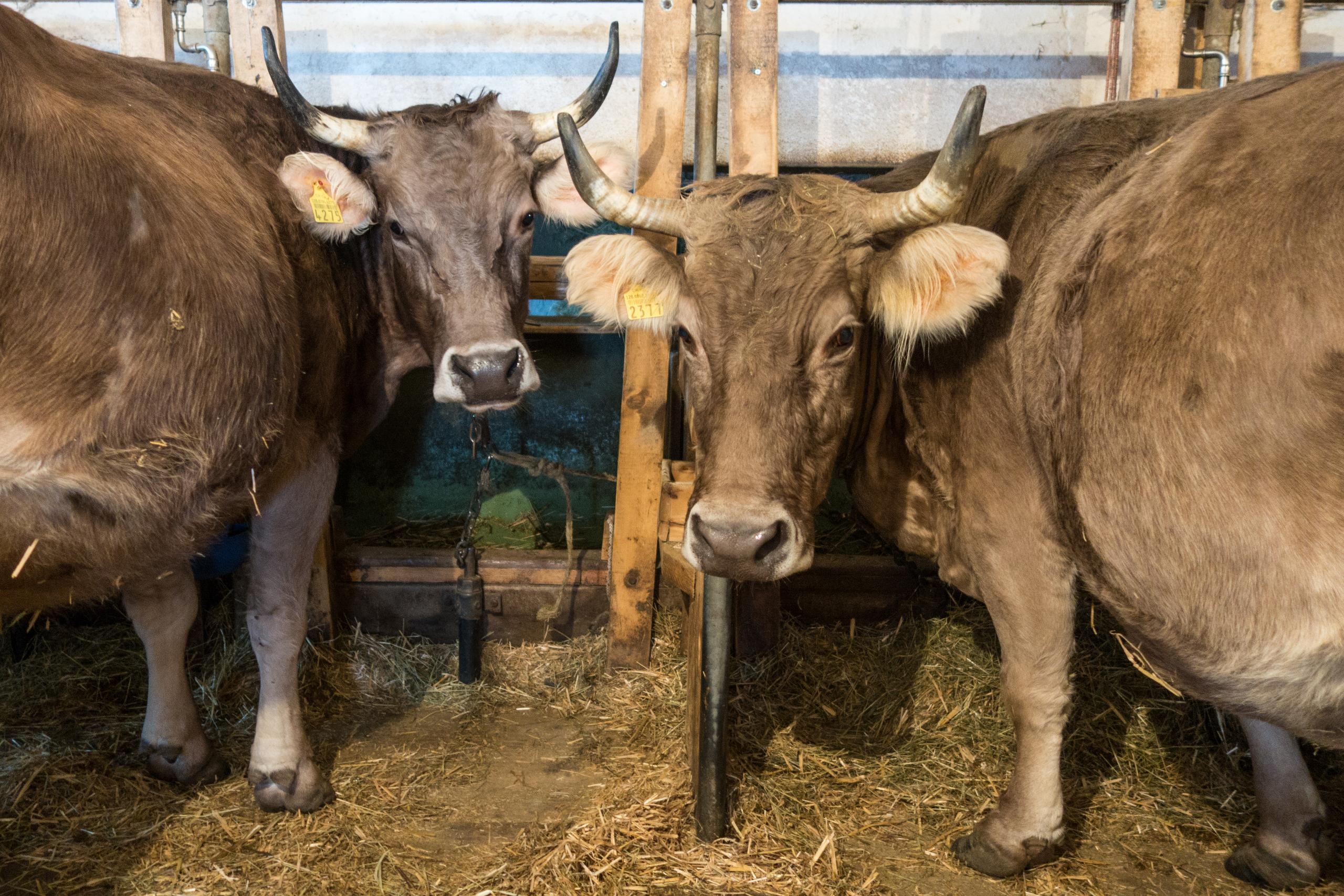
Mountain farmer Armin Capaul danced to Jimi Hendrix in his barn in front of the international media and won the hearts of the Swiss public. The initiative launched by his “IG Hornkuh” organisation wanted to amend the federal constitution to say that owners of cows and goats should receive financial support if they don’t cut off their animals’ horns. The outspoken Capaul raised awareness among many people to the fact that dehorning is painful for the animals and that horns are important for the cows.
More
More
The man trumpeting in favour of cow horns
However, opponents also cited animal welfare in their arguments: if the horns result in more tie stalls – to prevent injuries – this wouldn’t benefit the animals.
Capaul thought cows with horns were a “valuable cultural asset” – whether this influenced some voters is not known. The Social Democrats, Greens, Green Liberal Party and Protestant Party were in favour of the horned cow initiative, as were many animal and nature conservation organisations. But more than 54% of voters were against itExternal link in November 2018.
Match monopoly (1895)
The proposal that the state should have a monopoly on the production of matches dates from a different time, namely 1895. However, the reason why the government wanted a monopoly was a serious one: the white phosphorus used in production at the time was not only highly flammable, but also caused a fatal disease among workers. The harmless red phosphorus had already been discovered but was more expensive. After an initial ban, match smuggling flourished. The state monopoly would have been an alternative approach to the problem.
The Free Democrats, the Democrats and the Social Democrats were in favour, but in September 1895 over 56% of voters weren’tExternal link.
Initiative ‘against fighter jet noise in tourist areas’ (2008)
Fighting for noise protection! The name of the initiative, “Against fighter jet noise in tourist areas”, which was voted on in 2008, raises the question of whether people would be in favour of fighter jet noise elsewhere. And, if so, where? After all, only a few regions in Switzerland are not tourist areas – almost every municipality reckons it has something to offer tourists.
The background to the initiative was the plan to station F/A-18 fighter jets in Meiringen, canton Bern. An old hotel and an environmental protection organisation wanted to write into the constitution that “no fighter jet exercises may take place in areas used for tourism” during peacetime.
Opponents of the army and left-wing parties were in favour, but over 68% of voters decided against it in February 2008.
Edited by Samuel Jaberg. Adapted from German by Thomas Stephens
More