


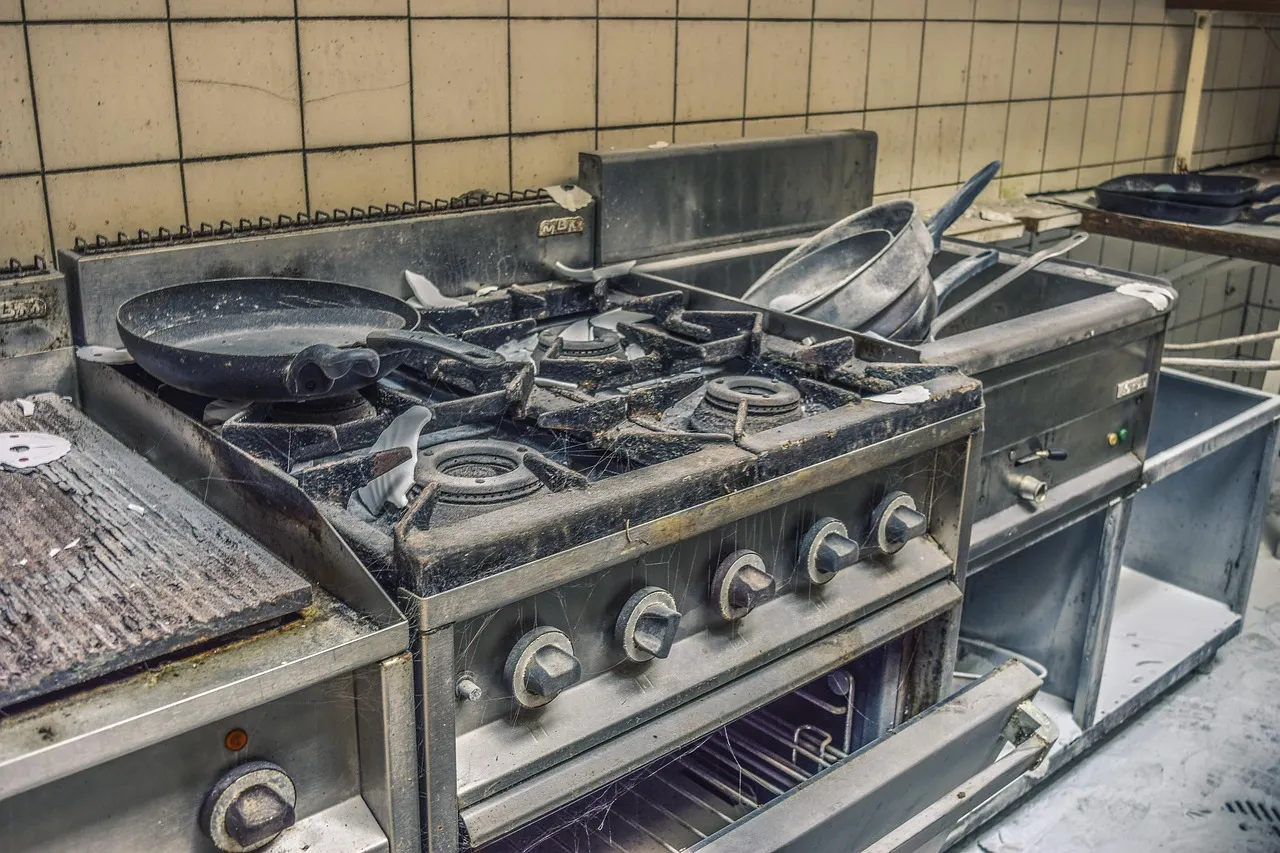
Switzerland has many excellent restaurants, but is the food they serve consistently safe to eat? A new report suggests restaurant goers should take care.
New findings released by Switzerland’s Federal Office for Food Safety ( FSVO) suggest many restaurants in the country have a hygiene issue.
Health inspections carried out between 2022 and 2023, uncovered “greenish meat, expired or long-frozen food, overheated cold rooms, or mouse droppings in the premises.”
Just how bad was the situation?
Among the restaurants the FSVO inspected (no names of the establishments or their locations have been disclosed) the health risk was deemed “considerable” or “high” in one in four inspections.
In 2023, more than 20,500 administrative measures were issued against restaurants, significantly more than in 2022; in around 2,500 of these cases, foods were seized and destroyed.
‘We take this seriously’
In view of these failings, Roman Helfer, director of the Federation of Hospitality and Taste Professions, stressed that “the health of our customers is essential. We take this seriously.”
He added, however, that these findings have to be taken with a pinch of salt (figuratively speaking, of course).
“We must be wary of the conclusions of such statistics. In this case, the inspections were carried out in establishments where problems were suspected, or which have already had them,” Helfer pointed out.
“The report should therefore not be taken as an empirical overview of cleanliness in [all] restaurants.”
Advertisement
Why are some restaurants failing the hygiene inspections?
One reason, according to Bern’s cantonal chemist Otmar Deflorin, is shortage of personnel.
“When there is a staff shortage, restaurants often start by cutting back on hygiene,” he said.
And Patrik Hasler-Olbrych, director of the industry umbrella organisation GastroSuisse, blames poor results on “overly lax, or even nonexistent, standards in some cantons.”
Overall, however, these findings should be put in perspective, Helfer said.
“All deficiencies must be corrected, but not all of them pose a danger to consumers.”
As an example, he cited broken kitchen tiles that haven’t been repaired. They woudn’t impact the safety of quality of food, but be noted in a report nevertheless.
Advertisement
Uniform standards
In terms of how to prevent these situations, Helfer and Hasler-Olbrych both agree that ongoing training is essential, and must be implemented equally rigorously in all cantons.
In Vaud, for instance “training is required to obtain an operating permit, and it is issued by the cantonal chemist,” Helfer said. “Unfortunately, this isn’t the case everywhere.”
So, is it safe to eat in Swiss restaurants?
These findings should, as Helfer pointed out, be put in perspective.
Food in the vast majority of establishments is safe and the kitchens are in compliance with hygiene and safety standards.
However, it is possible to get food poisoning while eating out — in Switzerland as anywhere else in the world.
READ ALSO: How can you check for warnings of food contamination in Switzerland?


