


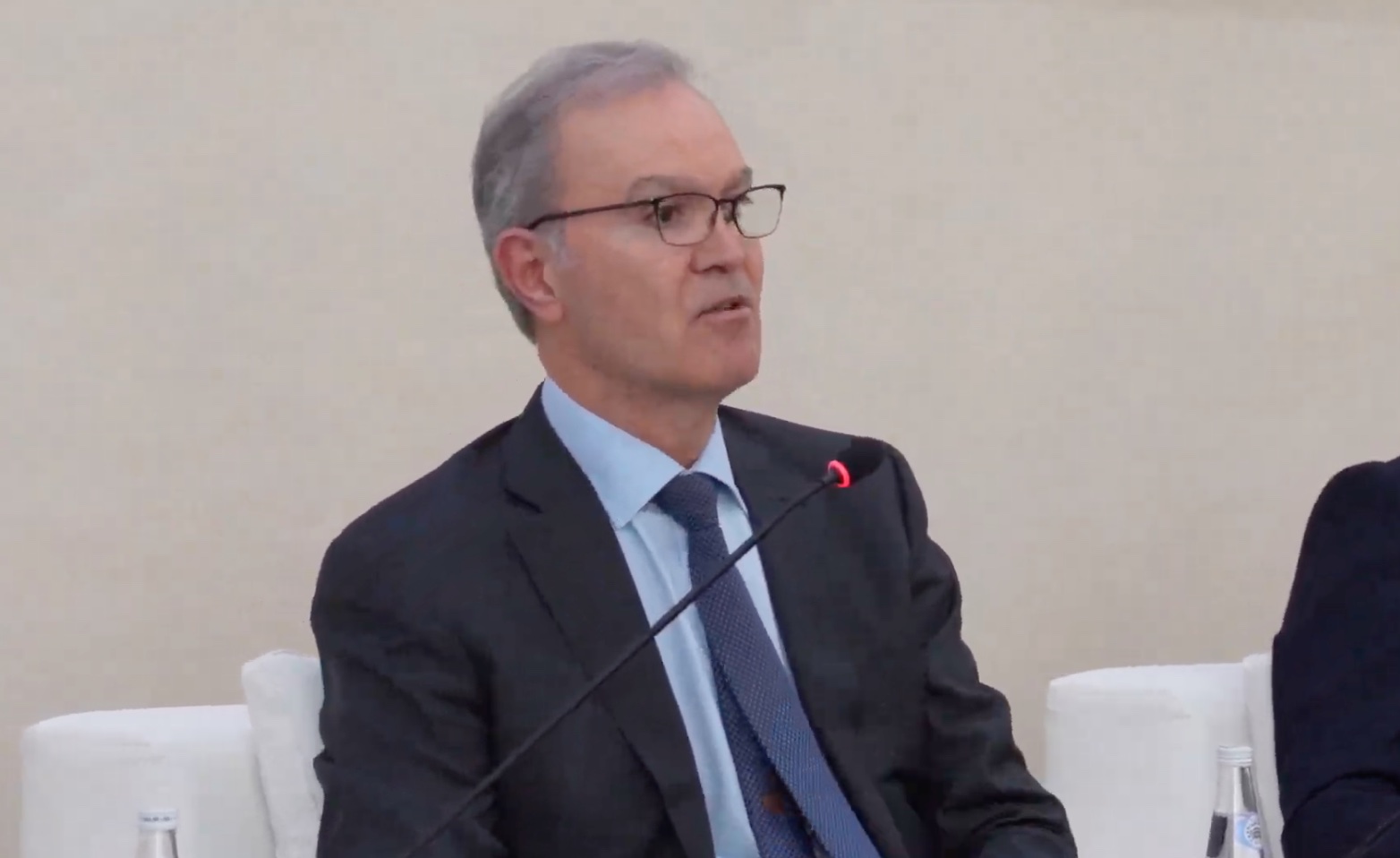
BAKU, Azerbaijan, May 2. The economic
performance of the Caucasus and Central Asia (CCA) region in 2024
exceeded expectations, with growth reaching nearly 5.5%, up from 5%
in 2023, said Thanos Arvanitis, Deputy Director of the IMF’s Middle
East and Central Asia Department, Trend reports.
Speaking at the launch of the IMF’s Regional Economic Outlook
for the CCA, Arvanitis described the results as “more than one
percentage point higher than we expected only in October last
year”.
The main drivers behind this robust performance were strong
domestic demand and investment. “Primarily, domestic demand was
very robust,” Arvanitis explained. “This reflected strong private
consumption, which was supported by strong remittances. Remittances
in the region continue to be at a historical high”.
He pointed to other factors supporting consumption, including
double-digit credit growth and notable real wage increases,
particularly in countries like Kyrgyzstan and Uzbekistan. “All of
these factors supported private consumption,” he said.
In addition to consumer activity, investment in infrastructure,
energy, and mining gained momentum. “This investment is important
not only because it supports domestic demand, but also because it
creates a momentum for the years to come,” Arvanitis noted.
While government spending played a smaller role, Arvanitis
highlighted that some CCA countries began fiscal consolidation,
particularly those with low import levels. “In fact, in many
countries government spending was not a major driver for growth,”
he said, adding that debt levels remained moderate in most cases —
around 30–40% of GDP in Kazakhstan and Azerbaijan.
On the external front, exports, remittances, and financial flows
continued to support economic activity, though export growth
moderated in pace compared to the previous year. Arvanitis said
that growth was “broad-based”, with “steady gains in construction,
transportation, [and] mining”.
Looking ahead to 2025, the momentum appears to be holding.
“We’ve seen actually this growth momentum continuing,” he said,
adding that this provides a strong foundation for the year.
However, rising global uncertainties may challenge that outlook.
“We’ve seen global uncertainty increasing… particularly reflecting
the trade tensions that have started in major economies,” Arvanitis
warned. “This, on the one side, the momentum coming into 2025 from
last year, but also the headwinds from the global uncertainty,
provides the setting for us to think about the prospects, but also
the policy priorities for this year”.


