


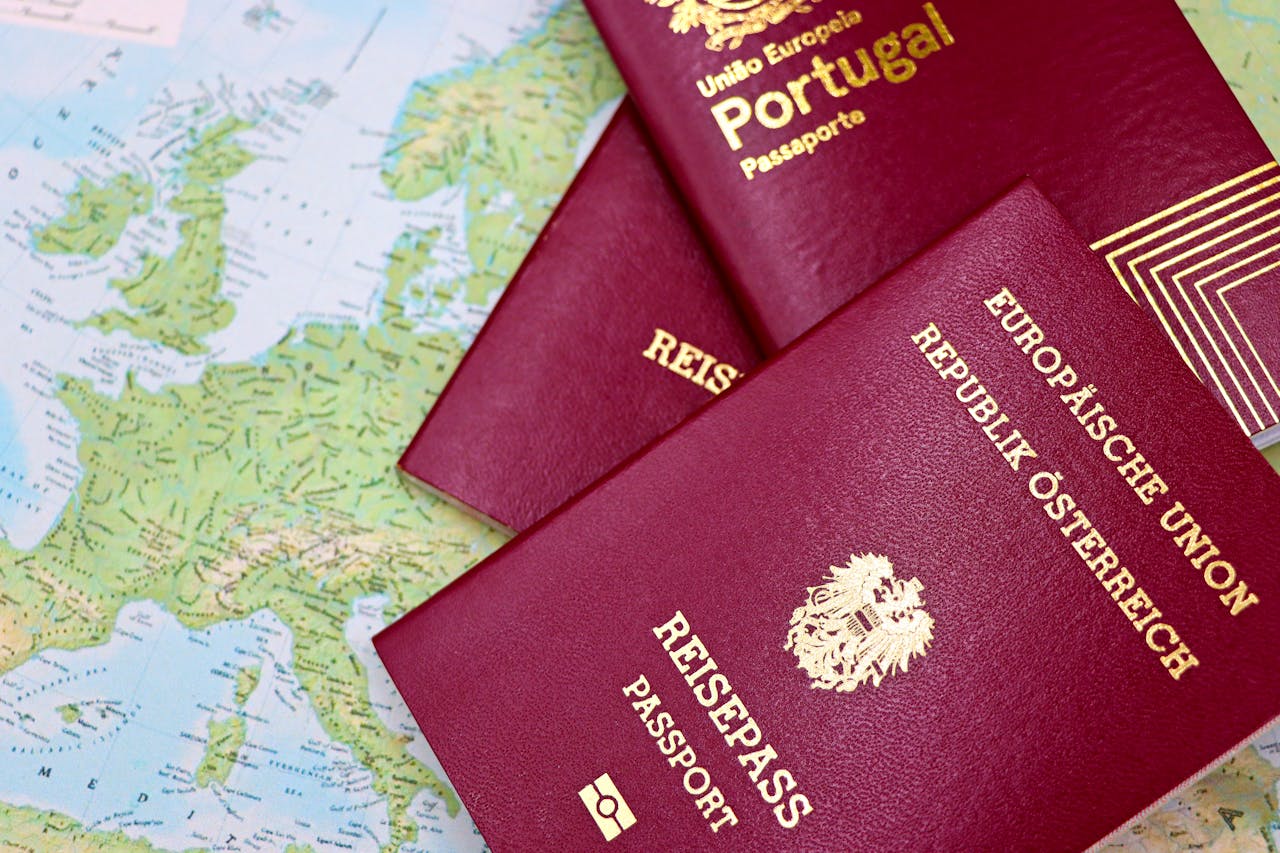
An increasing number of counterfeit passports are in circulation in Switzerland, which means holders could have obtained Swiss residency permits based on these forged documents.
An investigation carried out by public broadcaster SRF, shows that “thousands” of foreigners are living in Switzerland illegally, with counterfeit European passports.
Criminal networks, some identified as being based in Turkey, forge and sell EU passports which, under the terms of the immigration agreement Switzerland has with the European Union, allow their holders to live and work in Switzerland.
The exact number of these cases is difficult to determine, but according to the Federal Police (Fedpol) 3,735 forged documents were found and confiscated in Switzerland 2024.
That is an 8-percent increase compared to 2023.
Many more in circulation
But that number is likely just the tip of the iceberg because most of these documents go undetected.
One reason is that as Switzerland is part of the Schengen area, passport checks at Swiss borders are sporadic and random, allowing foreigners carrying falsified documents to slip into the country unnoticed.
However, “we assume that 10 percent of the [Swiss] residence permits were obtained fraudulently”, Alexander Ott, a spokesperson for Bern’s immigration authority, told SRF.
He came to this conclusion based on the number of arrests by the police and the number of forgeries seized.
This estimate is realistic, according to Simon Baechler, the head of the Neuchâtel Criminal Investigation Department, whose team is also investigating the networks of counterfeiters.
“The more we search, the more [fake passports] we find,” he said.
Advertisement
What are authorities doing to stem the flow of fake passport holders into Switzerland?
Because forgery techniques are improving, making it more difficult to detect counterfeited passports or ID cards with a naked eye, the focus is on training border guards as well as municipal employees – people who are most likely to come in contact with these fakes – how to spot them.
They “have yet to learn” about the security features in real passports, which are missing from the fakes, Ott pointed out.
This is especially the case in small communities, which have no infrastructure of larger cities permitting to spot fakes.
“Without suitable technology and/or qualified personnel, they struggle to detect counterfeits, allowing ineligible individuals to access passports,” he noted.
This is all the more important because “forgeries are getting better and better”, said Marcel Schafroth, a document expert at the Federal Office for Customs and Border Security.
“Forgers have become particularly skilled at these documents,” he added.


