


Greater military influence in government, reporters under threat and a stuttering economy — Indonesian President Prabowo Subianto’s first six months in power have triggered alarm bells for activists worried about a return to the country’s authoritarian roots.
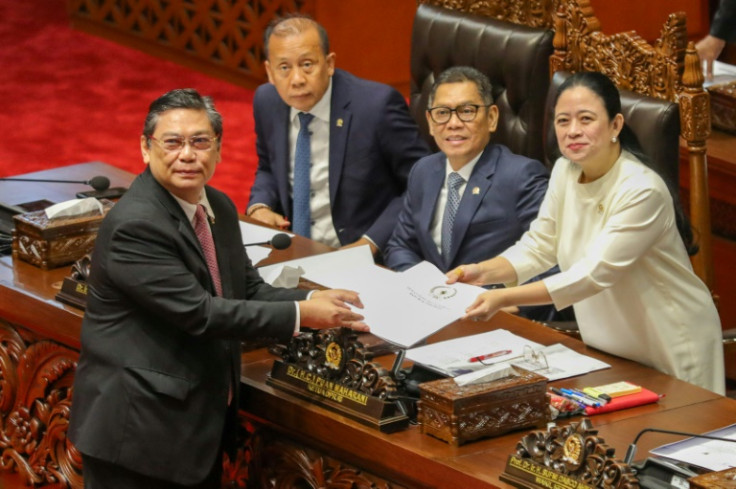
Last month, Indonesia’s parliament amended a law allowing active-duty military personnel to work in 14 state institutions — up from 10 — including the attorney general’s office, which rights groups say could weaken legal checks on military abuse.
The decision has critics anxious that the world’s third-largest democracy could hark back to the days of dictator Suharto, who ruled Indonesia with an iron fist for more than three decades.
“The government does not realise that Indonesia has a collective trauma over (Suharto’s) authoritarian New Order government,” said Hussein Ahmad, deputy director of rights group Imparsial.
Before Suharto was toppled by student-led protests in 1998, Prabowo was serving as a commander for an elite force to suppress unrest.
He remains accused of human rights abuses, including allegations that he had ordered the abduction of activists at the end of Suharto’s rule — which Prabowo has denied and never been charged for.
He has since rehabilitated his image, and was elected last year on the hopes that he would continue the policies of popular predecessor Joko Widodo.
Yet in the six months since coming into power, Prabowo’s former life as a general has been thrust into the public eye.
His administration’s move to expand the military’s role in government has raised eyebrows even within Indonesia’s political elite.
After Prabowo appointed government representatives to kickstart discussions of the law in parliament in February, former president Susilo Bambang Yudhoyono said it used to be “taboo” for military personnel to enter politics.
“It was one of the doctrines that we issued back then… If you want to do politics, resign,” he told a meeting.
Presidential spokesman Hasan Nasbi denied that the new law would regress Indonesia back to Suharto’s era.
“This law actually limits the role… to 14 sectors that truly need the skills and expertise relevant to (military) training,” he told AFP, adding that the critics were “inaccurate”.
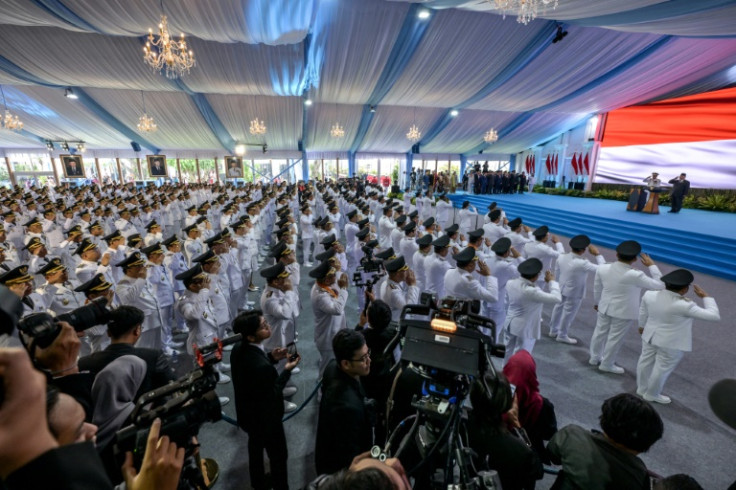
After his October inauguration, Prabowo paraded his cabinet in military fatigues at a retreat.
In November, his defence minister — also a former general accused of abuses under Suharto — announced that 100 battalions would be set up to enforce the government’s agenda.
And Prabowo has also faced backlash in recent months for slashing government budgets, as Indonesia’s flailing economy is further hit by a plummeting rupiah and see-sawing markets in reaction to Washington’s tariffs.
Adding to worries is a new regulation issued last month allowing police to monitor foreign journalists and researchers.
It gives the police the authority to provide a permission letter when reporting from “certain locations” — though a spokesperson later said the letter was “not mandatory”.
But the regulation could still spook reporters working on sensitive topics, said Human Rights Watch’s Andreas Harsono.
“Journalism always goes hand-in-hand with democracy,” Andreas told AFP.
“If journalism is suppressed, the freedom of speech is suppressed, democracy will be paralysed.”
The country’s press flourished after the fall of Suharto, but local reporters have in recent weeks raised fears of an environment of intimidation.
Last month, Tempo magazine — which publishes articles critical of the government — was sent a pig’s head and six decapitated rats.
Prabowo’s spokesperson denied any government role in the incident, and said an investigation was ongoing.
Tempo’s website also started seeing cyber attacks this month after it published an investigation into some gambling companies in Cambodia and its links to Indonesian tycoons and politicians.
Journalist Francisca Christy Rosana, who was doxxed in recent weeks, said they got the message loud and clear.
“This terror was not just aimed at intimidating but silencing and stopping our work.”
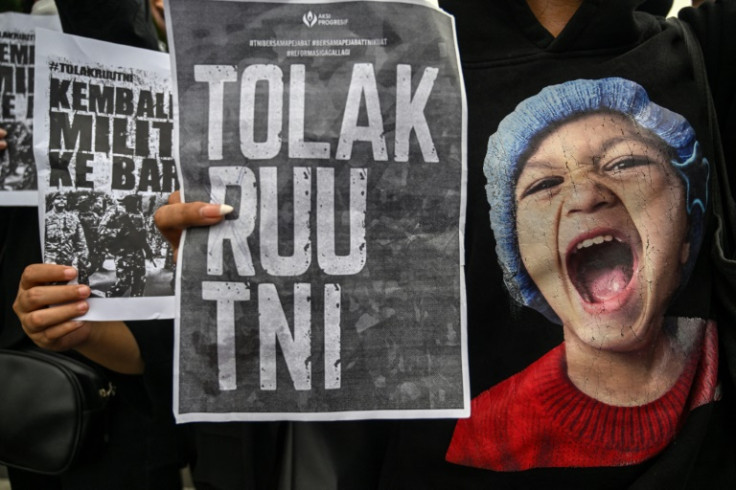
Thousands across Indonesia last month protested the new law, carrying posters that called for the military to “return to the barracks”.
Dismissing the public’s outrage over the military’s potential dual role in government as “nonsense”, Prabowo said he respected the people’s right to protest.
But if the demonstrations “create chaos and unrest, in my opinion this is against the national interest”, he said in an interview earlier this month.
Andrie Yunus of KontraS, the commission for missing persons and victims of violence, said the demonstrations are “the tip of the iceberg”.
“Civilians are fed up with the entry of militarism into civilian affairs,” he said, warning that the path to a military regime “is open”.
“We consider the passing of the (military law) to be an attempt to open Pandora’s box.”
AFP
AFP
AFP


