


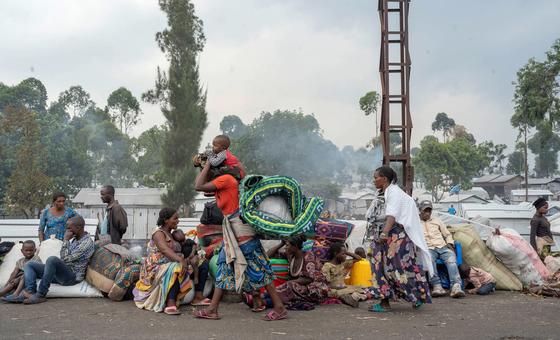
The Rugumba River burst its banks, inundating large areas of Kalemie and Nyunzu territories, destroying homes, schools and agricultural land.
Thousands have been left without shelter or a means to earn a living, while key crops such as cassava, maize, and peanuts have been wiped out, worsening an already serious food insecurity situation in the country.
Furthermore, stagnant and contaminated floodwaters are raising concerns over the risk of disease outbreaks, with reported cholera cases in Tanganyika already six times higher than during the same period last year.
A double crisis
UNHCR spokesperson Eujin Byun said the unfolding emergency reflects the “double crisis” in the DRC, where people are confronting weather shocks on top of ongoing conflict and mass displacement.
“The flooding has hit a community already under severe strain,” she told journalists in Geneva.
“Since January, Tanganyika has received around 50,000 internally displaced people (IDPs) fleeing violence in South Kivu. Many had been sheltering in local homes, churches and schools – now damaged or destroyed.”
Tanganyika and South Kivu are among four eastern provinces where some 2.3 million people are affected by ongoing conflict and hunger fears are rising, according to recent assessments.
The other provinces are North Kivu and Ituri.
Funding shortfall
UNHCR and partners are providing emergency support, including shelter, clean water, food and medical care, but critical funding gaps are hindering response.
Reports also indicate that some Congolese refugees who recently fled to Burundi have since returned to DRC, citing limited access to food, shelter and basic services.
At the same time, Congolese refugees continue to cross the border to neighbouring countries in search of safety. Nearly 120,000 people have so far arrived in Burundi, Tanzania and Uganda, with more than 5,500 entering Uganda over the past week.
“This trend highlights the urgent need for increased support in both host countries and return areas to address the challenges faced by returnees and refugees in neighbouring countries,” said Ms. Byun.
She stressed the need for a coordinated and robust humanitarian response but noted that UNHCR has only received 20 per cent of the funding required for its operations in the DRC.
“The people of the DRC are in dire need of aid, and without timely and adequate intervention, the consequences of this tragic ‘double crisis’ will only deepen,” she warned.


