


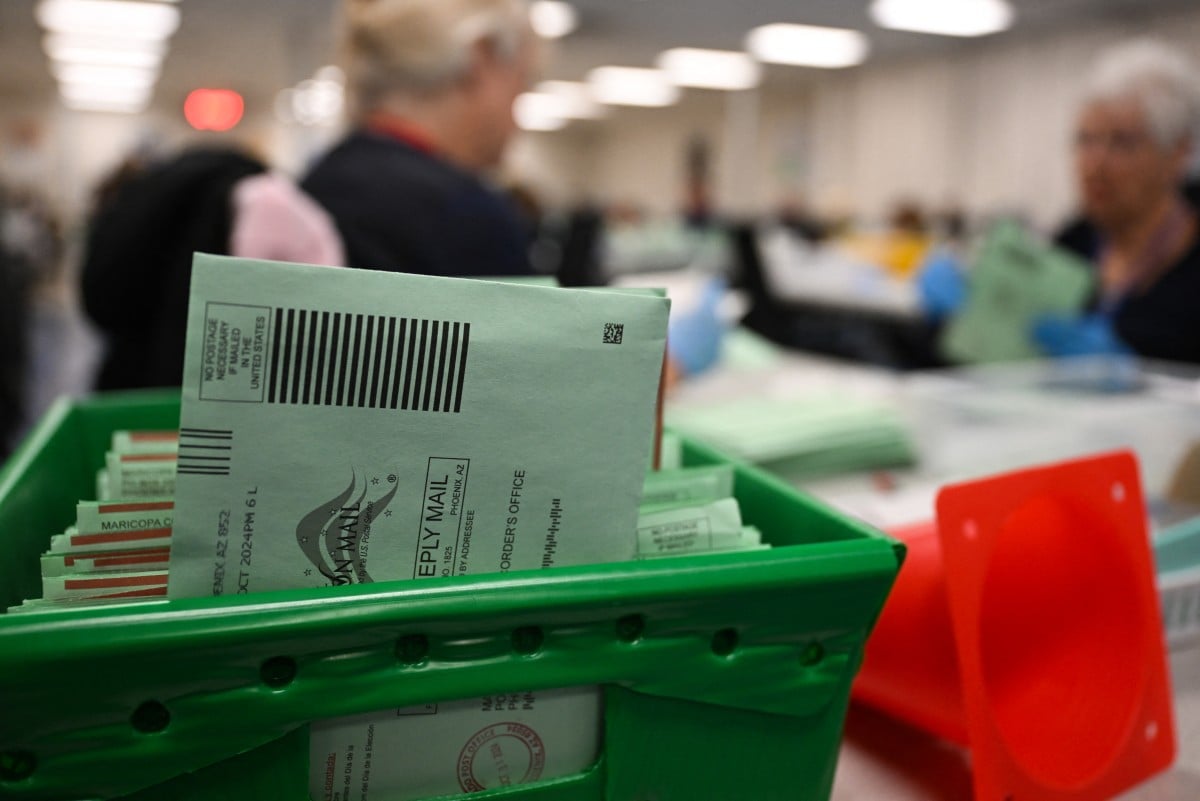
The US House of Representatives on Thursday passed legislation known as the SAVE Act, which could have a major impact on the voting rights of Americans living in Europe.
On Thursday, the US House of Representatives passed the SAVE Act (Safeguard American Voter Eligibility), which tightens the rules on voting in US elections, with 220 votes in favour and 208 opposed.
The passage of the bill follows a similar executive order by US President Donald Trump, which seeks to update the federal form voters use to register to vote so that it would require “documentary proof of United States citizenship”.
The SAVE Act was re-introduced in January 2025 by US Congressman Chip Roy, after it died in the Senate last year.
The Texas Republican’s bill could have sweeping impacts on access to voting for Americans abroad, as it aims to require anyone wishing to register to vote (or update their voter registration) to first show proof of their US citizenship – via a passport or birth certificate – in person to a US election official.
At present Americans living in Europe can register to vote by mail or online, depending on the rules of their state, but this legislation would require a trip to the US in order to register or make changes.
While the bill does not explicitly mention Americans abroad, it states that proof of citizenship documentation must be shown “in person to the office of the appropriate election official” before the deadline for completed voter registration applications.
According to the Associated Press, based on the bill’s current version, the acceptable documents would be:
- a REAL ID-Compliant driving licence (which must also indicate US citizenship)
- a valid US passport
- a military ID (which shows place of birth in the US)
- a valid government-issued photo ID showing birthplace in the US
- a valid government issued photo ID alongside a certified birth certificate (showing the US as birthplace)
How have people responded?
Groups representing Americans abroad have expressed concern about the SAVE Act.
In a joint letter at the end of March, US Vote Foundation, American Citizens Abroad, Association of Americans Resident Overseas (AARO), Federation of American Women’s Clubs Overseas (FAWCO), and Secure Families Initiative wrote to Congress urging representatives to oppose the SAVE Act.
“The SAVE Act would effectively end mail voter registration; instead of simply mailing a form, most Americans would have to present a birth certificate or passport in person to a local election official every single time they register or re-register to vote. The SAVE Act would also upend or eliminate online voter registration.
“Americans living overseas, including US service members and their families, are citizens fiercely committed to American democracy. Yet the SAVE Act does not make possible, or even account for, our participation in American elections,” they wrote.
Partisan groups like Democrats Abroad have also pushed back. In response to the SAVE Act passing the House, the group put out a statement saying the bill would “effectively end voting from abroad for military and civilian voters due to the costly, new in-person voter registration requirements it will impose.
“We call upon all Americans and especially Americans living abroad, regardless of their political party, to fight this massive disenfranchisement effort as the bill now goes to the Senate.”
Advertisement
Democrats Abroad previously noted that people who are already registered to vote may have cause for concern too, as some states update their voter rolls periodically and “if an abroad voter was accidentally purged, they would still need to appear in person with the required documentation to re-register.”
Experts worry other groups could also see access to voting restricted, including overseas military personnel and their families, as well as US residents who do not hold passports or may not have a birth certificate with their legal name on it (eg, married women who changed their surnames and transgender people).
Advertisement
What are the next steps for the legislation?
At the time of writing, the bill has passed the House and will now move on to the Senate, where it ‘faces an uncertain future’, according to ABC News.
The SAVE Act would need 60 votes to beat a filibuster and pass the Senate. Currently, Republicans hold a 53-47 majority.
Senate minority leader Chuck Schumer posted on X on Thursday that “[the bill] is dead on arrival in the Senate.”
The Senate allowed the bill to expire at the end of the previous Congress, which is why the SAVE Act had to be re-introduced at the start of January.
How can Americans Abroad express their views?
You can send an email to your representative. The catalogue on the US Senate website lists each member and their contact information.
Partisan groups like Democrats Abroad have also put together sample scripts and other resources for getting in touch with your representative. You can find their tips on their website.


