


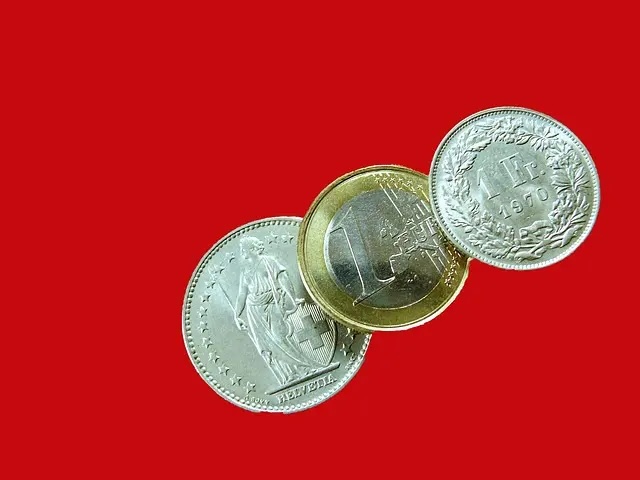
While financial markets continued to plummet as Donald’s Trump’s new customs duties went into effect on April 9th, the value of the Swiss franc was surging. Why is that, and what does it mean for Switzerland’s economy and population?
The tariffs — as high as 31 percent on Swiss exports to the United States — are affecting not only Switzerland’s economy but also consumers’ wallets, as the Swiss Market Index has fallen by more than 5 percent on average.
Meanwhile, Switzerland’s currency has strengthened against the US dollar overnight from April 8th to 9th, reaching 0.8381 cents — its highest level since the summer of 2011.
Just a week ago, the dollar was still worth more than 88 cents to a franc.
The franc has also soared against the euro: at 0.9272 cents, it is “nearing historic records,” according to Commerzbank analysts, quoted by Swiss media.
As a comparison, a week ago, one euro was still trading at nearly 95 (Swiss) cents.
The franc is “clearly the winner of this US customs policy and constitutes a textbook case of ‘safe haven’,” according to the bank.
What exactly does this mean?
Not to be confused with tax haven (which Switzerland no longer is), the franc has resisted global economic downturns much better than other countries’ currencies.
In fact, over the last few decades, the franc’s value kept increasing while many other currencies have struggled.
This financial resilience, combined with Switzerland’s political, economic, and social stability, as well as low inflation, has boosted the perception of the franc as a strong currency that serves as a ‘safe haven.’
That is why foreign investors like to purchase francs when the value of other currencies weakens due to economic or political upheavals.
So investors benefit from a strong franc, but it is good for the Swiss economy?
You may say it is a double-edged sword.
While its robust currency spells good news for Swiss businesses that primarily focus on importing products, companies that are export-based could suffer, because the goods they sell are too expensive abroad.
Advertisement
What about Swiss consumers?
Generally speaking, when a country’s currency is strong, consumers benefit on several fronts.
Since the exchange rates between the Swiss and foreign currencies are in franc’s favour, any merchandise that comes from abroad will, in principle, be cheaper.
By the same token, shopping in eurozone countries will also be advantageous, as the franc will go much further there than at home.
Last but not least, with the franc is stronger than the euro and the dollar, you can definitely benefit from travel abroad — at least in terms of accommodations and food while you are there.
The strong franc will not, however, compensate for the cost of getting there and back, as the prices for airplane tickets, train travel, and petrol remain relatively high.


