


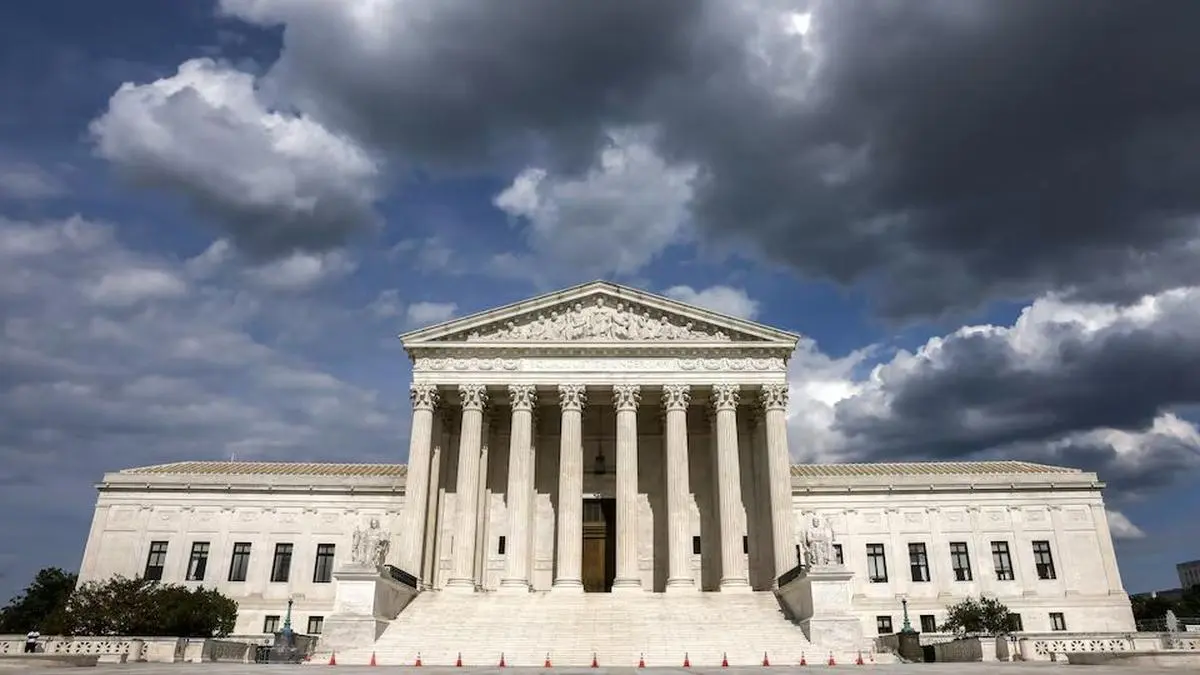
A US judge canceled a scheduled hearing concerning longer-lasting protections against President Trump’s deportations of Venezuelan nationals under the 1798 Alien Enemies Act after the Supreme Court lifted a temporary ban.
A U.S. judge cancelled a hearing set for Tuesday over whether to impose a longer-lasting block on President Donald Trump’s deportations of Venezuelans under a 1798 law historically used only in wartime after the U.S. Supreme Court lifted his temporary ban but did not immediately dismiss the case. The Supreme Court on Monday night granted the administration’s request to end Washington-based U.S. District Judge James Boasberg’s order that had temporarily blocked the summary deportations under Trump’s invocation of the Alien Enemies Act while litigation in the case continues. The unsigned 5-4 ruling was powered by the court’s conservative justices.
In a filing after the Supreme Court decision, Justice Department lawyers told Boasberg that he no longer has jurisdiction in the matter, should drop the case and should deny the preliminary injunction request by the migrants. In ending Boasberg’s temporary restraining orders barring such deportations issued on March 15 and March 28 and lasting two weeks apiece, the Supreme Court said detainees should have contested their deportations in Texas, where they were confined, rather than in Washington.
In a brief written order on Tuesday, Boasberg asked lawyers for the detained Venezuelan migrants to tell him by April 16 whether they intended to move forward with their bid for a longer-lasting preliminary injunction.
Lawyers with the American Civil Liberties Union, who are representing the migrants who have filed a legal challenge to Trump’s use of the 18th-century law to justify the deportations, did not immediately respond to a request for comment.
Speaking to reporters outside the White House on Tuesday before Boasberg’s postponement, Trump-appointed U.S. Attorney General Pam Bondi said the Supreme Court’s decision meant the “violent gang members” already deported would remain in El Salvador, where they are being held, and that she expects the case to move to Texas.
“The Supreme Court has spoken loud and clear – he has no jurisdiction,” Bondi said, referring to Boasberg.
Despite siding with the administration, the court’s majority placed limits on how deportations may occur, emphasising that judicial review is required. The ruling did not address how individuals currently held in El Salvador could seek judicial review.
Lee Gelernt, a lawyer with the American Civil Liberties Union representing a group of Venezuelan men in the custody of U.S. immigration authorities, on Monday, framed the court’s decision as a victory because it required people be given due process to challenge their removals.
Trump invoked the Alien Enemies Act on March 15 to swiftly deport the alleged members of the Tren de Aragua gang, attempting to speed up removals with a law best known for its use to intern Japanese, Italian and German immigrants during World War Two.
The ACLU sued to block the deportations, arguing that Trump’s order exceeded his powers because the Alien Enemies Act authorises removals only when war has been declared or the United States has been invaded.
They also said they were not given the opportunity to contest the administration’s assertion that they were Tren de Aragua members.
Published on April 8, 2025

