


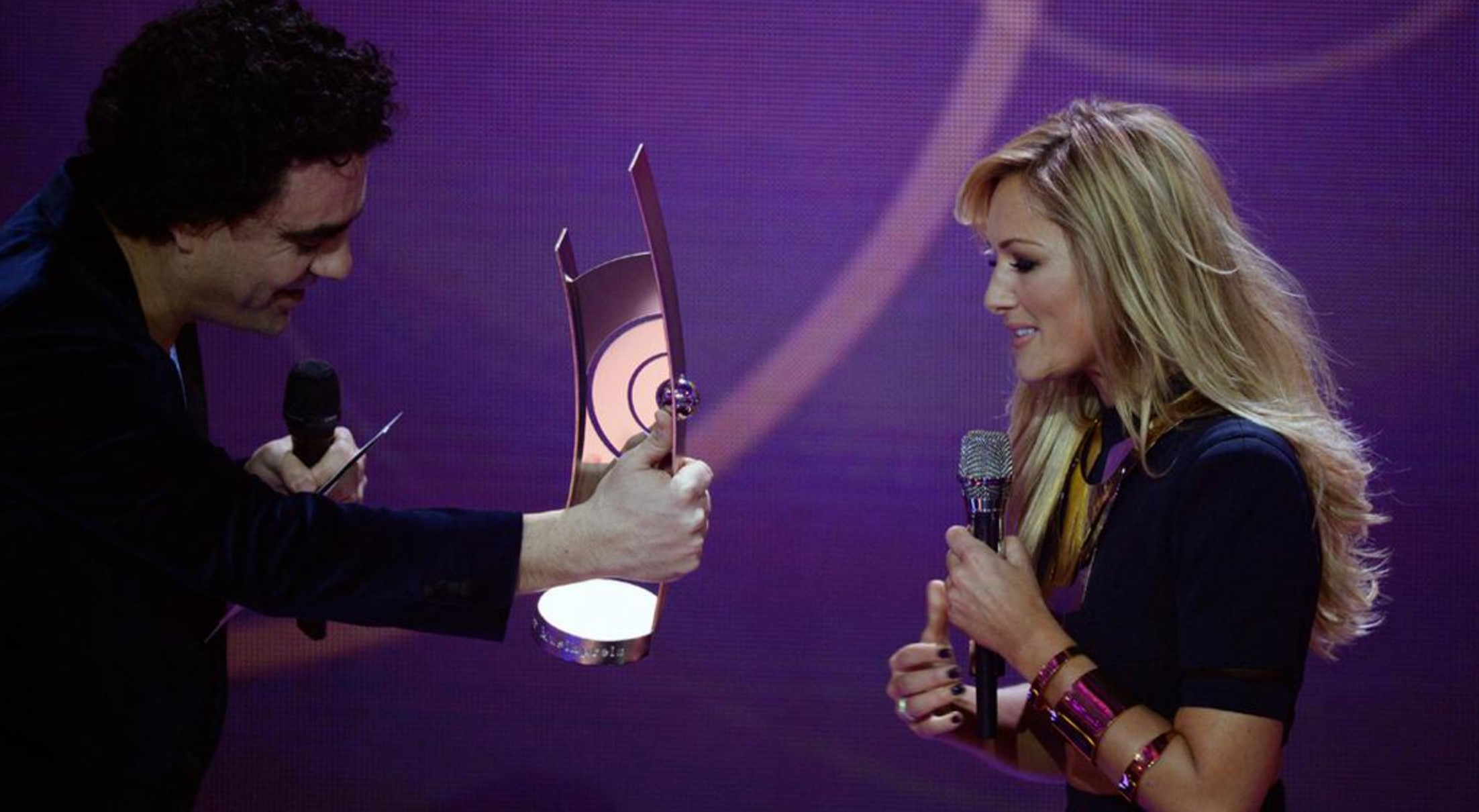
Schlager icon Helene Fischer is a star in German speaking countries. So what is Schlager music — and how did Fischer become its modern representative?
Her concerts feel like a healthy portion of sweet candy pop, complete with sparkling outfits, athletic dancing, pyrotechnics, and her perfectly flowing blonde hair. Forty year old singer Helene Fischer is perhaps the most successful pop star in the German-speaking world.
She may well be the best-known figure in modern Schlager – which when translated from German literally means “hits.” And although she may have little recognition outside the German-speaking world, her current dominance of Schlager music has left her one of the richest entertainers anywhere around the globe.
What is Schlager and how did it start up?
When many people think of modern Schlager music, songs that might come to mind immediately include many of Helene Fischer’s poppy bops set over techno music, such as Atemlos durch die Nacht or Herzbeben.
But Schlager’s roots are actually around 150 years old and begin at Vienna’s opera house. At that time, a Schlager referred to an entertaining song sung in German that was well-received by the audience. Johann Strauss Sohn’s Die Fledermaus could well be described as a Schlager opera.
Radio started making Schlager more popular in the 1920s before the genre reached new heights of popularity starting in the 1960s. Since then, people in German-speaking countries have described it to internationals as their version of country music – even though foreigners might be more likely to brand it “europop.” Although some ABBA songs have a similar feel, Schlager typically refers to songs sung in German.
During Schlager’s explosion in the 1960s and 1970s, German singers like Rex Gildo and Heino dominated the charts with simple songs about love or nostalgic musical odes to sunny holidays spent in Italy and Spain. But both Austrian Schlager artists like Simone Stelzer and DJ Ötzi, as well as Switzerland’s Francine Jordi, helped take the genre into the new millennium, just before Helene Fischer began dominating the genre after her debut in 2005.
Advertisement
Schlager and Eurovision
Perhaps unsurprisingly, Schlager and Schlager singers have been well represented at the annual festival of kitsch that is the Eurovision Song Contest. Stelzer represented Austria at Eurovision in both 1990 and 1994, while Jordi sang for Switzerland in Tallinn in 2002 – to use just two examples.
But perhaps Schlager’s biggest Eurovision triumph occurred in 1982, when 17 year-old Nicole won the contest for Germany with her song Ein bisschen Frieden, or “A little bit of peace.” It was Germany’s first-ever Eurovision win – a feat it would not repeat again until 2010.
Advertisement
The “Schlager Queen” Debate
Modern Schlager fans are still obsessed with one argument: who is the true “Queen of Schlager?” Is it Helene Fischer or Andrea Berg?
How someone answers this controversial question will tell you a lot about their Schlager tastes.
Having sold an estimated 15 million albums, an estimated net worth of around €35 million, and nearly a million YouTube subscribers, Fischer is arguably the biggest Schlager star active today.
Andrea Berg, though, has been on stage for a lot longer. In 2022, the 57 year-old German singer marked the 30th anniversary of her debut with a concert watched by over four million people. Over her career, she’s entertained at least 4.3 million people live, to say nothing of those who’ve listened to her on the radio or bought her albums.
With 11 Number One hits at the top of the German music charts and similar successes in Austria and Switzerland, Berg is still the most successful female singer in the German-speaking world when it comes to chart performance. She’s also the second most successful German-speaking singer overall, with only the late Udo Jürgens beating her total, with 17 Number One hits. But Helene Fischer is hot on Berg’s heels, with nine Number Ones of her own in Germany and others in Austria and Switzerland as well.
Advertisement
Fischer’s modern updates on the genre may also endear her to younger fans, who are sometimes more likely to call her the Schlager Queen. But if you bring up this question to a Schlager fan, be prepared for a possible spirited defence of either Fischer or Berg.
READ ALSO: How Germany’s Schlager music is making a youthful comeback
Listen to The Local’s Germany in Focus podcast episode released on March 24th to hear the team discuss Schlager.


